
Introduction
Healthy skin is not simply about achieving a brighter complexion. It involves maintaining an even skin tone, protecting the skin from environmental damage and following a consistent skincare routine. However, dark spots, pigmentation, uneven skin tone and dullness are common concerns that affect people of different ages.
Sun exposure, hormonal changes, inflammation, acne marks and environmental factors can contribute to changes in skin pigmentation. While many people try different skincare products to address these concerns, understanding the causes of pigmentation and choosing suitable ingredients are important steps towards better skin care.
A well-planned skincare routine that includes gentle cleansing, appropriate moisturisation and daily sun protection can help maintain healthy-looking skin.
Understanding Hyperpigmentation and Dark Spots
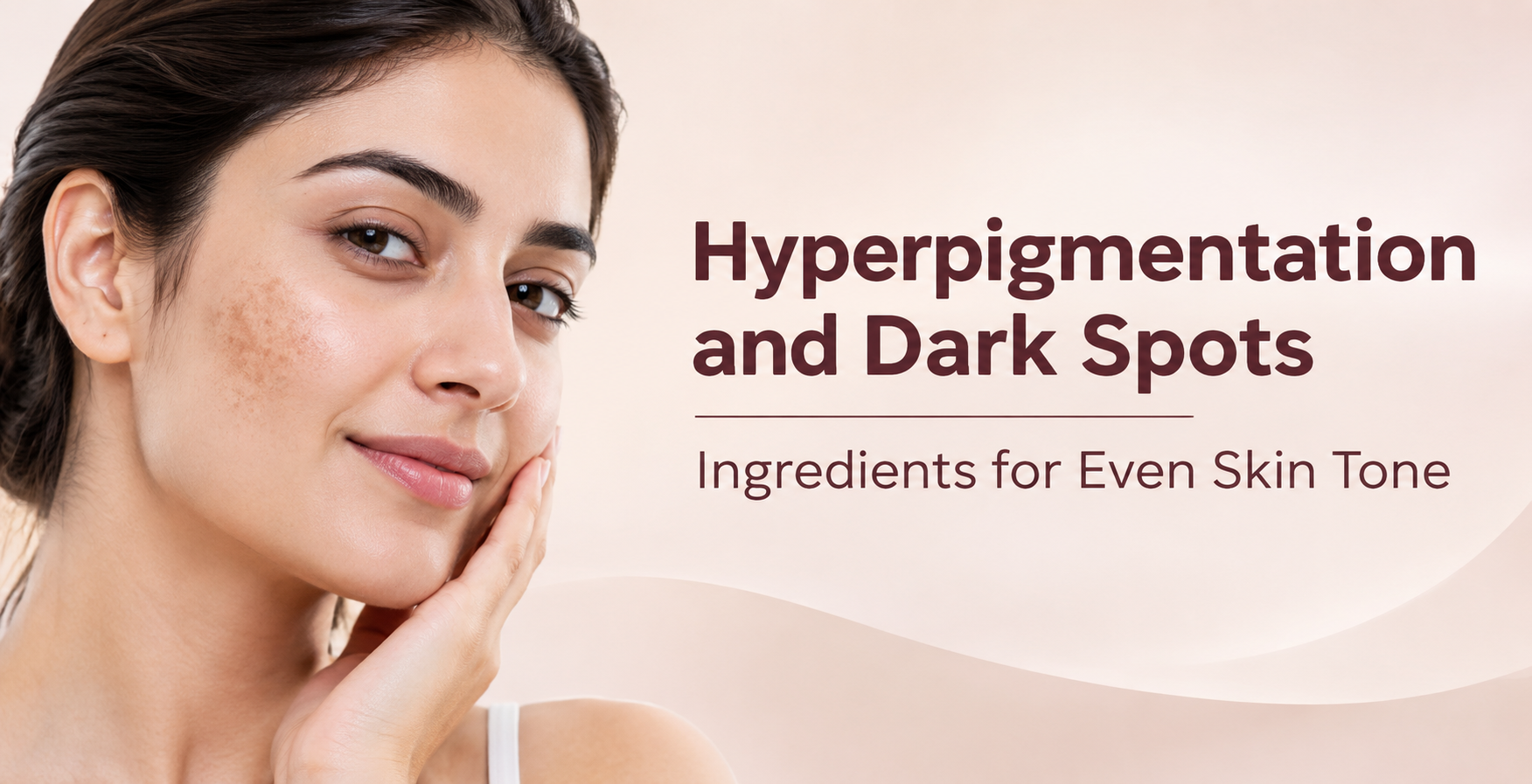
Hyperpigmentation is a common skin concern that occurs when certain areas of the skin become darker than the surrounding skin. This happens due to increased melanin production or changes in how melanin is distributed in the skin.
Melanin is the natural pigment responsible for skin, hair and eye colour. Although it plays an important protective role, excessive or uneven pigmentation can result in visible dark patches and spots.
Some common types of pigmentation include:
1. Sun-Induced Pigmentation
Frequent exposure to ultraviolet radiation can stimulate melanin production. Over time, this may contribute to sunspots, dark patches and uneven skin tone.
2. Post-Inflammatory Hyperpigmentation
Dark marks can develop after skin inflammation or injury. Acne, insect bites, irritation and certain skin conditions may leave darker areas even after the original problem has healed.
3. Melasma
Melasma is a pigmentation condition characterised by brown or grey-brown patches, commonly appearing on the cheeks, forehead and upper lip. Hormonal influences and sun exposure can contribute to its development.
4. Age-Related Dark Spots
As skin ages, cumulative sun exposure may contribute to the development of darker spots, particularly on frequently exposed areas such as the face and hands.
Understanding the type of pigmentation is important because different concerns may require different skincare approaches.
Common Factors That Contribute to Uneven Skin Tone
Several factors can influence melanin production and skin appearance.
Excessive Sun Exposure: Ultraviolet radiation stimulates melanin production and can worsen existing pigmentation.
Hormonal Changes: Hormonal fluctuations may contribute to pigmentation conditions such as melasma.
Acne and Skin Inflammation: Inflammation can trigger excess pigmentation, particularly in individuals prone to post-inflammatory dark marks.
Harsh Skincare Products: Unsuitable products and excessive exfoliation may irritate the skin and contribute to pigmentation after inflammation.
Genetic Factors: Genetics can influence skin characteristics and susceptibility to certain pigmentation concerns.
Lifestyle and Environmental Factors: Pollution, smoking and other environmental exposures may contribute to oxidative stress and affect overall skin health.
Important Skincare Ingredients That Help Address Pigmentation
Understanding skincare ingredients can help individuals choose products according to their skin concerns. Several ingredients are commonly used in formulations designed to improve the appearance of dark spots and uneven skin tone.
1. Tranexamic Acid
Tranexamic acid is an ingredient widely studied for its role in managing hyperpigmentation, particularly melasma. It works through pathways involved in pigmentation and may help improve the appearance of uneven skin tone.
It is available in different topical skincare formulations and should be used according to product directions.
2. Vitamin C (Ascorbic Acid)
Vitamin C is an antioxidant that supports collagen formation and helps protect skin cells against oxidative stress. It is also used in skincare formulations designed to improve the appearance of dullness and dark spots.
3. Niacinamide
Niacinamide, also known as vitamin B3, helps support the skin barrier and may reduce the transfer of melanin to surrounding skin cells. Regular use of suitable formulations can help improve the appearance of uneven skin tone.
4. Licorice Extract
Licorice extract contains naturally occurring compounds used in skincare products for their soothing and skin-conditioning properties. Certain components are also studied for their potential effects on pigmentation.
5. Hyaluronic Acid
Hyaluronic acid is a hydrating ingredient that attracts and retains moisture. It helps maintain skin hydration and supports a smoother-looking complexion.
Combining appropriate skincare ingredients with sun protection can help create a more effective routine for managing the appearance of pigmentation.
Why Sun Protection Is Essential for Pigmentation Management
Sun exposure is one of the major external factors associated with hyperpigmentation. Ultraviolet radiation can stimulate melanin production and make existing dark spots more noticeable.
Even when using brightening skincare products, inadequate sun protection may make pigmentation more difficult to manage.
Some practical sun protection habits include:
- Apply broad-spectrum sunscreen with SPF 30 or higher every morning.
- Reapply sunscreen approximately every two hours when outdoors, and after swimming or excessive sweating.
- Wear protective clothing and sunglasses.
- Use hats when spending extended periods outdoors.
- Seek shade during periods of strong sunlight.
- Avoid unnecessary prolonged exposure to direct sunlight.
Daily sun protection is an essential part of maintaining an even-looking skin tone.
Choosing the Right Skincare Product for Uneven Skin Tone
Selecting a suitable skincare product requires understanding its ingredients, formulation and intended use.
People experiencing pigmentation may look for formulations containing ingredients such as tranexamic acid, vitamin C, niacinamide and licorice extract.
One option is Canixa Tyrodin Creamy Lotion, a skin-brightening lotion formulated with ingredients designed to help improve the appearance of dark spots and uneven skin tone.
Its key ingredients include:
- Tranexamic Acid: Used in skincare formulations targeting the appearance of pigmentation.
- Ascorbic Acid: An antioxidant form of vitamin C that supports skin health and helps improve the appearance of dark spots.
- Niacinamide: Helps support the skin barrier and improve the appearance of uneven skin tone.
- Licorice Extract: Provides skin-conditioning and soothing properties and is used in pigmentation-focused formulations.
- Propylene Glycol: Helps maintain the formulation and supports ingredient delivery.
The lotion also contains SPF 15, which provides an additional level of sun protection. However, SPF 15 should not replace a dedicated broad-spectrum SPF 30 or higher sunscreen for daily sun protection.
The product is designed for external application. Follow its directions and perform a patch test before regular use, especially if you have sensitive skin.
How to Build a Daily Skincare Routine for Uneven Skin Tone
A consistent skincare routine is more useful than frequently switching between different products.
Step 1: Cleanse Gently
Use a mild cleanser to remove dirt, oil, sweat and accumulated impurities. Avoid aggressive cleansing that may irritate the skin.
Step 2: Apply Suitable Skincare Products
Choose serums or lotions containing ingredients appropriate for your skin concerns. Introduce new active ingredients gradually rather than using several new products simultaneously.
Step 3: Moisturise Regularly
Apply a suitable moisturiser to maintain hydration and support the skin barrier. Well-moisturised skin generally feels more comfortable and smoother.
Step 4: Apply Sunscreen
Use broad-spectrum SPF 30 or higher sunscreen every morning. Apply an adequate amount and reapply as directed.
Step 5: Maintain Consistency
Pigmentation management often requires patience. Follow product directions regularly and allow sufficient time to assess how your skin responds.
Lifestyle Habits That Support Healthy Skin
Skincare products are only one part of maintaining healthy-looking skin. Everyday lifestyle choices also contribute to skin wellness.
Eat a Nutrient-Rich Diet
Include fruits, vegetables, nuts, seeds and protein-rich foods in your daily meals. Nutrients such as vitamin C, vitamin E and zinc contribute to normal skin function.
Stay Hydrated
Drink sufficient water throughout the day to support normal body functions.
Get Adequate Sleep
Maintaining a consistent sleep routine supports overall well-being and the body’s natural maintenance processes.
Manage Stress
Regular exercise, meditation and relaxing activities can help manage everyday stress.
Avoid Smoking
Smoking contributes to oxidative stress and can negatively affect skin health. Avoiding tobacco supports overall wellness.
Common Skincare Mistakes to Avoid
Certain skincare habits can worsen irritation and make pigmentation concerns more difficult to manage.
- Skipping sunscreen during cloudy weather.
- Using too many active skincare ingredients together.
- Scrubbing the face aggressively.
- Picking or squeezing acne.
- Applying unsuitable products without checking ingredients.
- Expecting immediate results from brightening products.
- Ignoring irritation and continuing to use products that cause discomfort.
A gentle and consistent routine is generally a better approach than using multiple strong products.
When Should You Consult a Dermatologist?
Not all pigmentation concerns have the same underlying cause. Some dark patches may be related to hormonal changes, medical conditions or chronic skin inflammation.
Consult a dermatologist if pigmentation develops suddenly, spreads rapidly, changes in appearance or does not improve with appropriate skincare.
A dermatologist can identify the type of pigmentation and recommend suitable treatments based on individual skin needs.
People with sensitive skin, existing skin conditions or a history of allergic reactions should seek professional guidance before introducing new active skincare ingredients.
Conclusion
Uneven skin tone, dark spots and hyperpigmentation are common concerns influenced by sun exposure, hormonal changes, inflammation and environmental factors. Understanding these causes can help individuals choose suitable skincare ingredients and develop a consistent routine.
Ingredients such as tranexamic acid, vitamin C, niacinamide and licorice extract are commonly used in formulations designed to improve the appearance of pigmentation. Products such as Canixa Tyrodin Creamy Lotion combine these ingredients as part of a skin-brightening skincare approach.
However, healthy skin requires more than a single product. Consistent sun protection, gentle cleansing, regular moisturisation and balanced lifestyle habits are important for maintaining long-term skin wellness.

