
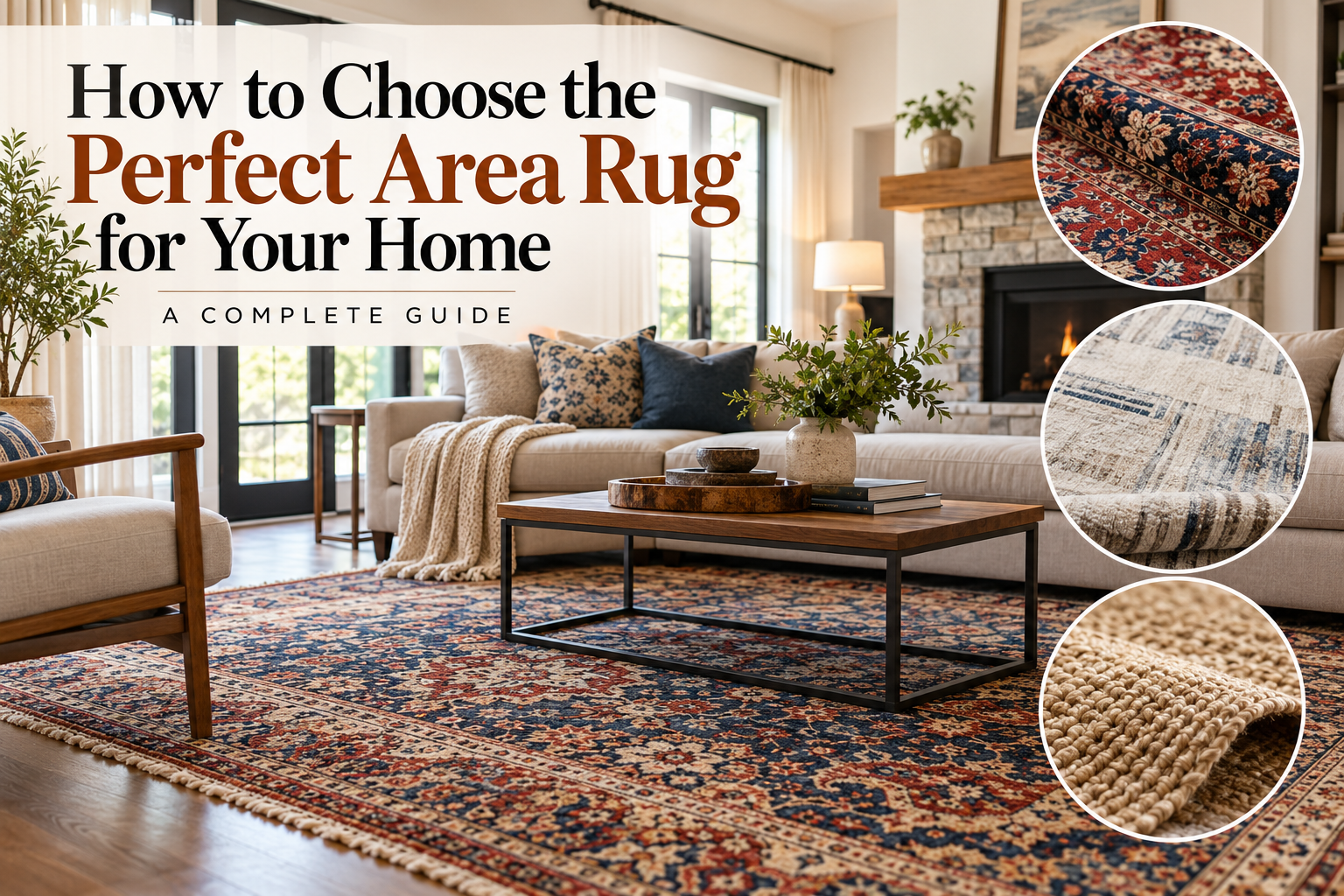
Choosing the right area rug can completely transform a room. The right rug adds warmth, defines furniture arrangements, introduces color and texture, and helps create a more comfortable and inviting atmosphere. However, with so many sizes, patterns, materials, and styles available, finding the perfect option can feel overwhelming.
Whether you are furnishing a living room, bedroom, dining area, hallway, or another space, a few simple considerations can make the decision much easier. This guide explains how to choose an area rug that complements your home while matching your practical needs and personal style.
1. Start With the Size of Your Room
One of the most important factors when choosing an area rug is size. A rug that is too small can make furniture look disconnected, while an oversized rug may overwhelm the room.
Before shopping, measure the space where you want to place the rug. Then consider how your furniture will sit around or on top of it.
For a living room, a larger rug that allows the front legs of sofas and chairs to rest on the rug can create a unified arrangement. In a bedroom, you may want a rug that extends beyond the sides and foot of the bed.
If you are unsure about the appropriate dimensions, visit the Jacobsen Rugs FAQs for additional guidance.
2. Consider Your Interior Design Style
Your rug should work with the overall character of your room rather than compete with it. Think about your existing furniture, wall colors, flooring, artwork, and decorative accessories.
For a classic interior, a traditional rug with detailed motifs can add timeless character. If your home has contemporary furniture and clean lines, a modern rug may provide the right finishing touch.
Jacobsen Rugs offers several distinct styles, including Traditional Rugs, Modern Rugs, and Transitional Rugs.
Transitional designs can be particularly useful when you want to combine classic details with a more contemporary interior.
3. Choose Between Traditional, Modern, and Transitional Designs
Understanding the difference between rug styles can help narrow your choices.
Traditional Rugs
Traditional rugs often feature established patterns, detailed motifs, and a timeless appearance. They work especially well in rooms with classic furniture and traditional architectural details.
Explore the Traditional Rug Collection at Jacobsen Rugs to discover designs suitable for classic interiors.
Modern Rugs
Modern rugs are ideal when you want a cleaner or more contemporary appearance. Bold colors, geometric patterns, and simplified designs can create a strong visual statement.
You can explore the Modern Rug Collection for contemporary styles.
Transitional Rugs
Transitional rugs combine elements of traditional and contemporary design. This makes them versatile for homes where classic and modern furniture are used together.
See the Transitional Rug Collection for options that bridge both design styles.
If you want something more distinctive, you can also explore the One Of A Kind Rug Collection for individual pieces with their own character.
4. Think About Color and Pattern
Color plays an important role in how a rug changes the appearance of a room.
If your furniture and walls already feature strong colors or patterns, consider a rug with more subtle tones. Conversely, a neutral room can benefit from a rug with richer colors or a distinctive pattern.
You do not necessarily need to match the rug exactly to your furniture. Instead, look for complementary colors that connect different elements of the room.
For example, a rug containing subtle blue details can work beautifully with blue cushions or artwork without requiring an exact color match.
5. Consider the Material and Construction
The construction and material of an area rug affect its appearance, comfort, durability, and maintenance requirements.
Handmade and hand-knotted rugs can offer distinctive character because small variations in weaving can contribute to the individuality of each piece.
If you are interested in handcrafted designs, explore the Fez Collection at Jacobsen Rugs. The collection features hand-knotted rugs with natural wool and distinctive geometric designs.
For high-traffic areas, consider durability and how frequently the rug will be used. For quieter spaces such as bedrooms, comfort and texture may be higher priorities.
6. Match the Rug to the Room
Different rooms have different requirements, so the ideal area rug depends partly on where you plan to use it.
Living Room
A living room rug should help connect seating areas and create a comfortable focal point. Make sure the size works with your sofa, chairs, and coffee table.
Bedroom
A bedroom rug can add softness and warmth. Consider placing a larger rug beneath the bed or using smaller rugs beside the bed.
Dining Room
For a dining room, choose a rug large enough for chairs to remain on the rug even when they are pulled away from the table.
Hallways and Entryways
Runners and smaller rugs can add personality to entryways and hallways while protecting flooring in areas that receive frequent foot traffic.
7. Think About Maintenance
Even a high-quality rug needs proper care. Dust, dirt, spills, and everyday foot traffic can gradually affect its appearance.
Regular vacuuming, promptly addressing spills, rotating the rug periodically, and limiting prolonged direct sunlight can help maintain its condition.
For valuable handmade, vintage, oriental, or delicate rugs, professional cleaning can be especially important. Jacobsen Rugs provides professional rug cleaning services designed to help maintain the condition and appearance of rugs.
8. Consider the Character of Handmade Rugs
If you want your rug to feel like more than simple floor décor, consider a handmade piece. Handmade rugs can introduce texture, craftsmanship, and individuality into a room.
Jacobsen Rugs features a selection of handmade, oriental, vintage, modern, and traditional rugs, making it easier to explore different styles according to your interior design preferences.
You can explore Jacobsen Rugs to browse the available collections and discover a rug that fits your home.
When choosing a handmade rug, look beyond appearance. Examine the quality of construction, materials, design, condition, and suitability for your space.
9. Set a Practical Budget
Area rugs are available across a wide range of price points. Before shopping, establish a realistic budget based on the size, construction, materials, age, and quality you are looking for.
Rather than choosing a rug based only on price, consider its expected use and longevity. A well-selected quality rug can become an important part of your interior for many years.
If you need assistance comparing options, contact Jacobsen Rugs for guidance based on your room, preferred style, and requirements.
10. Look Beyond Trends
Interior trends change, but a well-chosen rug can remain attractive for years. Instead of selecting a rug simply because a particular pattern is fashionable, think about whether you will still enjoy it as your furniture and décor evolve.
Traditional, transitional, vintage, and carefully designed modern rugs can all work as long-term additions when their colors, proportions, and patterns complement the room.
Final Thoughts
Choosing the perfect area rug is about finding the right balance between size, style, color, construction, comfort, and practicality.
Start by measuring your room, consider your furniture arrangement, and decide which design style best complements your interior. Think about how much traffic the rug will receive and choose a material and construction that fit your lifestyle.
