
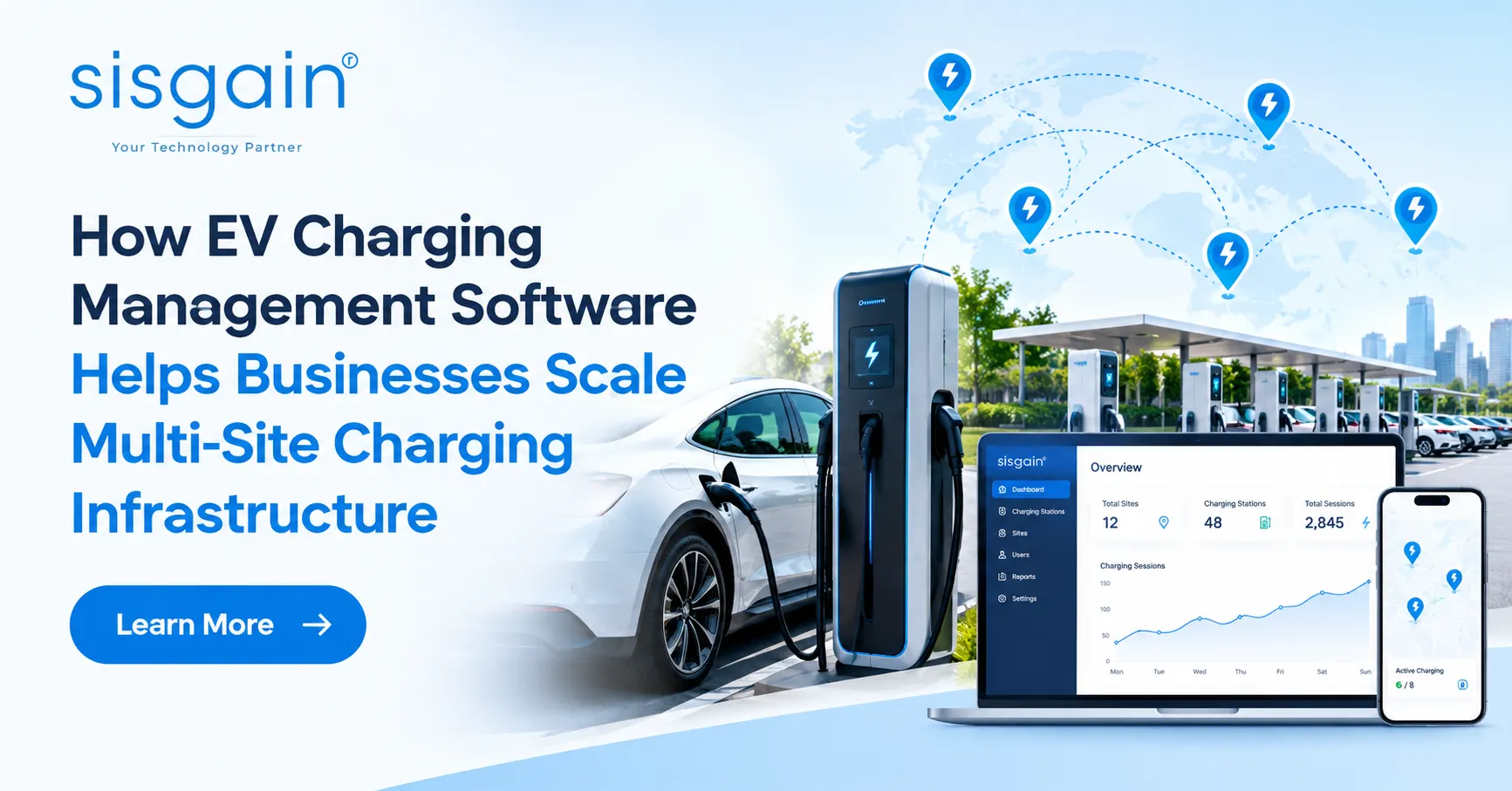
Key takeaways
- Work faster. One live view of every site replaces charger-by-charger checks and shortens fault response.
- Serve drivers better. Reliable chargers, clear pricing and simple access keep customers, tenants and fleet drivers coming back.
- Use the power you have. Dynamic load management shares site capacity and can delay costly grid upgrades.
- Stay flexible. OCPP-based, hardware-agnostic software lets you add any charger brand without a rebuild.
- Decide with data. Utilisation and revenue figures show which sites to fix and where to expand next.
- Stay competitive. Dubai’s network is growing quickly. Operators with better uptime, billing and analytics will win share.
Why Scaling EV Charging Is Becoming a Software Problem
Dubai is adding charging points faster than most cities add parking bays. DEWA reported more than 1,860 EV Green Charger points across the emirate in January 2026, and the city’s total reached 2,223 charging points by the end of the first quarter, counting stations run by licensed partners. EV registrations climbed with it, reaching an estimated 47,944 vehicles by the end of 2025.
Installing chargers is the part everyone can picture. Operating them is where businesses get stuck. A hotel group with chargers at six properties, a logistics firm with three depots or a developer with a dozen towers soon meets the same problems: mixed charger vendors, no single view of what’s working, power limits at every site, tangled payments and uneven use. One site can be managed by hand. Several can’t.
That’s where EV charging management software comes in. It’s the operational layer connecting chargers, sites, users, energy, payments and analytics, and it sits at the centre of serious EV charging infrastructure management. This guide covers how EV charging management software helps businesses scale, what to look for, and what Dubai operators should plan before the second site goes live.
Why Multi-Site EV Charging Is Harder Than Installing More Chargers

Adding chargers looks like progress on a site plan. In operation, every new location multiplies the ways things can go wrong.
Every New Site Adds Operational Complexity
Multi-site EV charging management starts with a plain fact: no two sites are alike. One tower has a 150 kW supply, another has 400 kW. A hotel installs one charger brand, a retail partner picks another. Each location has its own site manager, connectivity set-up, access rules and idea of a fair price. Add more sessions, more support calls and more maintenance visits, and the team that coped with one location is suddenly running a small utility.
Hardware Expansion Does Not Guarantee Network Performance
An installed charger isn’t a working charger. Plenty of units show as available yet fail to start a session because of dropped connectivity, OCPP communication errors or outdated firmware. Meanwhile one location sits empty and another has a queue at 6 p.m. Without a system that tracks successful sessions instead of hardware counts, you hear about these faults from frustrated drivers.
Take a hypothetical operator with eight sites and 60 chargers. If 5 percent of units are quietly offline at any moment, that’s three chargers earning nothing and frustrating drivers, and nobody knows which three until someone complains. Over a year of evening peaks, those lost sessions add up. This is the gap that multi-site EV charging management closes.
Businesses need an operational system, not simply more hardware.
What EV Charging Management Software Actually Does for a Multi-Site Network
EV charging management software is a cloud platform that sits between your chargers and everyone who depends on them. It works as a control layer linking chargers, sites, users, energy, payments, operations and analytics, so every team sees the same live picture.
In practice, EV charging management software monitors charger status, starts and stops sessions, manages users and access, groups locations under one account, automates billing, balances energy demand, tracks uptime, records operational data and connects to the ERP, CRM and parking systems a business already runs.
Here’s the flow. A charger connects to the platform over OCPP and reports its status, meter readings and faults. The platform applies your rules for access, pricing and power limits, then sends instructions back, such as start, stop, reduce current or restart. Drivers, tenants and managers use mobile and web apps, while finance and operations read the same data in dashboards and reports. That loop separates EV charging management software from a basic charger app, and it’s why EV charging management software matters more with every site you add.
Quick Question:“What is EV charging management software?”— It’s a cloud platform that talks to chargers over OCPP, so operators can monitor, control, bill and analyse charging across every site from one place.
From Individual Chargers to a Connected Charging Network
| Area | Without centralised software | With EV charging management software |
|---|---|---|
| Monitoring | Checked charger by charger | Live status across every site |
| Maintenance | Reactive, after a complaint | Remote diagnostics and automated alerts |
| Visibility | Limited to each location | Cross-site analytics |
| Operations | Manual, by phone and spreadsheet | Automated workflows |
| Decisions | Based on instinct | Based on utilisation and revenue data |
That shift turns charging equipment into a charging infrastructure platform.
6 Ways EV Charging Management Software Helps Businesses Scale

Each of these six benefits of EV charging management software grows in value as the network grows.
1. Centralises Multiple Charging Sites in One Dashboard
Central operations teams need the whole picture. EV charging management software gives them one dashboard across offices, retail properties, hotels, residential developments, fleet depots, parking facilities and public charging locations. Live charger status, active sessions, fault alerts, energy use, revenue and utilisation sit side by side, so multi-site EV charging management stops being a spreadsheet exercise.
Role-based access keeps it practical. Head office sees every site, while a mall’s site manager sees only their own chargers, sessions and revenue. Reports can be cut by site, region, charger type or customer group, so a regional manager and a CFO each get the view they need from the same EV charging management software.
2. Supports Hardware-Agnostic and OCPP-Based Expansion
Few businesses stay loyal to one charger brand. A new property arrives with different hardware, procurement changes suppliers, or a model is discontinued. OCPP charging software, built on the open protocol chargers use to talk to a central system, lets you manage mixed hardware from one place, with remote configuration and firmware management across every model and no vendor lock-in.
An OCPP-first EV charging station management system turns onboarding a new site into a configuration task: connect the chargers, assign a location, set pricing. EV charging management software built this way lets you add chargers without rebuilding anything. The practical test is simple: ask to see two different charger brands running side by side on one dashboard before you commit.
3. Optimizes Power Across Multiple Sites With Dynamic Load Management
Every site has an electrical ceiling. Install ten chargers on a supply built for six, and the first evening rush trips the limit. The usual fix is a grid upgrade, which is slow and expensive. Dynamic load management is the cheaper first step. EV charging management software reads each site’s power limit and shares available capacity across active sessions, instead of letting every charger draw maximum power at once.
It can prioritise a delivery van leaving at 5 a.m. over a visitor’s car, move sessions to off-peak hours and include solar or battery storage where a site has it. Static limits are the simplest start. Smarter EV charging management software adjusts in real time as a building draws more or less power through the day. For EV charging infrastructure management, that can be the difference between adding chargers now and waiting a year for a utility upgrade.
4. Improves Charger Uptime With Remote Monitoring and Predictive Maintenance
Downtime costs more than a repair bill. A dead charger means a lost session, an annoyed driver and, for a fleet, a vehicle that isn’t ready in the morning. EV charging management software monitors charger health in real time, tracks OCPP errors, flags units that drop offline and restarts them remotely. Many faults need no technician at all. Telemetry from connected hardware sharpens this further, and Custom IoT software development Dubai specialists can extend the data coming from chargers, meters and sensors.
Compare the two models. In reactive maintenance, a charger fails, a customer complains and a technician is dispatched. In predictive maintenance, the system spots abnormal behaviour, such as repeated failed starts or falling power delivery, and the operations team acts before drivers notice. Service-ticket integration closes the loop, and every avoided call-out saves travel, labour and lost sessions.
5. Simplifies Billing, Payments, and Multi-Site Monetization
Revenue gets messy fast. One site charges per kWh, another per minute, a third a flat session fee. Employees charge free, tenants are billed monthly, fleet drivers are charged to cost centres and the public pays by card. An EV charging management system for businesses holds these rules in one place, supports subscriptions and time-based rates, and automates invoicing and payment reconciliation.
Central commercial rules still let each location keep its own tariff, so a hotel can price differently from a business park, and finance sees one reconciled picture instead of six exports. Support teams benefit as well. When every session ends with an itemised charge, they can answer a billing query from the session record instead of guessing.
6. Turns Charging Data Into ROI and Expansion Decisions
Three sites produce data. Thirty produce decisions, if someone can read the numbers. EV charging management software tracks utilisation, revenue per charger and per location, energy consumption, session success rate, peak periods, downtime, maintenance frequency and site profitability. Then it points to action. Data flags the underperforming site.
Diagnosis shows whether the cause is price, location, charger speed or reliability. You fix it, and the improved numbers show where to deploy next. Be careful with vanity metrics. A charger that shows high availability but a low session success rate is failing drivers, and only EV charging management software that reports both will show it. That makes EV charging management software a strategic platform rather than an administrative dashboard.
Quick Question: “Is it too early for software if I only have two sites?”— Usually not. If the two sites use different charger brands or pricing, central EV charging management software costs less now than migrating later.
How EV Charging Management Software Supports Different Business Models
The same EV charging management software architecture can serve very different operators.
Commercial Properties and Retail Businesses
Malls and offices serve shoppers, visitors and employees on the same bays. EV charging management software separates them with discounted employee charging, paid customer charging, parking integration and pricing that rises at peak hours. Drivers get a smoother experience, and that keeps them on site longer. A retailer can also tie charging to loyalty or parking validation, so the chargers support footfall instead of sitting on the books as a cost.
Fleet Operators and Logistics Businesses
EV fleet charging management software schedules depot charging around shifts, prioritises vehicles by departure time, identifies drivers and vehicles, allocates energy cost by vehicle or route and connects to telematics. Multi-depot visibility lets a logistics manager check readiness across every yard.
Property Developers and Real Estate Operators
Residential towers need EV charging management software that handles tenant billing, visitor access, parking management and central administration across many buildings, without leaving each building manager to run a separate system. An EV charging management system for businesses of this type also gives owners a clean record of who used which charger and what they paid.
Charging Point Operators
Public networks need roaming, payments, utilisation tracking, uptime reporting and cross-site analytics from their EV charging management software. One platform can support all four models, which is how EV fleet charging management software and public charging can coexist on the same network.
UAE-Specific Considerations When Scaling EV Charging Infrastructure
DEWA and Local Charging Requirements
Dubai charging runs through DEWA, which operates the EV Green Charger network and licenses independent charge point operators. Its first two CPO licences went to Tesla and UAEV. If you plan to operate chargers commercially, confirm current DEWA licensing, approval and reporting requirements for your case before launch, because rules change. Good EV charging management software keeps operational records and compliance reports ready, and supports OCPP, which most networks expect.
Designing for Dubai’s Multi-Site Environment
Dubai’s demand sits in commercial towers, residential developments, hotels, retail destinations, fleet depots, public corridors and dense urban districts. Each has a different power budget and user mix, so smart EV charging solutions UAE operators rely on need site-level flexibility from day one. Dubai’s summer heat adds another layer. High temperatures can stress charging equipment, so teams should watch temperature-related faults and reduced output inside their EV charging management software instead of treating them as random outages.
Arabic, Payments, Roaming, and Local Integrations
Drivers expect Arabic and English interfaces, local payment methods and access across networks. Operators need APIs for mobility platforms, parking systems and regional reporting. Software Integration Services in Dubai connect the EV charging infrastructure management layer to the ERP, CRM and payment gateways a business already uses, so an EV charging management system for businesses doesn’t become one more silo.
Building a Scalable EV Charging Management Architecture
Core Architecture Components
A scalable EV charging management software stack has nine parts, and each one should be replaceable without breaking the others:
- Charging hardware layer
- OCPP communication layer
- Central charging management platform
- User and access management
- Payment and billing layer
- Energy management
- Analytics and reporting
- Mobile and web applications
- API and third-party integrations
Two layers deserve extra attention. The OCPP layer decides how reliably chargers stay connected, and the integration layer decides whether the platform fits the way your finance, parking and fleet teams already work.
Build for Today’s Network Without Limiting Tomorrow’s Expansion
Good EV charging infrastructure management plans for the network you’ll have, not the one you have today. Don’t build software around today’s ten chargers if you plan to operate hundreds. Look for cloud-native infrastructure, API-first design, modular services, OCPP charging software with OCPI readiness for roaming, role-based access, strong data security, monitoring and logging, and horizontal scalability. Businesses that need tariffs, fleets or building systems handled their own way usually bring in a custom software development company Dubai enterprises already work with, because the hard part of EV charging management software is integration, not screens.
What Businesses Should Look for in EV Charging Management Software
Essential Capabilities
Any EV charging management software worth shortlisting should cover these.
- Multi-site dashboard
- OCPP support
- Remote monitoring
- Remote diagnostics
- Dynamic load management
- Billing and payments
- User management
- Fleet management
- Analytics
- API integrations
- Security controls
- Mobile applications
Ask vendors to demonstrate, not describe. A live demo of their EV charging management software with your own tariff rules, a mixed hardware set and a simulated fault tells you more than a feature sheet.
Questions to Ask Before Choosing a Platform
Put these to every EV charging management software vendor on your list.
- Can the EV charging management software manage chargers from different manufacturers?
- Can new sites be onboarded without major redevelopment?
- Can power be allocated dynamically?
- Can pricing vary by location, and can fleet and public charging coexist?
- Can it integrate with existing ERP, CRM, parking and payment systems?
- Will the architecture scale as the network grows?
The Future of Multi-Site EV Charging Management
AI-Powered Predictive Operations
Failure prediction, charger health scoring, automated diagnostics and demand forecasting are the next layer of EV charging management software. Teams exploring them can use AI development services Dubai providers to build models on their own charging data.
Smart Energy and V2G
Solar integration, battery storage and dynamic energy optimisation already change how sites buy power, and EV charging management software is where those decisions get made. Vehicle-to-grid orchestration will extend that, as vehicles and standards allow.
Plug & Charge and ISO 15118
Automated vehicle authentication with certificate management removes the card or app step, which matters more as networks mature. Platforms that plan for it in their EV charging management software will adapt faster.
Interoperability and Roaming
OCPI supports cross-network charging and unified billing, so EV charging management software with OCPI support connects your sites to the wider charging ecosystem. None of this needs to be in your first release. It does need an architecture that won’t block it later.
Why Businesses Need a Software-Led Strategy for EV Charging Expansion
Scaling isn’t just more chargers in more locations. It takes more chargers plus centralised software, energy management, reliability, monetisation, analytics and integrations. EV charging management software provides the control layer that coordinates them. A software-led plan also changes the order of decisions. Choose the platform and data model first, then pick chargers that work with it, instead of finding out later that your hardware limits your software. Businesses planning a custom platform should look for an EV software development company Dubai operators can trust to integrate OCPP, APIs, mobile apps, payment systems, fleet platforms, energy systems, analytics and cloud infrastructure.

Final Takeaway
Scaling EV infrastructure creates operational complexity faster than it creates charging capacity. EV charging management software answers that with centralised operations, better charger utilisation, higher reliability, smarter energy use, flexible monetisation, multi-site visibility, easier fleet management and data-driven expansion.
SISGAIN Technologies, a software development company based in Dubai, helps businesses design and build custom EV charging management software platforms around the way their networks actually run.
FAQs
What is EV charging management software?
EV charging management software is a cloud platform that connects chargers over OCPP, letting businesses monitor status, control sessions, manage users, automate billing and analyse performance across every charging site from one central dashboard.
Why do multi-site operators need EV charging management software?
Each new site adds different chargers, power limits, pricing and managers. Centralised software gives one live view of status, sessions and revenue, so teams fix faults faster and apply consistent rules across locations.
What does OCPP do, and why does it matter?
OCPP is the open protocol chargers use to communicate with a central system. It lets you manage different charger brands together, avoid vendor lock-in and add new sites without rebuilding your software.
How does dynamic load management work?
The software reads each site’s power limit and shares available capacity across active sessions. Chargers don’t all draw maximum power at once, which helps avoid overloads and can delay costly grid upgrades.
Can EV charging management software reduce charger downtime?
Yes. Real-time health monitoring, fault alerts and remote restarts resolve many issues without a technician. Predictive maintenance spots abnormal behaviour early, so teams act before drivers notice a charger failing.
How does it handle billing across different locations?
It holds central commercial rules while letting each site set its own tariff. Per-kWh, per-minute, subscription, employee and fleet pricing are supported, with automated invoicing and payment reconciliation for finance teams.
Is EV fleet charging management software useful for fleet operators?
Yes. Fleet teams use it to schedule depot charging around shifts, prioritise vehicles by departure time, identify drivers, allocate energy costs and see charging readiness across multiple depots in one place.
What should Dubai businesses check before scaling?
Confirm current DEWA licensing, approval and reporting requirements for your setup. Also check OCPP support, Arabic and English user interfaces, local payment methods and integration with your existing ERP, CRM and parking systems.
What features should I look for in a platform?
Look for a multi-site dashboard, OCPP support, remote diagnostics, dynamic load management, flexible billing, user and fleet management, analytics, open APIs, strong security controls and mobile apps for drivers and operators.
When should a business build custom software instead of buying?
Consider custom development when you need unique tariffs, fleet logic or integrations with building, ERP or payment systems that off-the-shelf tools can’t handle. Plan for scale, APIs and OCPP from the start.
