
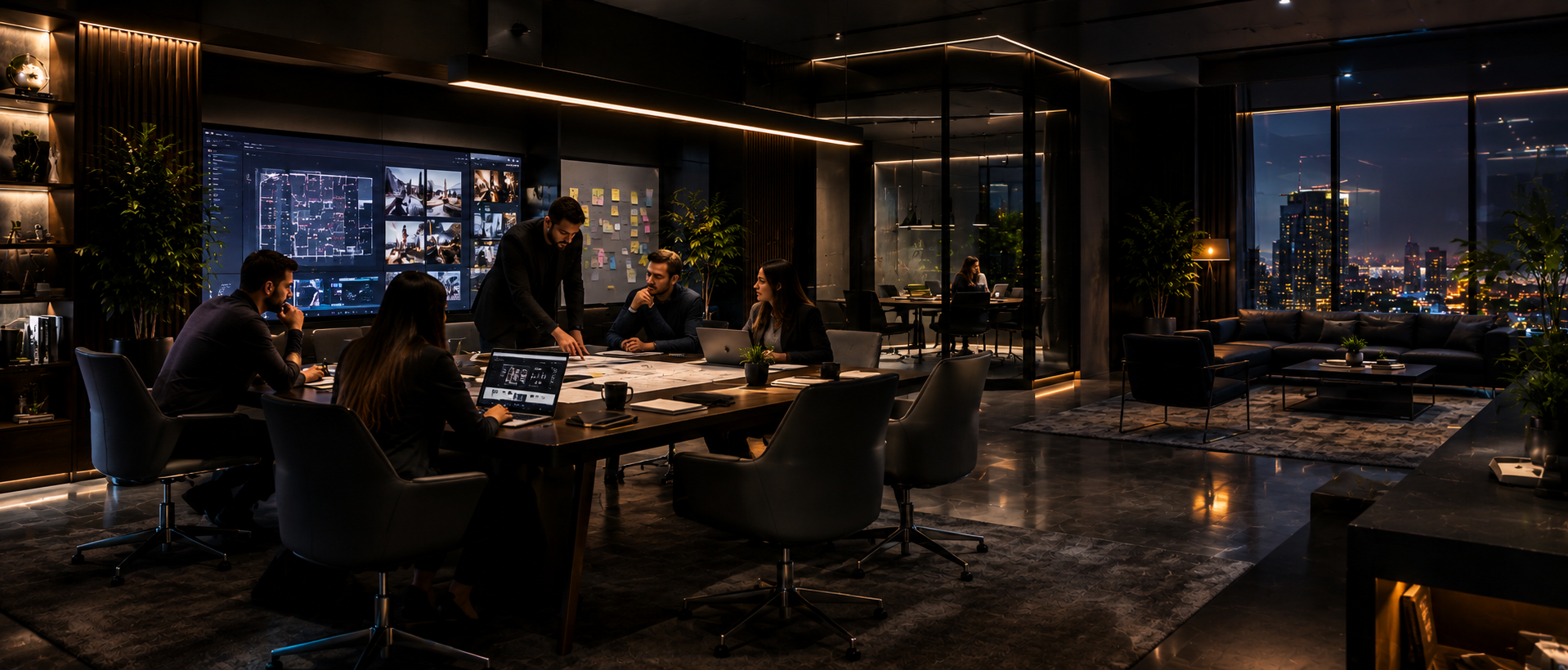
The modern corporate office needs to do more than provide a desk for every employee. Many businesses now use a mixture of individual work, meetings, collaboration, technology-based communication, and flexible schedules.
This means corporate office design needs to support several working patterns within the same building. A successful workplace should provide choice without becoming confusing or unnecessarily complicated.
Start With Employee Activities
A corporate office should be designed around activities rather than job titles alone.
Employees may need:
- Quiet concentration
- Video meetings
- Team discussions
- Client presentations
- Informal conversations
- Individual project work
- Training
- Social interaction
A useful design provides appropriate places for these activities.
The Shift Toward Flexible Workspaces
A fixed desk for every employee may not always be the most efficient use of space. Some organizations have employees who spend part of their week away from the office. Flexible work areas can provide additional options.
KV Workspace identifies hot desking and multiple work environments as approaches that can support flexible and hybrid work patterns. The objective is not simply to remove desks. It is to create enough useful settings for the work employees actually perform.
Where design corporate office Becomes Strategic
A modern design corporate office strategy should connect workplace layout, furniture, employee needs, technology, and company culture.
KV Workspace’s corporate design guidance emphasizes flexible work locations, natural elements, and environments designed to support productivity and employee wellbeing.
That means design decisions should be evaluated by their practical impact, not just by how they appear in photographs.
Create Different Types of Work Areas
One desk type cannot support every activity equally well.
Consider combining:
- Traditional workstations
- Height-adjustable desks
- Small meeting rooms
- Informal lounges
- Collaboration tables
- Phone rooms
- Shared touchdown areas
This gives employees more choice while allowing the company to use its floor area efficiently.
Bring Natural Elements Into the Workplace
Natural materials, earthy colors, plants, daylight, and views can contribute to a calmer visual environment. KV Workspace highlights earthy tones and natural elements as one of its corporate office design trends.
The key is not to turn the office into a decorative garden. Natural elements should complement the architecture and work environment.
Design Better Collaboration Areas
Collaboration areas need enough room for people to move and communicate comfortably. A small team may only need a compact table and screen. Larger groups may need flexible furniture that can be rearranged.
Mobile tables and chairs can allow the same room to support training, brainstorming, project work, and presentations.
Give Employees Places to Concentrate
Open-plan offices can be useful for communication, but they should not be the only option. Quiet rooms, enclosed offices, acoustic screens, and designated focus zones can provide alternatives when concentration is necessary. This balance is particularly important for employees who regularly handle confidential information or complex tasks.
Think About Acoustic Design
Noise can affect how employees experience an office. Conversations, phone calls, equipment, and movement can create a constant background level that makes concentration difficult.
KV Workspace notes that sound masking and acoustics can be important in open offices, particularly where privacy and focus matter.Furniture and architectural elements can therefore play a role in controlling sound.
Support Workplace Wellness
Employee wellbeing should be integrated into office design rather than treated as a separate initiative. Ergonomic furniture, comfortable seating, opportunities to change working positions, natural light, and accessible collaboration areas can all contribute to a better working environment. Height adjustable desks and monitor arms are examples of relatively practical ergonomic solutions highlighted by KV Workspace.
Make Technology Part of the Design
Hybrid work depends on reliable technology. Meeting rooms may require cameras, microphones, displays, speakers, and power. Individual workstations may require multiple screens and charging points. Technology should be integrated into the environment without creating excessive cable clutter.
Build a Consistent Brand Experience
The workplace can reinforce corporate identity through color, materials, graphics, furniture forms, and signage. However, branding should remain practical.
A company does not need every wall covered with logos. A carefully selected color palette and consistent material strategy can communicate identity more subtly.
Plan for Future Adaptability
Workplace needs can change quickly. A department may expand, a company may introduce more hybrid working, or a meeting room may become more valuable than a row of desks.
Flexible furniture and modular partitions make these changes easier. KV Workspace’s planning guidance also emphasizes future-proofing through movable walls, flexible workstations, and adaptable furniture.
Avoid Designing for Appearance Alone
A visually impressive office can still be frustrating to work in. Before approving a design, ask practical questions. Can employees find a quiet place when needed Are meeting rooms accessible Is storage sufficient Can technology be maintained Are circulation routes clear These questions reveal whether the design works beyond the photographs.
Conclusion
Corporate office design is becoming more focused on flexibility, wellbeing, technology, and choice. Employees need spaces that support different types of work rather than forcing every activity into the same workstation.
A thoughtful office combines focused areas with collaboration spaces, integrates technology, uses furniture strategically, and leaves room for future changes.
The strongest corporate workplace is therefore not defined by a particular trend. It is defined by how effectively the environment supports the people and work inside it.
