
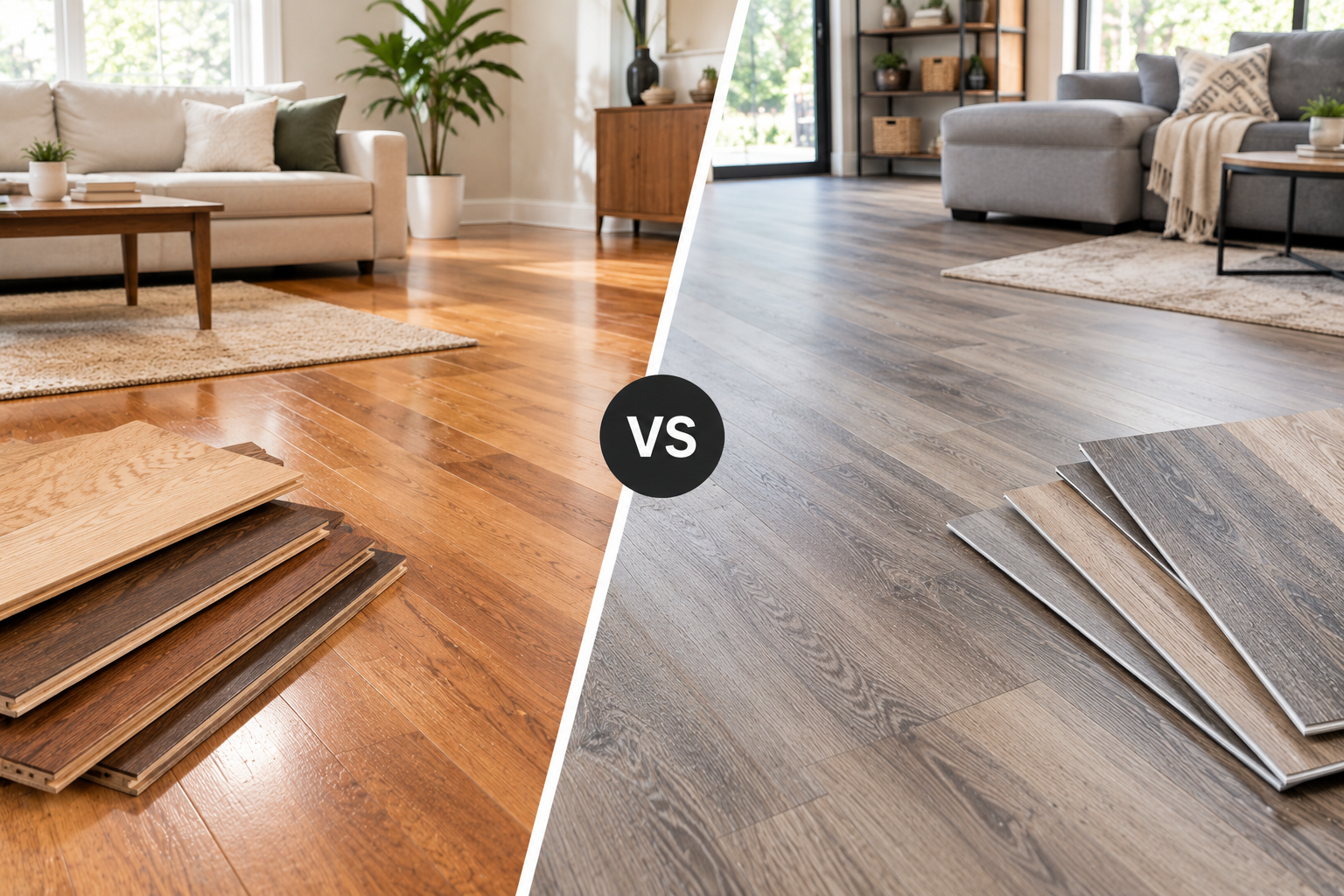
Walk into any flooring showroom today and you will notice something interesting. Luxury vinyl plank is everywhere. It takes up more floor space than hardwood in many stores, it comes in more colors and styles than ever before, and the sales staff will often lead you straight to it before you even ask about real wood. So is the industry trying to tell us something? Is luxury vinyl actually better than hardwood now?
The honest answer is that it depends entirely on what you mean by better. Better for a basement bathroom? Possibly yes. Better for a historic Craftsman bungalow where the floors are part of the character of the home? Almost certainly not. Better for your budget right now? Maybe. Better for your home’s resale value in ten years? Probably not.
This is a comparison that deserves a straight, no-fluff breakdown rather than a sales pitch in either direction. Both materials have genuine strengths. Both have real limitations. And the right answer for your home depends on factors that are specific to your space, your lifestyle, your budget, and your goals. Let us work through each one clearly.
Understanding What You Are Actually Comparing
Before comparing these two flooring types fairly, it helps to understand exactly what each one is made of and how that construction drives everything else about how they perform.
1. What Luxury Vinyl Plank Actually Is
Luxury vinyl plank, commonly called LVP, is a multi-layer synthetic flooring product. The core layers are made from PVC plastic and limestone composite, topped with a photographic film layer that replicates the look of wood grain, then sealed with a transparent wear layer that protects the surface from scratches and stains. Better quality LVP has a thicker wear layer, measured in mils, which directly determines how long the surface holds up under foot traffic before showing wear.
The key characteristics that define LVP performance are that it is 100 percent waterproof through the full thickness of the plank, dimensionally stable meaning it does not expand and contract significantly with humidity changes, and softer underfoot than hardwood because of the cushioned core layers. It is also lighter than hardwood, which makes installation more straightforward and makes it suitable for applications over concrete subfloors and below grade where real wood would be problematic.
2. What Hardwood Brings to the Table
Solid hardwood is exactly what the name describes. A single piece of natural wood milled to a consistent thickness, typically three-quarter inch for solid and thinner for engineered hardwood with a real wood veneer over a plywood core. The wood species, cut pattern, grain character, and finish all contribute to the final look and the long-term performance of the floor.
What makes hardwood genuinely different from any synthetic alternative is its depth. The surface you walk on is the same material all the way through the plank. That means when the surface wears or gets damaged, it can be sanded back and refinished to look new again, sometimes multiple times across the life of the floor. It also means the floor develops a patina and character over time that no photographic film layer can replicate because it is not a print of wood. It is wood.
Why This Comparison Matters More Than Ever Right Now
The reason this question comes up so frequently is that LVP technology has genuinely improved to the point where casual observation during a home showing often cannot tell the difference between a quality LVP floor and real hardwood. That visual parity is new. Five years ago the difference was more apparent. Today it requires getting close and knowing what to look for. That shift in quality has made the comparison more meaningful and the decision harder to default on without thinking it through carefully.
Durability and Real-World Performance: Which One Holds Up Better?
Durability is where most people expect LVP to win decisively, and in certain categories it does. But the complete picture of durability over a floor’s full lifespan tells a more complicated story.
1. How Luxury Vinyl Handles Scratches, Water, and Heavy Use
LVP’s waterproof core is its most significant practical advantage in real-world residential use. Spills, pet accidents, mopping with a wet mop, kids tracking in wet boots, all of it sits on the surface rather than penetrating the material. For rooms where moisture exposure is a consistent concern, this is a genuine and meaningful benefit that real wood simply cannot match without careful management.
The wear layer on quality LVP handles light to moderate scratch resistance well. Dog nails, furniture movement, and everyday foot traffic in a family home are within the performance range of a quality product with a 12 mil or thicker wear layer. Where LVP shows its limits is with deep gouges or cuts that breach the wear layer and reach the photographic film beneath. Once that print layer is damaged, the only fix is replacing the affected planks because there is no material underneath to sand back to.
2. How Hardwood Performs Over Decades of Real Life
Hardwood scratches more easily than quality LVP in the short term. That is simply true and worth acknowledging honestly. But the difference between hardwood and LVP in terms of long-term durability is that hardwood can be restored when it shows wear and LVP cannot. Scratched, dull, or worn hardwood gets sanded and refinished and looks new again. Scratched or worn LVP gets replaced.
Over a twenty or thirty year window, a well-maintained hardwood floor that has been refinished once or twice looks as good as or better than a floor that was installed and never touched. LVP over that same time window shows its age progressively and eventually needs full replacement with no option to restore the original material. This is the durability argument that the LVP industry does not spend much time talking about.
The Role of Hardwood Floor Repairs in Long-Term Value
One of hardwood’s most underappreciated advantages is how repairable it is across every type of damage. Scratches, stains, gaps between boards, damaged sections, even significant water damage in many cases can be addressed through targeted hardwood floor repairs without replacing the entire floor. This repairability means the floor keeps accumulating value rather than depreciating toward replacement. LVP can have sections replaced when damaged, but the replacement process requires finding a matching product that may no longer be in production, and the seams around replaced sections are often visible in a way that a well-executed hardwood repair is not.
Cost Comparison: Upfront Price vs. Lifetime Value
The price comparison between LVP and hardwood is one of the most commonly cited reasons to choose vinyl, and the upfront numbers do favor LVP. But the full financial picture over the life of the floor is more nuanced.
1. What Luxury Vinyl Costs to Install and Maintain
Quality LVP materials run roughly two to five dollars per square foot at the consumer level, with installation adding another two to four dollars per square foot for professional work. Total installed cost for a typical room in a quality LVP product lands between four and nine dollars per square foot in most markets. Maintenance costs are minimal because the floor requires no refinishing, no special treatments, and no periodic professional attention to stay functional.
The cost that does eventually arrive with LVP is full replacement. Quality LVP has a realistic lifespan of fifteen to twenty-five years in a residential setting with normal care. When it reaches the end of that life, the entire floor comes out and new material goes in. There is no halfway measure.
2. What Hardwood Costs and Why the Math Changes Over Time
Solid hardwood materials run roughly four to ten dollars per square foot depending on species and grade, with installation adding three to six dollars for professional work. Total installed cost for hardwood lands between seven and sixteen dollars per square foot, meaningfully higher than LVP at the starting line. A refinishing cycle every eight to fifteen years adds a cost of three to six dollars per square foot when it comes due.
But here is where the math changes. A solid hardwood floor installed today, maintained properly, and refinished once or twice over the next thirty years can still be the original floor at the end of that period. No replacement, No demo cost. No new material cost. The cumulative cost of owning a hardwood floor over thirty years often ends up competitive with or lower than the cumulative cost of owning LVP over the same period when replacement is factored in honestly.
3. Repairing Gaps in Hardwood Floors vs. Replacing Vinyl Sections
When specific damage occurs in either floor type, the repair economics also differ meaningfully. Repairing gaps in hardwood floors from seasonal wood movement, isolated board damage, or finish wear is typically a targeted, cost-effective repair that preserves the existing investment. Repairing gaps in hardwood floors professionally costs a fraction of what full floor replacement runs and extends the life of the floor by years.
With LVP, section replacement when panels are damaged requires finding matching product from the same manufacturer and production run. Which is not always possible if the floor was installed more than a few years prior. Visible seams around replaced LVP sections and color or texture variation between new and aged panels are common outcomes that do not occur with well-executed hardwood repairs.
Comfort, Feel, and Everyday Living Experience
Numbers and timelines aside, how a floor actually feels to live on every day matters enormously to real homeowners, and the two materials deliver different experiences.
1. How Each Floor Feels Underfoot in Daily Life
LVP has a slight cushion to it from the core layers, which makes it feel softer underfoot than hardwood, particularly on bare feet over long periods of standing. This is genuinely appreciated in kitchens and utility spaces where people stand for extended periods. The cushion also absorbs minor impact noise from foot traffic, which can be noticeable in upper-floor applications.
Hardwood feels firmer and more solid underfoot in a way that many homeowners associate with quality and permanence. It does not give under foot pressure the way LVP does. Some people experience this as cold and hard, especially on bare feet in the morning. Others experience it as reassuring and substantial. It is genuinely a matter of personal preference rather than an objective quality difference.
2. Sound, Temperature, and Indoor Comfort Differences
LVP runs cooler than hardwood because the plastic core does not hold ambient temperature the way wood does. In warm climates this can be a benefit. In Portland’s cool and damp winters, a hardwood floor that has been warmed by the home’s heating system feels noticeably more comfortable underfoot than LVP in the same conditions.
Sound transmission is another practical difference. LVP without an attached underlayment can sound hollow underfoot, particularly in floating installations, which some homeowners find noticeable and distracting. Hardwood nailed to a subfloor produces a solid, quiet sound underfoot that most people associate with quality construction. Adding underlayment beneath LVP reduces but does not fully eliminate the hollow sound characteristic.
Home Value and Resale: What Buyers Actually Think
Both materials look similar in listing photos taken well. But real buyers who are seriously evaluating a home up close know the difference, and that difference shows up in their offers.
1. How Real Estate Agents View Luxury Vinyl vs. Hardwood
Most experienced real estate agents in markets like Portland will tell you plainly that hardwood floors generate more buyer interest and stronger offers than LVP in comparable homes across the mid-range and upper price segments. Buyers in the entry-level and first-time buyer segments are more accepting of LVP as a neutral or positive feature. Buyers in the mid-range and above typically view LVP as a budget choice even when the specific product installed was not inexpensive.
This perception gap affects what buyers offer and how they negotiate. A home with original hardwood in good condition, or recently refinished hardwood, consistently draws fewer price reduction requests than the same home with LVP in the main living areas. The floor is one of the most visible and emotionally impactful features in a home showing, and hardwood’s perception premium is real and measurable in transaction data.
2. Which Flooring Choice Returns More at Resale
Multiple studies and surveys from the National Association of Realtors and regional real estate organizations consistently show that hardwood floors return more of their cost at resale than any other flooring material. LVP returns less, not because buyers dislike it, but because they do not pay a premium for it the way they pay a premium for real wood.
For Portland homeowners specifically, where the housing stock includes a significant number of character homes where buyers are actively seeking original craftsmanship and natural materials, the resale advantage of hardwood is particularly pronounced. Hardwood floor repairs that restore a damaged floor to excellent condition before a sale routinely return more than their cost in the final sale price.
Which Rooms and Situations Favor Each Option?
Neither material is universally better. The right answer depends on where the floor is going and what it needs to do.
1. Where Luxury Vinyl Makes the Most Practical Sense
LVP genuinely excels in moisture-prone environments where hardwood’s vulnerability to water creates ongoing risk. Bathrooms, laundry rooms, mudrooms, basements, and kitchens with heavy appliance use are all spaces where LVP’s waterproof core solves a real problem that hardwood cannot match without significant compromise. Rental properties where maintenance simplicity and tenant durability matter more than long-term value accumulation are another strong case for LVP. Below-grade installations over concrete where moisture vapor transmission makes solid hardwood inappropriate are also excellent LVP territory.
2. Where Hardwood Is Worth Every Extra Dollar
Main living areas, dining rooms, bedrooms, hallways, and staircases in owner-occupied homes where long-term value and appearance quality matter are all places where hardwood earns its higher price. Historic homes, Craftsman bungalows, and character properties where the architectural details demand authentic natural materials are specifically cases where LVP simply cannot deliver the same result regardless of how good the photography on the box looks.
Homeowners who plan to stay in their homes for ten or more years get the most out of hardwood’s cumulative value proposition. And homeowners dealing with existing hardwood that has developed surface damage or gaps over time will almost always find that professional hardwood floor repairs restore the floor to a condition that serves them better and longer than replacing it with a synthetic alternative.
For any Portland homeowner weighing repairing gaps in hardwood floors, restoring worn hardwood, or deciding between hardwood and LVP for a new installation, All Seasons Floors brings the kind of honest, experience-based guidance that helps you make the right call for your specific home rather than the easiest answer to give.
Conclusion
Is luxury vinyl better than hardwood? In specific situations, yes. For moisture-prone rooms, budget-conscious renovations, rental properties, and below-grade installations, LVP is a practical and smart choice that performs exactly as promised. But as a long-term investment in a home you plan to own and live in for years, hardwood’s repairability, its ability to be refinished and restored rather than replaced, its impact on home value, and the way it actually feels to live on a real wood floor give it an advantage that quality photography and improved manufacturing have not yet closed. The best floor for your home is the one that fits the room, the budget, and the goals, and sometimes the right answer is different in different rooms of the same house.
FAQs
1. Does luxury vinyl add as much home value as hardwood?
No, hardwood consistently returns more at resale. Buyers in mid-range and above markets pay a measurable premium for real wood that LVP does not command.
2. Can luxury vinyl be refinished when it gets worn?
No. LVP cannot be sanded or refinished. When the wear layer is gone or the surface is damaged, the planks need to be replaced.
3. Is hardwood flooring too risky for homes with pets and kids?
Not necessarily. Harder species like hickory and white oak handle pet traffic well, and repairing gaps in hardwood floors or surface scratches is straightforward compared to replacing LVP sections.
4. How long does luxury vinyl plank actually last?
Quality LVP with a thick wear layer realistically lasts fifteen to twenty-five years in a residential setting before needing full replacement.
5. Which is easier to repair when damaged, LVP or hardwood?
Hardwood is easier to repair meaningfully. Surface damage, gaps, and finish wear are addressed through targeted hardwood floor repairs without replacing the whole floor, which LVP cannot offer.
