
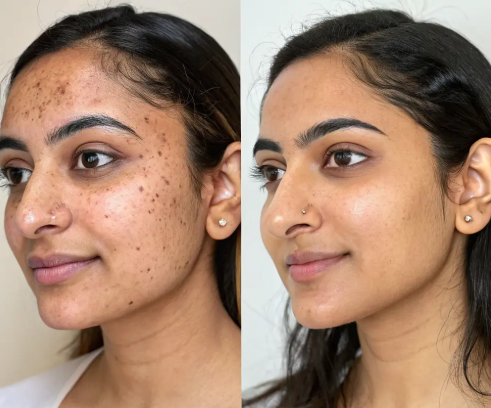
Uneven skin tone is a common reason people seek professional skincare advice. Dark spots, brown patches, and marks left after acne can make the complexion appear uneven, but the cause isn’t always the same.
Before choosing a cosmetic procedure, it is useful to understand what may be behind the pigmentation.
Why Does Skin Become Pigmented?
The skin naturally produces melanin, which helps protect it from ultraviolet radiation. When melanin production increases or becomes unevenly distributed, darker areas can appear.
Several factors can contribute to pigmentation.
Sun Exposure
Repeated exposure to ultraviolet radiation can stimulate melanin production and contribute to dark spots. Existing pigmentation can also become more noticeable with continued sun exposure.
Hormonal Factors
Melasma is one example of pigmentation associated with hormonal changes. It commonly appears as patches on the face and may become more noticeable with sun exposure.
Acne and Inflammation
After an acne lesion heals, the affected area can sometimes remain darker than the surrounding skin. This is known as post-inflammatory hyperpigmentation.
Natural Aging
As the skin ages, cumulative environmental exposure can become more visible. Sun spots and other forms of uneven pigmentation may gradually appear.
Does Every Dark Spot Need the Same Treatment?
No. The appearance of pigmentation alone does not determine which treatment should be used.
A professional assessment can help distinguish between different pigmentation concerns and evaluate factors such as skin tone, pigmentation depth, and possible triggers.
Depending on the situation, treatment may involve topical products, chemical peels, laser procedures, microneedling, or a combination approach.
What Are Some Professional Treatment Options?
Chemical Peels
Professional chemical peels can remove or exfoliate superficial layers of skin and may be considered for certain pigmentation concerns.
Laser Treatments
Specific laser technologies can target pigment within the skin. The appropriate laser and settings depend on the pigmentation and the individual’s skin characteristics.
Microneedling
Microneedling creates controlled micro-injuries in the skin and may be incorporated into treatment plans for certain pigmentation and texture concerns.
Combination Treatment
Some pigmentation problems may require more than one approach. A practitioner may combine professional procedures with topical skincare depending on the diagnosis and treatment goals.
What About Results?
Pigmentation usually does not disappear overnight. The timeline depends on the type of pigmentation, treatment method, skin response, and whether the underlying triggers continue.
Some people may need multiple sessions, while maintenance may also be necessary for conditions that are prone to recurrence.
Sun protection is particularly important because ultraviolet exposure can contribute to pigmentation returning or becoming darker.
Finding Pigmentation Treatment in Islamabad
If you’re researching pigmentation treatment in Islamabad, look for a clinic that provides a proper assessment rather than recommending the same procedure to everyone.
Royal Cosmetic Surgery offers aesthetic and skin treatments in Islamabad.
You can read more about pigmentation treatment in Islamabad, including different treatment approaches and factors that can influence results.
Final Thoughts
Uneven pigmentation can have several causes, so the first step should be understanding what type of pigmentation you have.
Professional assessment can help determine whether a topical treatment, peel, laser, microneedling procedure, or combination approach is appropriate.
If pigmentation is affecting your skin, discussing the concern with a qualified professional can help you understand the available options and set realistic expectations.
This information is intended for general education and should not be considered a substitute for medical advice.
