
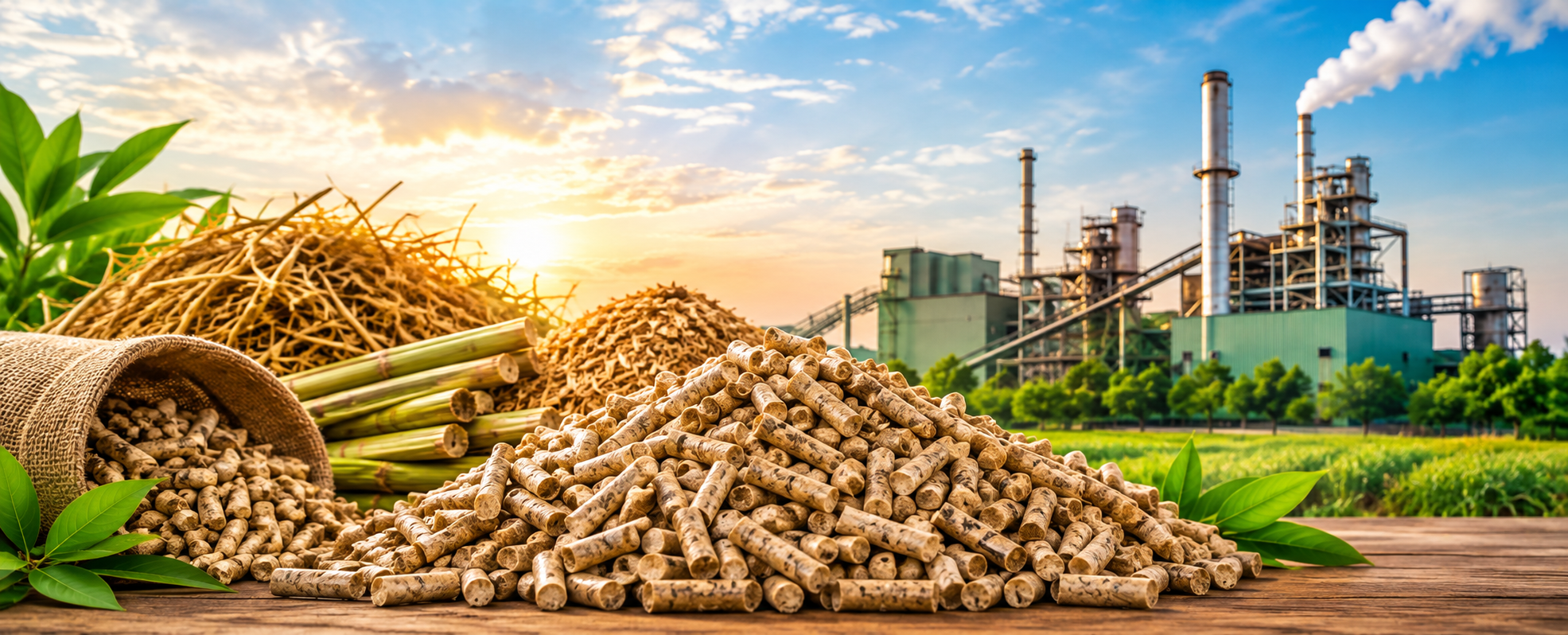
Agriculture produces enormous quantities of crop residues every year, and rice straw is one of the most widely available agricultural by-products in rice-growing regions. Traditionally, managing this residue has been a challenge for farmers and communities. A reliable Rice Straw Pellet Supplier can help convert suitable rice straw into useful renewable fuel for industrial applications. With advances in biomass processing, agricultural residues can now be transformed into practical fuel products.
Rice straw pellets are a processed form of biomass fuel made by compressing prepared rice straw into dense, uniform pellets. This transformation can make agricultural residue easier to handle, transport, store, and utilize in suitable industrial heating systems. For businesses exploring renewable energy options, understanding the value of rice straw as a fuel resource can help them make informed decisions about biomass energy.
When evaluating a supplier, businesses should consider important factors such as fuel quality, moisture content, calorific value, ash content, consistency, production capacity, delivery capabilities, and equipment compatibility. These considerations can help industrial buyers select a suitable biomass fuel solution for their operational requirements.
What Makes Rice Straw a Valuable Biomass Resource?
Rice straw is generated after harvesting rice. It contains organic material that can be processed and converted into different forms of biomass fuel when appropriate technologies are used.
Its availability makes it an interesting feedstock for renewable energy production, particularly in regions where rice cultivation is widespread. Instead of leaving suitable crop residues unused, they can potentially be collected and processed into a standardized fuel.
This approach creates a connection between agriculture and the energy sector. Farmers generate crop residues, biomass processors convert suitable residues into fuel, and industrial users can utilize the resulting products for compatible energy applications.
The value of rice straw therefore extends beyond its role as an agricultural residue. With appropriate processing and supply systems, it can become part of a renewable fuel chain.
From Rice Fields to Biomass Pellets
Converting rice straw into pelletized fuel involves several stages. The exact process depends on the technology used and the characteristics of the raw material.
Collection and Preparation
The first step involves collecting suitable rice straw from agricultural areas. The material needs to be properly prepared before it enters the pellet production process.
Foreign materials and unsuitable residues may need to be removed to maintain product quality.
Size Reduction
Rice straw may be processed into smaller particles to prepare it for compression. Uniform material preparation can support efficient pellet formation.
Moisture Management
Moisture is an important consideration in biomass fuel production. Excess moisture can influence pellet formation, storage stability, and combustion characteristics.
Therefore, moisture management is an important part of preparing agricultural residue for pellet production.
Compression
The prepared material is compressed using pelletizing equipment. This produces dense cylindrical fuel pieces that are easier to handle than loose straw.
Quality Inspection
Finished pellets can be evaluated for characteristics such as moisture content, calorific value, ash content, density, size, and physical consistency.
These specifications are particularly relevant for industrial users that require predictable fuel performance.
Why Pelletization Makes Rice Straw More Useful
Loose rice straw can be bulky and difficult to transport efficiently. Its low bulk density can also create storage challenges for businesses handling large quantities.
Pelletization changes the physical characteristics of the material. By compressing the residue into smaller, denser units, manufacturers create a fuel product that can be easier to store, transport, and feed into compatible combustion systems.
This does not mean that every pellet is automatically suitable for every application. Industrial users still need to evaluate product specifications and equipment compatibility.
However, pelletization provides an efficient way of converting a widely available agricultural residue into a more standardized form of solid biomass fuel.
Important Fuel Characteristics to Consider
Businesses considering agricultural-residue pellets should understand the specifications that can influence fuel performance.
Moisture Content
Lower and controlled moisture levels can be important for efficient combustion. Buyers should ask suppliers for product specifications and compare them with their equipment requirements.
Calorific Value
Calorific value indicates the energy available from the fuel during combustion. It is an important parameter when estimating fuel consumption for industrial applications.
Ash Content
Ash is the residue left after combustion. Its quantity can influence cleaning and maintenance requirements, depending on the combustion system.
Pellet Density
Density affects transportation, storage, and handling. Dense pellets can generally provide more fuel material within a given storage volume than loose agricultural residue.
Physical Consistency
Consistent size and structure can be useful for feeding and handling systems. Industrial buyers should assess whether the pellet dimensions match their equipment.
Industrial Applications of Rice Straw Pellets
Processed agricultural biomass can be used in several industrial applications where suitable combustion equipment is available.
Industrial Boilers
Boilers require fuel to generate steam or hot water for industrial processes. Rice straw-based pellets can be considered for compatible boiler systems.
Brick Kilns
Brick manufacturing requires substantial thermal energy. Some operators explore biomass-based fuels as part of their fuel procurement strategy.
Manufacturing Units
Manufacturing facilities may require heat for drying, processing, or other production activities. Biomass fuel can potentially be used in compatible heating systems.
Food Processing
Food-processing facilities can require thermal energy for cooking, drying, steaming, and other operations. Suitable biomass fuels may support these requirements.
Heating Systems
Industrial furnaces, dryers, and other thermal equipment may also be suitable for pelletized biomass, depending on their design.
Before making a fuel transition, businesses should confirm that their equipment is designed or appropriately adapted for the selected biomass product.
Environmental Value of Agricultural Residue Utilization
One of the major advantages of using rice straw as a biomass resource is the opportunity to make better use of agricultural residues.
When suitable crop waste is processed into fuel, it becomes part of a resource-recovery approach. Instead of viewing agricultural residue only as a disposal problem, it can be considered a potential source of renewable energy.
This can support a circular economy model in which agricultural by-products are redirected into productive applications.
The environmental benefits depend on responsible sourcing, collection, processing, transportation, and combustion practices. Biomass energy should therefore be considered as part of a broader sustainable energy strategy rather than as a standalone solution.
Choosing a Reliable Supplier
Selecting a dependable Rice Straw Pellet Supplier is important for industries that require regular fuel quantities. Buyers should evaluate the supplier’s ability to provide consistent product quality and maintain supply according to their operational requirements.
Important factors include:
- Raw material sourcing
- Production capacity
- Moisture specifications
- Calorific value
- Ash content
- Pellet size and density
- Quality-control procedures
- Packaging
- Storage recommendations
- Transportation
- Delivery schedules
- Bulk-order capability
A supplier should also be able to communicate clearly about product specifications and availability.
Ecostan Biofuel provides biomass fuel solutions, including biomass pellets and briquettes, for industrial applications. Businesses evaluating agricultural-residue fuel should compare suppliers based on their specific equipment, fuel consumption, quality requirements, and delivery expectations.
Why Consistent Supply Matters
Industrial facilities often depend on continuous fuel availability. A shortage can disrupt production schedules, while inconsistent fuel characteristics can make combustion management more difficult.
For this reason, businesses should evaluate not only the quality of a single shipment but also the supplier’s ability to provide regular quantities.
Production capacity, raw material availability, logistics, and delivery planning all contribute to supply reliability.
For bulk buyers, it is useful to discuss expected monthly consumption and delivery frequency in advance. This allows both parties to establish realistic supply expectations.
Bulk Procurement of Rice Straw Pellets
Businesses purchasing biomass fuel in bulk should plan their procurement carefully. Large orders require sufficient storage capacity, suitable transportation arrangements, and an understanding of expected fuel consumption.
A trial order can be useful before entering into a long-term supply agreement. During the trial period, buyers can assess pellet handling, storage, feeding, combustion, ash generation, and overall suitability.
Once the product meets the required specifications, businesses can discuss recurring orders with their selected supplier.
Bulk procurement can also benefit from a planned delivery schedule. Rather than waiting until fuel stocks are nearly exhausted, businesses can establish an inventory system that supports continuous operations.
The Role of Quality Control
Quality control is essential throughout biomass fuel production. Variations in raw materials can naturally occur, particularly when agricultural residues are collected from different sources.
A structured production process can help manage these variations. Monitoring raw materials, moisture levels, pellet formation, and finished products can contribute to greater consistency.
Industrial buyers should ask suppliers about their quality-control procedures and available product specifications. Where appropriate, testing and trial use can provide additional information about fuel suitability.
Rice Straw Pellets and India’s Renewable Energy Potential
India has significant agricultural activity, creating substantial quantities of crop residues. Converting suitable residues into useful fuel can contribute to the country’s broader efforts toward renewable energy and resource efficiency.
Rice-growing regions can particularly benefit from organized systems that connect farmers, biomass processors, transportation providers, and industrial fuel users.
As businesses continue exploring alternatives to conventional fuels, agricultural-residue pellets may become an increasingly relevant option for suitable industrial applications.
The development of this sector also demonstrates how agricultural waste and renewable energy can be connected. Instead of allowing valuable organic resources to remain underutilized, they can be processed into products that serve practical energy requirements.
How Businesses Can Make an Informed Decision
Choosing agricultural biomass fuel should begin with understanding the needs of the individual facility. There is no single fuel specification that works for every industrial operation.
Businesses should evaluate their boiler or heating system, daily and monthly fuel consumption, storage capacity, handling equipment, and combustion requirements.
It is also important to compare the complete cost of procurement. Product price, transportation, storage, handling, and fuel consumption can all influence the overall economics.
A careful evaluation helps businesses avoid making decisions based solely on the lowest quotation.
Conclusion
Rice straw has considerable potential as a biomass resource because it is widely generated as an agricultural residue and can be converted into a more convenient solid fuel through appropriate processing. Pelletization can make the material easier to handle, store, transport, and use in compatible industrial systems.
For businesses considering this option, choosing a dependable Rice Straw Pellet Supplier involves evaluating fuel quality, moisture, calorific value, ash content, consistency, production capacity, logistics, and long-term supply capability.
Ecostan Biofuel supports the use of biomass-based fuel solutions for industrial applications and provides businesses with an option to consider when evaluating renewable fuel suppliers. With proper planning and supplier evaluation, rice straw pellets can become a practical component of an industrial energy strategy while encouraging more productive utilization of agricultural residues.

