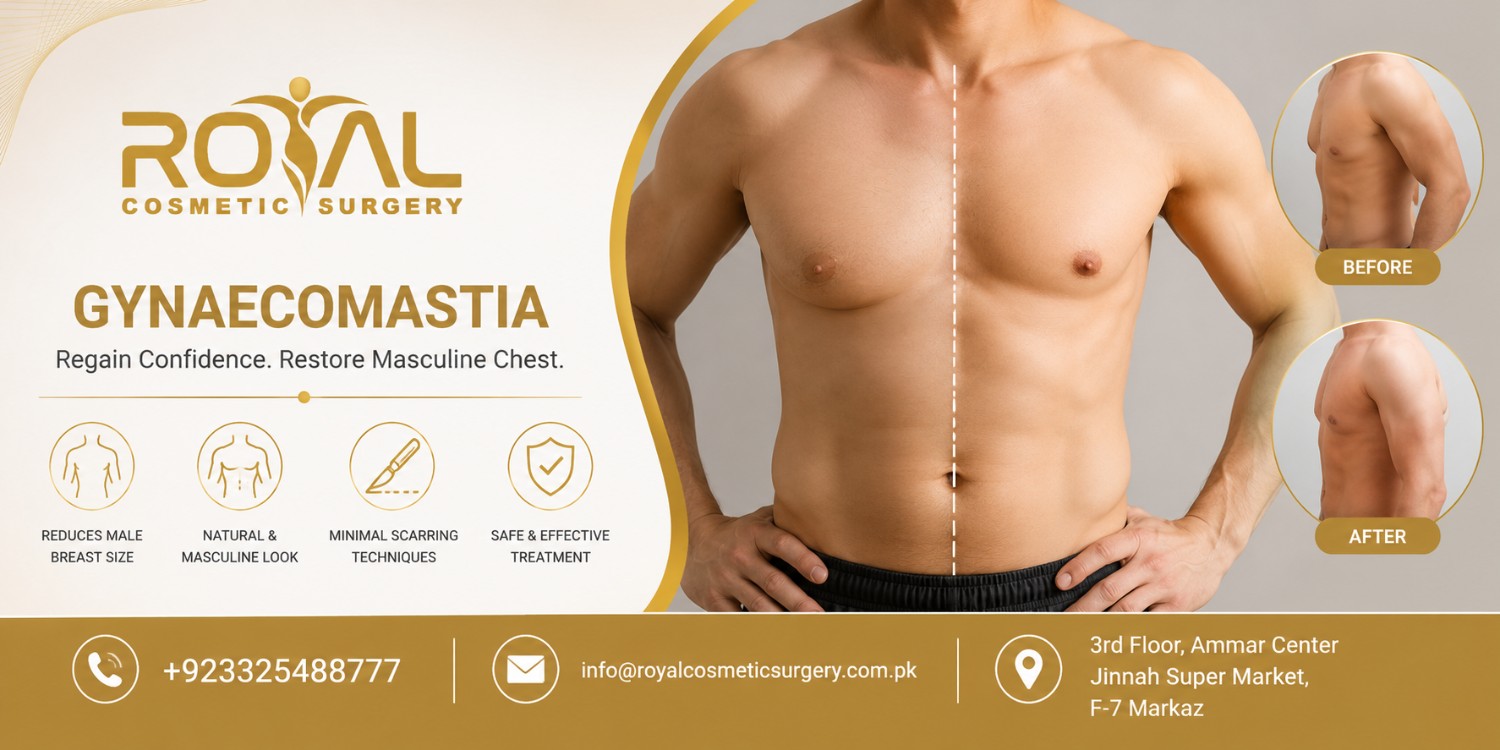
Gynecomastia in Islamabad is a common condition in which male breast tissue becomes enlarged. It can affect one or both sides of the chest and may develop during adolescence or adulthood. Although the condition is usually not dangerous, enlarged male breasts can affect confidence, clothing choices, and body image.
The condition can develop because of hormonal changes, weight gain, certain medicines, underlying health problems, or genetic factors. In some cases, the enlargement results mainly from excess fat rather than actual breast tissue. This condition is commonly known as pseudogynecomastia.
Treatment depends on the underlying cause and the amount and type of chest tissue present. Some people improve without surgery, while others may benefit from a combination of liposuction and glandular tissue removal.
What Is Gynecomastia?
Gynecomastia refers to the enlargement of male breast tissue. It usually occurs when the balance between estrogen and testosterone changes.
Estrogen is present naturally in males as well as females, while testosterone plays an important role in male development. When estrogen has a stronger effect on breast tissue relative to testosterone, glandular breast tissue can grow.
Gynecomastia should not be confused with simple fat accumulation. In pseudogynecomastia, the chest becomes larger primarily because of excess fat, often associated with weight gain or obesity.
A physical examination helps distinguish between glandular gynecomastia and excess fat.
What Causes Gynecomastia?
Several factors can contribute to enlarged male breasts. Common causes include:
- Hormonal changes during puberty or aging
- Weight gain and obesity
- Certain prescription medicines
- Anabolic steroid use
- Conditions affecting hormone production
- Liver or kidney disease
- Thyroid-related problems
- Genetic factors
- Changes in testosterone and estrogen levels
Puberty-related gynecomastia may improve naturally as hormone levels stabilize. Persistent or newly developing breast enlargement in adulthood may require further assessment to identify an underlying cause.
Gynecomastia Symptoms
The most noticeable gynecomastia symptoms involve changes in the chest. A person may experience:
- Enlarged male breasts
- A firm or rubbery area beneath the nipple
- A puffy nipple appearance
- Tenderness or sensitivity
- Swelling around the breast area
- Uneven enlargement between the two sides
A puffy nipple or firm tissue directly beneath the nipple can suggest glandular enlargement, although only a proper clinical assessment can determine the cause.
Pain, rapid enlargement, a hard lump, nipple discharge, or significant changes affecting only one side should be evaluated by a healthcare professional.
Gynecomastia vs Excess Chest Fat
Not every enlarged male chest represents glandular gynecomastia. Weight gain can increase fat deposits around the chest, creating a condition known as pseudogynecomastia.
The distinction matters because the treatments can differ.
Glandular gynecomastia involves actual breast tissue and may require glandular excision when it does not respond to other measures. When excess fat contributes significantly to the chest size, tumescent liposuction may help remove localized fat.
Some patients have both excess fat and glandular tissue. In these cases, combining liposuction with gland excision may provide more balanced chest contouring.
When Is Gynecomastia Treatment Needed?
Treatment depends on the cause, duration, severity, and symptoms.
When hormonal changes cause temporary enlargement, particularly during adolescence, observation may be appropriate. Addressing an underlying medical condition or reviewing a causative medication may also help in selected cases.
Weight management can improve the appearance of pseudogynecomastia when excess body fat contributes to chest enlargement. However, exercise and weight loss cannot always remove established glandular breast tissue.
For persistent cases that cause significant physical or emotional concerns, a consultation with a qualified plastic surgeon can help determine suitable gynecomastia treatments.
Gynecomastia Surgery
Gynecomastia surgery is a male breast reduction procedure designed to remove excess glandular tissue, fat, or both. The objective is to create a flatter, more proportionate and natural-looking chest.
The surgical approach depends on the individual’s chest structure.
Liposuction
Liposuction can remove excess fat from the chest through small incisions. A thin cannula removes localized fat deposits while allowing the surgeon to shape the surrounding area.
Liposuction works best when fat contributes significantly to the enlargement. It does not remove firm glandular tissue effectively.
Glandular Excision
When firm breast tissue remains beneath the nipple, gland excision may be required. The surgeon removes the unwanted glandular tissue through an appropriately positioned incision.
Some patients need both liposuction and glandular excision to achieve an improved masculine chest contour.
Skin Tightening
Significant enlargement may leave skin redundancy after tissue removal. In selected cases, additional skin tightening or skin excision may be considered.
The technique depends on the amount of excess skin, tissue quality, and desired chest contour.
Gynecomastia Procedure
Before a gynecomastia procedure, the surgeon assesses the chest and reviews the patient’s medical history. The assessment may include discussion of medications, anabolic steroid use, weight changes, hormonal issues, and previous treatments.
The surgical plan is then tailored to the individual’s anatomy.
Depending on the extent of surgery and clinical circumstances, the procedure may take place under local anesthesia with sedation or general anesthesia. The appropriate option is determined by the surgical plan and anesthesia assessment.
After surgery, patients commonly experience swelling and bruising. A compression garment may be recommended during the early recovery period to support the treated area and help manage swelling.
Gynecomastia Surgery Recovery
Gynecomastia surgery recovery varies according to the extent of treatment and individual healing.
During the first few days, swelling, bruising, tightness, and mild discomfort can occur. These effects generally improve gradually.
Patients should follow their surgeon’s postoperative instructions regarding:
- Wearing a compression garment
- Keeping incisions clean
- Taking prescribed medicines
- Limiting strenuous activity
- Returning gradually to exercise
- Attending follow-up appointments
Most patients can gradually return to routine activities as healing progresses, but strenuous exercise and heavy lifting may need to wait until the surgeon considers them appropriate.
Gynecomastia Surgery Risks
Like any surgical procedure, gynecomastia surgery carries potential risks. These can include:
- Infection
- Bleeding
- Hematoma
- Seroma
- Changes in nipple sensation
- Asymmetry
- Visible scarring
- Contour irregularities
- Persistent or recurrent tissue enlargement
The risk profile varies between patients and depends partly on the surgical technique and the extent of tissue removal.
A qualified surgeon should explain these risks during the consultation rather than promising completely risk-free treatment.
Gynecomastia Surgery Cost in Pakistan
The gynecomastia surgery cost in Pakistan depends on factors such as the amount of glandular tissue and fat, surgical complexity, anesthesia, facility charges, and postoperative care.
An indicative price provided for treatment is PKR 190,000, but the actual gynecomastia surgery cost in Islamabad may vary according to the patient’s individual treatment plan and the services included.
Patients should confirm what the quoted fee covers before scheduling surgery. A consultation is useful for understanding whether liposuction, glandular excision, skin tightening, or a combination of techniques is necessary.
Choosing a Gynecomastia Surgeon
Choosing a suitable plastic surgeon is an important part of treatment. Patients should evaluate the surgeon’s qualifications, relevant experience, surgical facility, approach to patient safety, and experience with male chest reduction.
Before-and-after photographs can help patients understand the surgeon’s approach, but photographs should not be the only basis for choosing a provider. A proper consultation should include an examination and realistic discussion of expected results.
Patients considering gynecomastia surgery in Islamabad may also ask about recovery, potential scarring, anesthesia, complications, follow-up care, and what happens if additional treatment becomes necessary.
Gynecomastia Treatment in Islamabad
For people exploring gynecomastia treatment in Islamabad, the first step should be identifying whether the enlargement comes from glandular tissue, excess fat, or both.
At Royal Cosmetic Surgery, patients can discuss their concerns and undergo an assessment to determine an appropriate treatment approach. The goal of treatment should remain a proportionate and natural-looking masculine chest contour, rather than simply removing as much tissue as possible.
Conclusion
Gynecomastia in Islamabad can result from hormonal changes, excess fat, medications, medical conditions, or other factors. Understanding the underlying cause helps determine the most appropriate treatment.
Some cases improve naturally or respond to management of an underlying condition. Persistent enlargement may require surgical correction, particularly when glandular tissue remains or excess chest fat does not respond to weight management.
Gynecomastia surgery may involve liposuction, glandular excision, skin tightening, or a combination of techniques. With appropriate assessment, realistic expectations, and proper postoperative care, treatment can improve chest proportions and create a flatter, more natural-looking appearance.