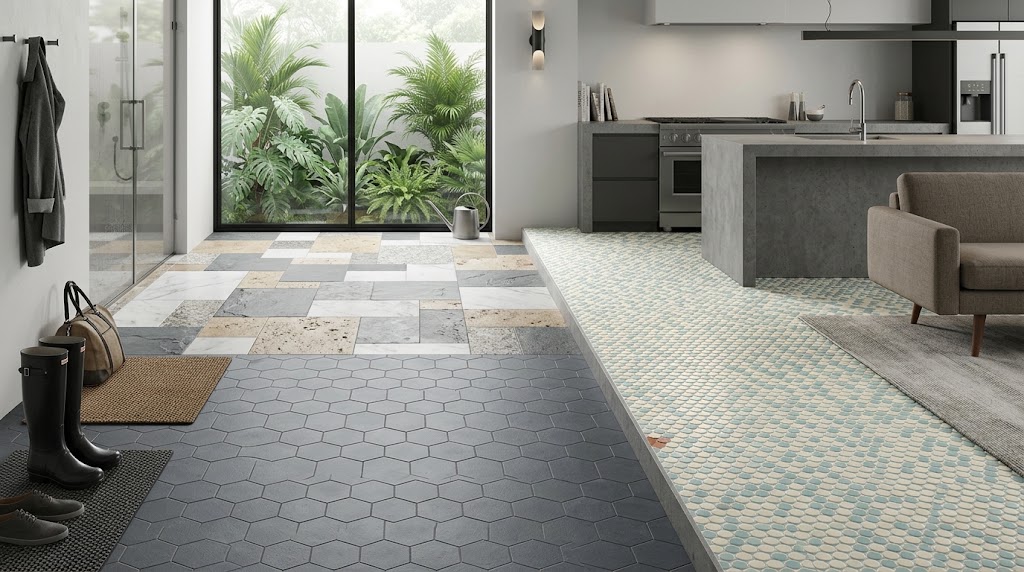
A floor endures what walls never face. Feet drag across it daily. Spills soak into it. Heavy objects strike it without warning. Choosing a material that survives these forces requires more than picking the prettiest sample under showroom lights.
Design trends come and go, but the physical demands on a floor never change. In a region where warmth and moisture coexist year-round, those demands intensify. Before visiting a tile shop in Singapore, equipping yourself with material knowledge transforms the shopping experience from guesswork into informed selection.
The longevity of mosaic floor tiles depends on composition, manufacturing, and the environment in which they are installed. Porcelain, ceramic, and stone each tell a different durability story.
Porcelain: The Material That Refuses to Quit
Porcelain starts as refined clay but undergoes a transformation that separates it decisively from ordinary ceramic. Kiln temperatures climb to 1,200 degrees Celsius and beyond, expelling moisture and compressing the molecular structure into something remarkably tight and hard. The finished product absorbs less water than almost any other tile category.
This dense composition makes porcelain exceptionally resistant to surface abrasion. Walking surfaces, kitchen zones, and corridors that handle constant foot traffic retain their appearance for years. Scratches from grit-laden shoes or dragged furniture rarely penetrate the surface meaningfully.
Water is essentially powerless against porcelain. Absorption rates consistently fall below 0.5 percent, meaning liquids remain on the surface rather than entering the tile body. Bathrooms, laundry areas, and any space exposed to frequent splashing benefit enormously from this characteristic.
Through-body coloration adds another layer of longevity. The pigment runs through the entire thickness rather than sitting exclusively on the surface. When minor impacts cause chips, the exposed interior matches the glazed face. The blemish becomes inconspicuous without any repair work.
The installation process demands respect. Porcelain resists conventional cutting tools with the same stubbornness it shows toward everything else. Wet saws fitted with diamond blades are the minimum requirement. Professional installation is advisable for anything beyond simple rectangular layouts, but the resulting floor will outlast nearly everything else in the home.
Ceramic: Practical Where Demands Are Modest
Ceramic operates under different constraints. Fired at significantly lower temperatures than porcelain, it retains a softer, more porous clay body. The surface glaze provides the primary defense against wear, stains, and everyday abrasion.
Under normal conditions, that glaze performs adequately. Regular foot traffic and routine cleaning do not compromise a well-applied coating. The vulnerability emerges at the point of impact. A dropped pot, a kicked doorstop, or a piece of furniture dragged carelessly can chip through the glaze entirely.
Once the glaze breaks, the softer clay beneath is exposed. That clay is typically terracotta or white — a stark contrast to the colored surface above. The chip reads as damage immediately, and there is no practical home remedy to disguise it.
This characteristic limits ceramic’s ideal application. Low-traffic zones — secondary bathrooms, guest quarters, seldom-used hallways — allow the material to perform without excessive risk. High-activity areas accelerate the appearance of damage and reduce the floor’s aesthetic lifespan.
Ceramic does offer genuine advantages in workability. It cuts with standard hand tools and drills without difficulty. Projects involving numerous penetrations around plumbing or irregular wall shapes become less labor-intensive. For budget-conscious renovations of large areas, ceramic’s lower material and installation costs add up to meaningful savings.
It is worth noting that when customers compare options at a tile shop in Singapore, ceramic often appears as the most approachable entry point. That accessibility is real, but it should be paired with honest expectations about long-term resilience.
Stone: Natural Splendor, Natural Responsibility
Stone exists in a category of its own. Formed over geological timescales, each tile carries mineral patterns that human manufacturing cannot authentically replicate. Marble, granite, travertine, and slate offer textures, veining, and tonal variations unique to each individual piece.
Not all stone shares the same durability profile. Granite, for instance, stands among the hardest materials available for any flooring application. It withstands scratching, chipping, and heavy loads with impressive tenacity. In practical terms, granite performs on par with porcelain for resilience.
Slate brings different strengths to the conversation. Its layered, naturally uneven surface creates built-in slip resistance. When wet — whether from tracked-in rain or bathroom humidity — it maintains traction underfoot. This characteristic makes it both safe and visually distinctive in high-moisture environments.
Marble requires more nuanced consideration. Despite its association with grandeur, it is a relatively soft stone susceptible to scratching from fine abrasives. More significantly, acidic substances cause chemical etching on its surface. Wine, citrus, vinegar, and common household cleaners all trigger reactions that leave dull, permanent marks.
Travertine contains natural voids — cavities formed during mineral deposition underground. Resin fills these holes before sale, but sustained heavy traffic can gradually dislodge those fills. The result is a surface that accumulates dirt in exposed pits and demands regular cleaning attention.
The defining characteristic of all natural stone is porosity. Without protective sealing, stone absorbs liquids rapidly and thoroughly. An unattended spill on an unprotected surface can produce a permanent discaparición. Prospective buyers evaluating stone mosaic floor tiles should weigh this reality alongside the material’s undeniable beauty.
Upkeep with stone is perpetual and mandatory. Sealing before installation is the first step. Annual reapplication follows, with increased frequency in humid environments. Spills demand immediate attention. Stone delivers extraordinary visual rewards but only to those who commit to the maintenance it requires.
Tropical Conditions and Flooring Choices
Environmental factors deserve more weight in flooring decisions than they typically receive. Heat, humidity, and persistent moisture reshape how materials age. What performs beautifully in a dry interior may struggle in a wet, tropical setting.
Porcelain is essentially impervious to climate-related degradation. Its negligible absorption rate means humidity never enters the tile body. Mold and mildew cannot colonize it. Harsh cleaning solutions cause no surface damage. It maintains consistent performance regardless of external weather patterns.
Ceramic manages humidity well at the tile level. The glazed face sheds water effectively. Grout lines between tiles remain the Achilles’ heel. Cement-based grout absorbs ambient moisture and supports biological growth in warm conditions. Regular sealing mitigates but does not eliminate this vulnerability.
Stone faces the steepest climate-related hurdles. Constant moisture exposure accelerates sealer degradation, requiring more frequent maintenance cycles. Slip resistance becomes a safety priority — polished marble transforms into a hazard when wet. Textured stone varieties or unglazed porcelain provide substantially more reliable footing in wet areas.
Honest self-assessment serves you well here. In consistently warm and humid cities, materials requiring less ongoing intervention typically prove to be the smarter long-term investment. Consider how your weekends will look — spent maintaining floors or spent enjoying them.
The Role of Grout in Mosaic Installations
Every mosaic installation carries a structural reality that cannot be ignored. The small dimensions of each piece generate extensive networks of grout lines. These joints collectively represent a significant portion of the floor’s total surface area.
Cement grout is inherently porous. It absorbs moisture, traps dirt, and supports bacterial colonization. In wet rooms, visible discoloration can appear within months. Beyond aesthetics, this absorption compromises the joints structurally over time.
Post-installation sealing is critical regardless of your tile selection. Epoxy grout offers a compelling upgrade — it creates a waterproof, stain-resistant seal that cement formulations cannot achieve. The application requires more skill and patience, but the resulting durability justifies the effort.
Grout failure carries consequences that extend far beyond appearance. Water passes through degraded joints and reaches the adhesive layer beneath. The subfloor absorbs this moisture, swelling and weakening progressively. Tiles loosen, lift, and eventually break free. The entire installation may need replacement. Protecting grout means protecting the structural foundation of your floor.
Making a Decision That Lasts
Porcelain delivers the most comprehensive durability package. It withstands heavy use, repels moisture entirely, and conceals minor damage through consistent body coloring. For households with active daily life, it offers the most forgiving long-term experience.
Ceramic serves well in controlled environments. Budget constraints and low-traffic applications justify its selection. Maintaining spare tiles from the original batch ensures repair readiness. Entering the arrangement with clear expectations prevents disappointment.
Stone provides a beauty that no manufactured material matches. Selecting the appropriate variety for each specific application is essential. Granite for demanding areas, slate for wet spaces, marble reserved for refined settings where foot traffic is gentle and spills are rare.
When you evaluate mosaic floor tiles for your next project, carry this knowledge with you. Assess durability alongside aesthetics. Factor in your climate, your traffic patterns, and your willingness to perform maintenance. The strongest floor choices are those made with both present needs and future realities in mind.