
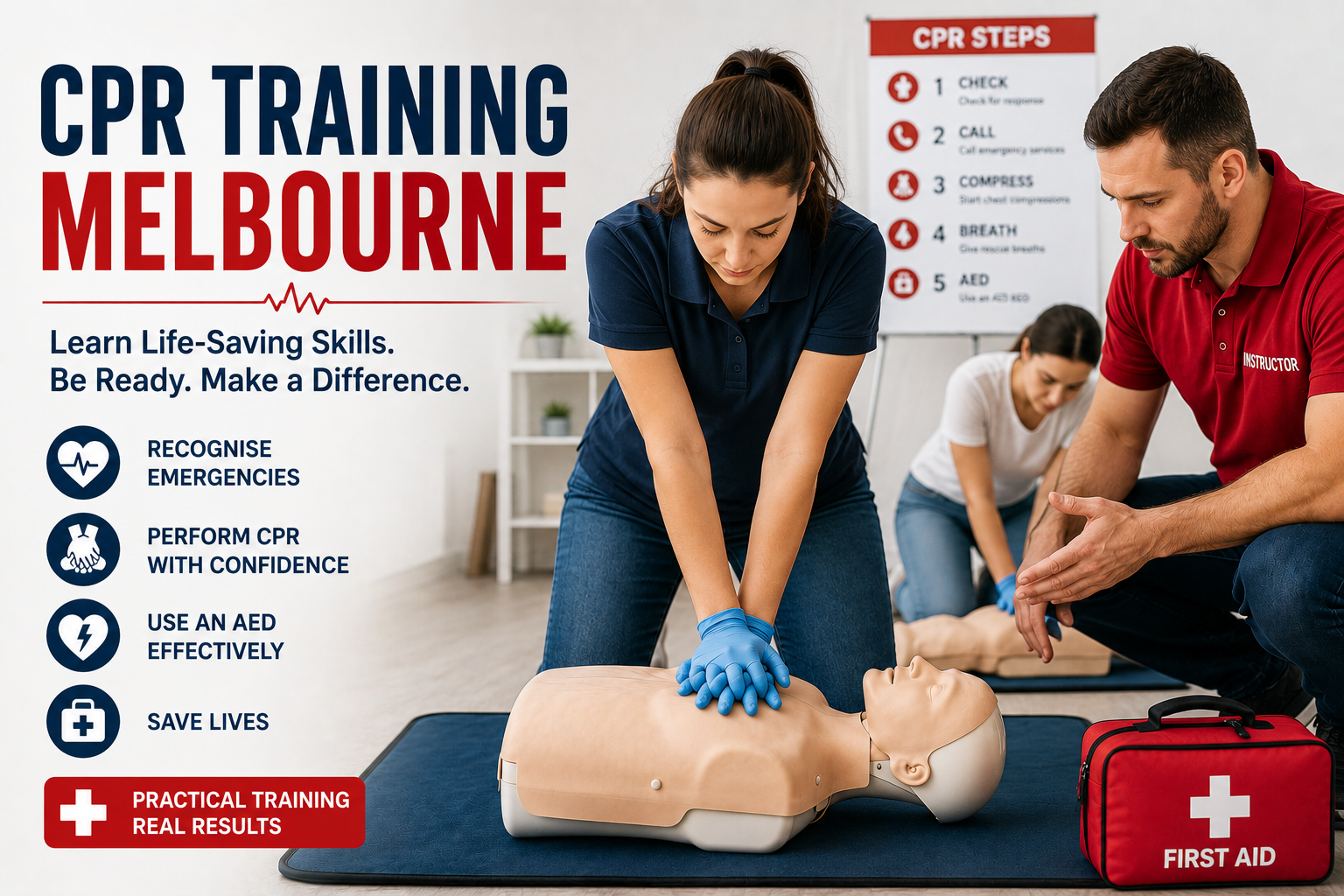
A medical emergency can happen at any time, and knowing how to respond quickly can make a significant difference. When a person becomes unresponsive and is not breathing normally, immediate action may be required while emergency services are on their way. CPR is one of the most important emergency response skills people can learn.
CPR Training Melbourne gives participants the opportunity to learn and practise essential CPR skills in a structured training environment. Whether training is needed for work, professional responsibilities, or personal knowledge, practical CPR education can help people feel more prepared to respond during an emergency.
What Is CPR Training?
Cardiopulmonary resuscitation, commonly known as CPR, is an emergency procedure used when a person is unresponsive and not breathing normally. CPR involves chest compressions and, when appropriate and within the person’s training, rescue breaths.
Why CPR Skills Matter
When the heart stops pumping effectively, vital organs can quickly be affected by a lack of oxygen. Starting CPR promptly can help maintain circulation until professional medical assistance arrives.
Because emergencies can be stressful, practical training is valuable. It gives participants an opportunity to learn the correct techniques and practise them rather than relying solely on written instructions.
What You Learn During CPR Training Melbourne
A CPR Training Melbourne course generally focuses on recognising a cardiac emergency and taking appropriate action.
Practical CPR Techniques
Participants may learn how to:
- Assess a person’s responsiveness
- Check breathing appropriately
- Contact emergency services
- Begin CPR when required
- Perform effective chest compressions
- Provide rescue breaths when appropriate
- Use an automated external defibrillator (AED)
- Continue monitoring and responding until further help arrives
Hands-on practice using training manikins allows participants to become more familiar with CPR techniques.
Who Can Benefit From CPR Training?
CPR knowledge can be valuable for people in many different roles. Employees, teachers, childcare educators, parents, fitness professionals, hospitality staff, community workers, and other members of the public can benefit from learning emergency response skills.
CPR Training for the Workplace
Workplaces may have different first aid needs depending on their size, environment, industry, and potential hazards. Having appropriately trained employees can support a workplace’s emergency response arrangements.
Businesses should identify their specific first aid requirements and ensure employees receive training that is suitable for their responsibilities.
CPR Training for Education and Childcare
People working with children may encounter situations where emergency response skills are needed. Teachers and childcare educators can benefit from training that helps them understand how to respond appropriately to emergencies involving children and infants, according to the requirements of their relevant course.
Hands-On Learning Builds Confidence
CPR is a practical skill, so simply reading about it may not provide the same level of confidence as practising the techniques. During training, participants can work through realistic scenarios and receive guidance from trainers.
This practical experience can help make the response process easier to remember.
Why Choose CPR Training in Melbourne?
When selecting CPR Training Melbourne, look for a course that provides practical learning, experienced trainers, suitable equipment, and training relevant to your needs.
A supportive training environment allows participants to ask questions, practise techniques, and improve their understanding of emergency procedures.
Be Prepared to Respond
You cannot predict when a cardiac emergency will occur, but you can prepare yourself to respond. CPR Training Melbourne provides practical knowledge and hands-on experience that can help individuals develop important emergency response skills.
Whether you are completing CPR training for workplace requirements or simply want to learn a valuable life skill, practical training can help you understand what to do when every moment matters. Keeping your skills current also helps ensure you remain familiar with the correct response when an emergency occurs.
