Choosing the right collaboration platform requires more than comparing monthly subscription prices. Businesses also need to consider features, user requirements, document management, security, support, scalability, and the overall value a platform provides. A solution that appears inexpensive at first may become costly as a company adds more users or requires advanced functionality.
For businesses researching glasscubes pricing, understanding the relationship between plans, features, users, and business requirements is essential. The platform is designed to support document management, collaboration, project work, client communication, information requests, tasks, and workflows from a centralized environment.
This guide explains the factors that can influence the overall cost, what businesses should look for in a plan, how to evaluate value, and what questions to ask before making a purchasing decision.
What Are Glasscubes?
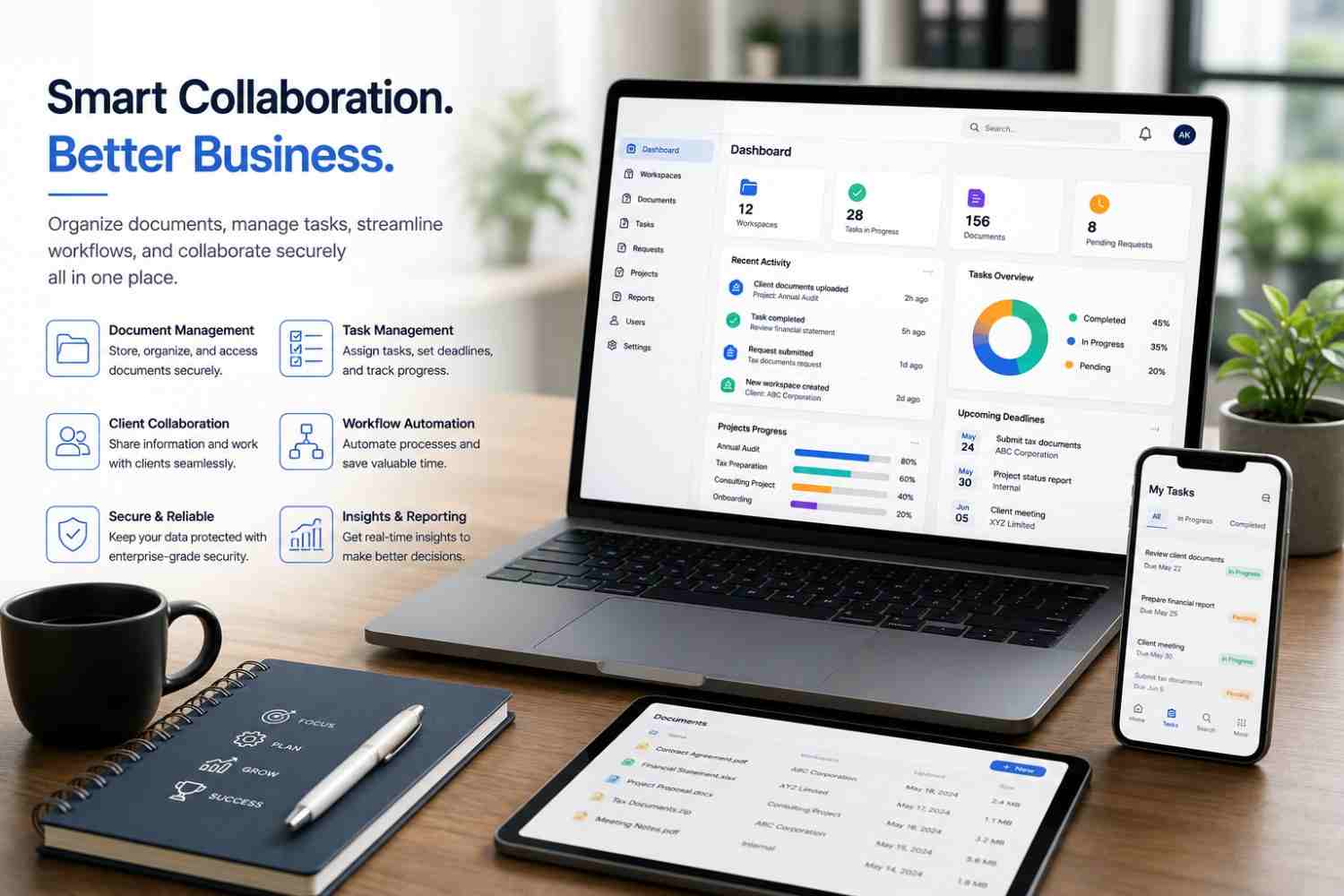
Glasscubes is a cloud-based business collaboration and information-management platform built around shared workspaces. These workspaces can be used to organize documents, tasks, projects, communication, forms, workflows, and information requests.
The platform can be particularly useful for professional service organizations that regularly need to collect documents and information from clients. Instead of relying entirely on email conversations and separate file-sharing tools, teams can manage requests and related information in a centralized workspace.
When researching the glasscubes system, businesses should therefore look beyond basic cloud storage. The platform combines several collaboration capabilities that can support recurring business processes.
How Does Glasscubes Pricing Work?
The exact cost of a subscription depends on the package and business requirements. According to the provider’s terms, subscriptions can involve an account fee and user fees, with monthly or annual billing arrangements depending on the agreement.
Several factors can influence the final price, including:
- Number of users
- Selected subscription package
- Required features
- Client collaboration requirements
- Security requirements
- Support needs
- Enterprise functionality
- Billing period
Because business requirements vary, organizations should avoid judging the platform solely by a starting price.
A small company with a limited number of users may have very different costs from a large professional services organization with multiple teams and external collaborators.
What Features Can Businesses Get?
A major part of evaluating glasscubes PM pricing or any similarly named pricing search is understanding exactly what the software delivers. In this case, the platform is focused on business collaboration and information management rather than electronic medical records.
Its functionality can include document management, task management, workflows, forms, communication, reporting, information requests, and permissions.
Document Management
Businesses can use workspaces to organize important documents and make them available to authorized users.
This can reduce dependence on email attachments and make it easier for teams to work with current files.
Information Requests
Information requests can be especially valuable for professional service firms.
For example, an accounting company may need financial documents from a client before completing an assignment. Instead of repeatedly sending emails, the company can organize requests and monitor outstanding information.
Task Management
Tasks can be assigned to team members and tracked according to deadlines and responsibilities.
Advanced task functionality can support recurring tasks, task groups, labels, reporting, and time tracking.
Workflow Management
Forms and workflow functionality can help organizations standardize recurring processes.
This can be useful when employees repeatedly perform similar activities and need a consistent process.
Client Collaboration
Businesses can use centralized workspaces to collaborate with external stakeholders.
This is particularly relevant for organizations that need to exchange documents, collect information, and maintain communication with clients.
What Determines the Total Glasscubes Cost?
When calculating the glasscubes cost, businesses should consider more than the subscription itself.
Number of Users
User count is one of the most important considerations.
A business should identify how many people require access and what level of access each person needs. Employees, administrators, managers, and external collaborators may have different requirements.
Before purchasing, create an estimated user list and discuss it with the provider.
Features Required
Not every organization needs every feature.
A company that only wants document sharing may not need advanced workflows, information requests, reporting, or other capabilities.
On the other hand, professional service firms may benefit from combining these features in one platform.
Security Requirements
Security can also affect the appropriate package.
Businesses managing sensitive information may require additional controls such as two-factor authentication, IP restrictions, single sign-on, or other enterprise-level capabilities.
Enterprise Requirements
Larger organizations may require additional functionality such as custom branding, custom URLs, dedicated support, API access, migration assistance, or enhanced security.
These requirements should be included when calculating the total software investment.
Glasscubes Plans and Business Value
Businesses should evaluate each available plan according to the problems it solves.
Instead of asking only, “How much does the software cost?” companies should ask:
What business processes can this subscription improve?
For example, imagine an organization that spends several hours every week:
- Following up with clients
- Searching for documents
- Managing file versions
- Updating task lists
- Sending repeated information requests
- Checking project progress
If a centralized platform reduces some of these activities, the productivity savings can contribute to its overall value.
This is particularly important when comparing collaboration software with inexpensive file-storage products.
Is Glasscubes Worth the Price?
Whether it is worth the investment depends on the organization’s requirements.
If a business only needs basic cloud storage, there are simpler alternatives available. However, companies that require document management, client collaboration, task tracking, workflows, and structured information requests may receive more value from a comprehensive platform.
The key is to compare the cost with measurable business benefits.
For example, if employees save several hours every month because documents are easier to locate and client requests are more organized, those savings can contribute to the software’s return on investment.
Glasscubes PM Pricing: Understanding the Keyword Confusion
Some searches use phrases such as glasscubes PM pricing, glasscubes PM software, or glasscubes PM reviews. However, businesses should be careful with this terminology.
Glasscubes is primarily a business collaboration and information-management platform, not an electronic medical record system. “PM” generally refers to electronic medical records, which are designed specifically for healthcare organizations.
Therefore, businesses researching Glasscubes should focus on relevant terms such as collaboration software, document management, client portal, information requests, workflow management, and business collaboration.
Using the correct terminology helps buyers find more accurate product information and compare the platform against appropriate alternatives.
Glasscubes Features That Can Affect Value
When evaluating plans, businesses should focus on features that directly support their workflow.
Important areas include:
File and Document Management
Centralized document storage can help teams find and share business information more efficiently.
User Permissions
Permission controls allow organizations to determine who can access specific information.
Tasks and Projects
Task management can help employees understand responsibilities and deadlines.
Information Collection
Structured requests can reduce repetitive client follow-ups.
Reporting
Reporting tools can help managers understand progress and outstanding work.
Integrations
Businesses should also review available integrations and API capabilities if connecting the platform to existing systems is important.
Glasscubes Pricing vs Alternatives
Comparing the platform with alternatives can help organizations determine whether the investment makes sense.
Microsoft SharePoint
SharePoint can be a strong choice for organizations already using Microsoft 365. It provides extensive document management and collaboration capabilities.
However, its configuration and administration can become complex for businesses without dedicated technical resources.
Dropbox
Dropbox is well suited to businesses primarily interested in cloud storage and file sharing.
It may be simpler for basic requirements but may require additional applications when businesses need more advanced workflows or client information collection.
Google Workspace
Google Workspace provides email, cloud storage, online documents, meetings, and productivity tools. It can be attractive to organizations looking for an integrated productivity ecosystem.
Box
Box focuses on secure content management, document collaboration, governance, and enterprise workflows.
Businesses with strict content-management requirements may want to compare its capabilities against those of Glasscubes.
How to Calculate Software ROI
A simple return-on-investment assessment can make the purchasing decision easier.
Start by estimating how much time employees currently spend on administrative tasks.
For example:
Current administrative time: 20 hours per month
Estimated time after implementation: 12 hours per month
Potential saving: 8 hours per month
If the organization’s average employee cost is known, management can estimate the financial value of those saved hours.
Businesses should also consider indirect benefits, such as:
- Fewer duplicate documents
- Faster client responses
- Better visibility
- Improved organization
- Reduced email dependency
- More consistent workflows
These benefits may be difficult to measure precisely but can still contribute to overall software value.
Questions to Ask Before Purchasing
Before selecting a subscription, businesses should ask the provider:
- What is the current subscription price?
- How are users charged?
- What features are included in each plan?
- Are external clients included?
- Are there storage limitations?
- What support is available?
- Are implementation services included?
- Are integrations included?
- What security controls are available?
- Are enterprise options available?
- Is annual billing available?
- Are there additional fees for advanced functionality?
Getting clear answers to these questions makes pricing comparisons much more accurate.
Glasscubes Demo and Evaluation
A glasscubes PM Demo search may again produce misleading results because the platform is not an PM solution. Businesses should instead request a standard Glasscubes product demonstration if they want to evaluate its collaboration and document-management functionality.
During a demonstration, companies should focus on their own workflows.
For example, ask the provider to demonstrate:
- Creating a workspace
- Uploading and organizing documents
- Assigning tasks
- Creating information requests
- Managing permissions
- Tracking outstanding work
- Collaborating with external users
- Generating reports
A practical demonstration is usually more useful than simply reviewing a feature list.
How Businesses Should Evaluate the Final Price
The best approach is to compare three elements:
Cost + Functionality + Business Value
A low-priced platform may not be economical if employees need multiple additional applications.
Likewise, a feature-rich platform may not provide sufficient value if the organization only needs basic file storage.
Businesses should therefore calculate their actual requirements before making a decision.
Conclusion
Glasscubes pricing should be evaluated according to the complete business value of the platform rather than subscription cost alone. Its combination of document management, collaboration, tasks, workflows, client information requests, and communication can make it useful for organizations managing structured business processes.
Companies should consider user numbers, required functionality, security, support, scalability, and potential productivity improvements before choosing a plan. Comparing the platform with alternatives such as SharePoint, Dropbox, Google Workspace, and Box can also help businesses identify the best fit.
For organizations researching business collaboration and software solutions, codatis can also be considered as a resource when evaluating technology options and digital workflows.
FAQs
What is the average Glasscubes cost?
There is no single cost that applies to every business. Pricing can depend on the subscription arrangement, number of users, selected functionality, and business requirements. Companies should request current pricing based on their specific needs.
Does Glasscubes offer different plans?
Yes. The available subscription structure can vary according to the type of customer and required capabilities. Businesses should confirm the latest plans and included features directly with the provider.
Is Glasscubes an PM software?
No. Glasscubes is primarily a business collaboration and information-management platform. Searches for glasscubes PM software can be misleading because PM normally refers to electronic medical record systems used in healthcare.
What should I consider when comparing Glasscubes pricing?
Consider user numbers, features, storage, security, support, integrations, implementation requirements, and expected productivity benefits rather than comparing the subscription price alone.
Is Glasscubes suitable for small businesses?
It can be suitable for small businesses that need centralized document management, collaboration, client information requests, and workflow management. However, businesses with very simple requirements may prefer a more basic solution.
How can I evaluate Glasscubes before purchasing?
A product demonstration can help businesses understand how the platform works. Use the demonstration to test real workflows, including document sharing, task management, information requests, permissions, and client collaboration.