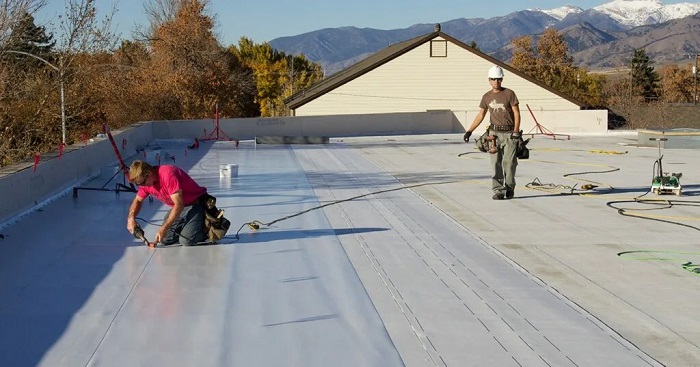
Walk through any business park and flat roofs rule the skyline, and for good reason too. Warehouses, offices, and retail units almost never bother with a pitched design. That choice boils down to cold hard practicality rather than fashion. Business owners scouting flat roofing London contractors stumble onto this fact fast. Below sits a rundown of the real advantages behind that choice and why property managers refuse to consider anything else.
Why Does Cost Tilt in Favor of Flat Roofing for Commercial Jobs?
Materials and labor both drop sharply once a roof ditches the steep angles and extra framing a pitched design demands. Flat roofs eat up less material overall since the surface area stays smaller than an angled equivalent covering identical ground. Crews wrap up the job quicker too, skipping the need to build elaborate trusses or wrestle with tricky angles. Lower upfront costs free up capital a business can funnel into equipment, staffing, or growth instead of sinking it all into the roof.
How Does Flat Roofing Carve Out Usable Extra Space?
A pitched roof squanders the whole area above it on empty attic space nobody can touch. A flat roof flips that script entirely, handing businesses a genuine platform right over their heads. HVAC units, satellite gear, and storage tanks fit neatly on top without gobbling up valuable ground floor real estate. Some companies even turn that flat surface into a rooftop garden or a staff break area, wringing extra value from square footage that would otherwise sit dead.
Does Flat Roofing Make Maintenance Access Easier?
Climbing a ladder onto a flat surface beats scaling a steep pitched roof any day. Technicians roam around freely while inspecting or fixing equipment mounted up there. That ease of access trims labor time during routine checks and speeds up emergency repairs whenever something breaks. Safety climbs too, since workers face far less risk of a fall compared to navigating a sloped surface way up high.
Why Do Flat Roofing London Businesses Lean Toward This Style for Solar Setups?
Solar panels crank out the most power when installers angle them precisely toward the sun, regardless of the building’s original orientation. A flat surface hands over that freedom since racking hardware tilts panels at whatever pitch squeezes out peak energy. Plenty of flat roofing London commercial properties now pair solar arrays with their roof for this exact reason, slashing energy bills while boosting the building’s green credentials at once. A pitched roof rarely offers this same flexibility since panels stay locked into whatever slope already exists.
Can Flat Roofing Shoulder Heavy Equipment Loads Better?
Commercial buildings often need to support air conditioning units, generators, or communication gear somewhere on the property. A flat roof spreads this weight evenly across a broad surface built with commercial grade structural support baked in from the start. Engineers plan load points with far sharper precision on a flat deck than they ever could on a pitched surface riddled with awkward angles. This structural edge makes flat roofs the obvious pick whenever heavy rooftop gear enters the picture.
How Does Flat Roofing Shape a Building’s Overall Look?
Modern commercial architecture leans hard toward clean lines and a streamlined silhouette. A flat roof suits that aesthetic far better than a steep pitched design ever could. Plenty of architects pick flat roofing specifically because it lets a building’s facade steal the spotlight instead of fighting a bulky roofline overhead. This visual simplicity works especially well for office parks, retail centers, and modern warehouses chasing a sleek professional vibe.
Does Flat Roofing Deliver Better Value for Large Footprint Buildings?
Sprawling commercial structures gain enormously from the economics of flat roofing next to a pitched alternative. Covering a massive warehouse with an angled roof would demand a mountain of extra material and structural support just to manage the pitch across that distance. Flat roofing scales far more smoothly across large areas since the design stays consistent no matter how much square footage it needs to cover.
What Part Does Flat Roofing Play in Energy Efficiency for Commercial Spaces?
Reflective coatings and rigid insulation both go on with far greater ease across a flat plane than across a patchwork of angled sections. Commercial buildings often carry hefty heating and cooling loads given their size, and a well insulated flat roof directly chips away at that burden. Business owners who invest in solid insulation and a reflective membrane often notice a real drop in utility costs within the first year alone.
Final Thoughts
Flat roofing brings together lower cost, usable space, and genuine practicality that commercial properties lean on daily. Easier maintenance access, stronger solar compatibility, and superior load handling all stack the deck in favor of this design across countless building types. Business owners who grasp these advantages make sharper calls when planning new construction or a major roof swap. A flat roof isn’t merely the cheaper pick, it’s frequently the smarter one for the specific demands a commercial building throws at it.
Frequently Asked Questions
Is flat roofing suitable for every type of commercial building?
Flat roofing suits most commercial structures fine, though extremely tall buildings or ones facing heavy snowfall sometimes need extra structural planning.
How long does a commercial flat roof typically hold up?
A well maintained commercial flat roof usually runs twenty to thirty years depending on the material picked and the climate it battles.
Does flat roofing cost less to insure than a pitched roof?
Insurance costs hinge more on a building’s overall risk profile and location than the roof style alone, though lower repair costs can nudge premiums down.
Can a flat commercial roof support a rooftop garden?
Yes, with proper structural reinforcement and waterproofing a flat roof can carry a rooftop garden or green space for employees just fine.
What is the biggest drawback of flat roofing for commercial use?
Drainage demands more careful planning and steady maintenance compared to a pitched roof, which makes regular inspections essential to dodge water related headaches.