What is Digital Marketing?
Digital marketing is the use of digital channels such as search engines, social media, websites, and email to promote products or services and connect with customers. It helps businesses reach their target audience, build brand awareness, generate leads, and increase sales.
Types of Digital Marketing
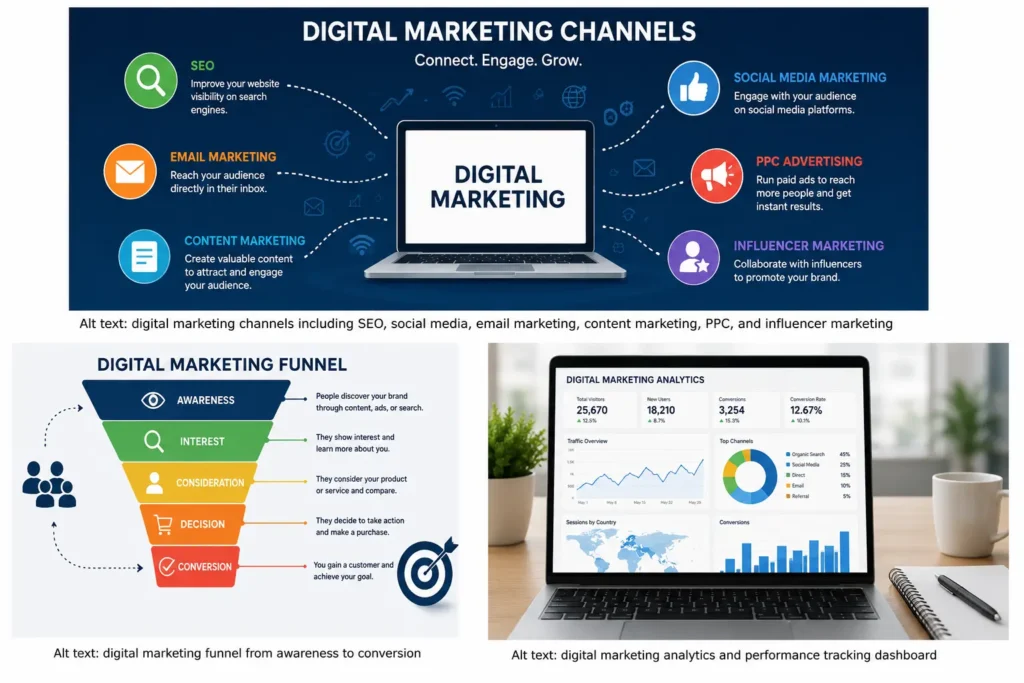
Digital marketing includes different methods such as SEO, social media marketing, email marketing, content marketing, pay-per-click advertising, and influencer marketing. Each method helps businesses reach and engage with their target audience in different ways.
SEO
Search Engine Optimization (SEO) is the process of optimizing a website to improve its visibility and ranking on search engines like Google. It helps businesses attract organic traffic and reach people who are searching for their products or services.
Social media Marketing
Social media marketing is the use of platforms such as Instagram, Facebook, TikTok, and LinkedIn to promote products or services, connect with customers, and build brand awareness.
Email Marketing
Email marketing is the process of sending emails to customers or potential customers to share information, promotions, offers, or updates and encourage them to take action.
Content Marketing
Content marketing involves creating and sharing useful and relevant content, such as blogs, videos, guides, and posts, to attract an audience, build trust, and promote a business.
Pay-per-click(PPC)
Pay-per-click (PPC) is an online advertising method where advertisers pay a fee each time someone clicks on their advertisement. It helps businesses bring targeted visitors to their website quickly.
Influencer Marketing
Influencer marketing is a marketing method where businesses collaborate with influencers to promote their products or services to the influencer’s audience and build awareness or interest.
Benefits of digital marketing
Digital marketing offers many benefits to businesses of all sizes. It helps businesses reach a wider audience, target specific customers, build brand awareness, generate leads, and increase sales. It can also be more measurable and cost-effective than many traditional marketing methods.
Wider Audience Reach
Digital marketing allows businesses to reach a much larger audience through websites, search engines, social media, and other online platforms. Unlike traditional marketing, businesses can reach customers beyond their local area and even connect with people in different countries.
Cost-Effective Marketing
Digital marketing can be more affordable than traditional advertising methods such as television, newspapers, and billboards. Businesses can choose their advertising budget and control how much they spend on campaigns.
Targeted audience
One of the biggest advantages of digital marketing is the ability to target specific audiences. Businesses can target people based on factors such as age, location, interests, online behavior, and search activity.
Measurable Results
Digital marketing makes it possible to track campaign performance using different metrics. Businesses can measure clicks, impressions, conversions, sales, and other results to understand whether their marketing strategy is working.
Better Customer Engagement
Digital platforms allow businesses to communicate directly with their customers. Through social media, email, comments, and messages, businesses can answer questions, receive feedback, and build stronger relationships with their audience.
Increase Brand Awareness
Regularly appearing on search engines, social media, websites, and other digital platforms can help people become familiar with a brand. Over time, this can increase brand recognition and help businesses build trust with their target audience.
How does Digital Marketing work?
Digital marketing works by connecting businesses with their target audience through different online channels. First, a business identifies its target audience and understands their needs. Then, it chooses suitable platforms such as search engines, social media, websites, email, or online advertising to reach them.
Awareness
At this stage, people first discover the brand or product. Businesses can use social media posts, SEO, videos, advertisements, and other content to attract attention.
Interest and Consideration
After discovering a brand, people may become interested and start researching the product or service. They may read articles, watch videos, compare products, or check reviews before making a decision.
Decision and Conversion
Next, the potential customer decides whether to take action. This action could be purchasing a product, filling out a form, signing up for a service, or contacting the business. This is called a conversion.
Retention and Loyalty
After a customer makes a purchase, the business can continue communicating with them through email, social media, special offers, and useful content. As a result, satisfied customers may return and become loyal to the brand.
Digital Marketing Vs Traditional Marketing
Digital marketing and traditional marketing both aim to promote products and services. However, they use different channels and offer different ways to reach and interact with customers.
| Feature | Digital Marketing | Traditional Marketing |
|---|---|---|
| Medium | Websites, social media, search engines, email | TV, newspapers, radio, billboards |
| Audience | Can target specific audiences | Usually reaches a broader audience |
| Cost | Flexible budget | Can be expensive |
| Tracking | Results can be measured easily | Tracking can be more difficult |
| Interaction | Direct interaction with customers | Limited interaction |
How to Start Digital Marketing as a Beginner
1.Learn the Basics
Start by understanding important concepts such as SEO, social media marketing, email marketing, content marketing, and PPC.
2.Choose a niche
Choose a specific topic or market that you want to focus on. A clear niche makes it easier to understand your target audience and create relevant content.
3.Understand Your Target Audience
Research your audience’s needs, interests, problems, and online behavior. This helps you create marketing messages that are more relevant to them.
4.Choose the right platforms
Select platforms where your target audience is active. Depending on your niche, this could include Google, Instagram, Facebook, TikTok, YouTube, or email.
5.Create Useful Content
Create helpful and relevant content such as blog posts, videos, social media posts, guides, and infographics. Moreover, focus on providing value instead of only promoting products.
6.Track Your Results
Use metrics such as CTR, CPC, CPL, conversions, and ROI to understand how your campaigns are performing. Therefore, you can identify what works and improve your future marketing efforts.
7.Keep Learning
Digital marketing changes regularly because platforms, algorithms, and customer behaviour can change. Therefore, beginners should continue learning and practicing new strategies
Conclusion
Digital marketing has become an important way for businesses to reach and connect with their target audience online. By using strategies such as SEO, social media marketing, email marketing, content marketing, and PPC, businesses can build awareness, attract customers, and increase conversions. With the right strategy and consistent effort, digital marketing can help businesses achieve their marketing goals and grow online.