Fine Bubble Tube Diffuser Silicone is one of the most efficient aeration solutions used in Sewage Treatment Plants (STP) and Effluent Treatment Plants (ETP). Designed to deliver maximum oxygen transfer efficiency while minimizing energy consumption, silicone tube diffusers have become the preferred choice for municipal wastewater treatment facilities, industrial plants, commercial buildings, pharmaceutical industries, food processing units, textile factories, and chemical processing plants.
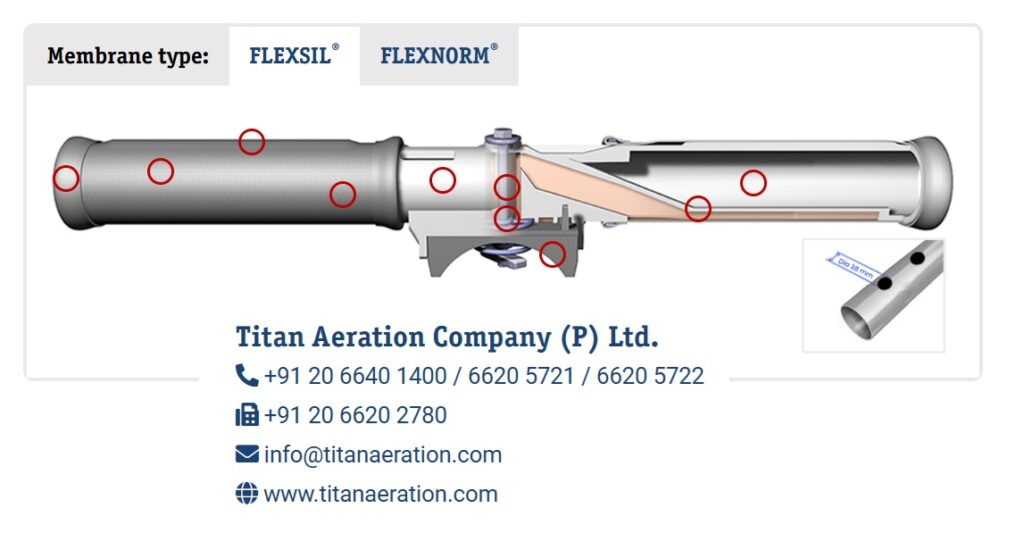
By producing millions of uniform fine bubbles, these diffusers significantly improve biological treatment processes, ensuring effective wastewater purification and long-term operational reliability. Their advanced silicone membrane technology provides exceptional resistance to fouling, chemicals, temperature fluctuations, and aging, making them ideal for demanding wastewater treatment applications.
What is a Fine Bubble Tube Diffuser Silicone?
A Fine Bubble Tube Diffuser Silicone is a cylindrical aeration device fitted with a high-quality silicone membrane that releases compressed air through precision-engineered micro-slits. When air passes through these openings, it forms extremely fine bubbles that remain suspended in water for a longer period.
The extended contact time between air and wastewater dramatically increases oxygen transfer efficiency, enabling aerobic microorganisms to effectively decompose organic contaminants while reducing overall power consumption.
Unlike conventional aeration systems, silicone tube diffusers provide consistent airflow distribution, improved biological activity, and lower maintenance requirements throughout their operational life.
Working Principle of Silicone Fine Bubble Tube Diffusers
The operation of a silicone tube diffuser is based on efficient oxygen transfer.
Step 1: Air Supply
Compressed air generated by blowers enters the diffuser through a network of pipelines.
Step 2: Membrane Expansion
The flexible silicone membrane expands under air pressure, allowing micro-slits to open uniformly.
Step 3: Bubble Formation
Tiny fine bubbles are released into the wastewater, creating a dense oxygen-rich environment.
Step 4: Oxygen Transfer
Fine bubbles rise slowly through the water column, maximizing dissolved oxygen levels and supporting aerobic bacteria.
Step 5: Self-Cleaning Action
Once airflow stops, the silicone membrane contracts, sealing the slits and preventing wastewater from entering the diffuser, reducing clogging and fouling.
Key Features of Fine Bubble Tube Diffuser Silicone
Modern silicone tube diffusers are engineered to provide outstanding performance under continuous operation.
Premium Silicone Membrane
The silicone membrane offers superior flexibility, excellent elasticity, and long service life even in aggressive wastewater environments.
High Oxygen Transfer Efficiency
Fine bubble generation increases oxygen transfer efficiency while reducing blower energy requirements.
Uniform Air Distribution
Precisely designed perforations ensure even airflow throughout the aeration tank.
Low Pressure Loss
Reduced pressure drop helps decrease blower operating costs.
Chemical Resistance
Silicone membranes resist oils, chemicals, acids, alkalis, and industrial contaminants.
Temperature Stability
They perform efficiently across a wide temperature range without cracking or deformation.
Long Operational Life
Properly maintained silicone diffusers often provide years of reliable performance.
Technical Specifications of Silicone Tube Diffusers
Although specifications vary among manufacturers, standard models generally include:
| Parameter | Typical Value |
| Membrane Material | Premium Silicone |
| Support Tube | PVC / PP / ABS |
| Bubble Size | 1–3 mm |
| Diffuser Length | 500 mm – 1000 mm |
| Air Flow Rate | 2–12 m³/hr |
| Oxygen Transfer Efficiency | High |
| Operating Temperature | Wide Industrial Range |
| Installation | Horizontal or Vertical |
| Connection Size | Standard BSP/NPT Options |
Advantages of Silicone Fine Bubble Tube Diffusers
Excellent Oxygen Transfer
Fine bubbles provide a larger surface area, improving oxygen dissolution into wastewater.
Energy Savings
Higher oxygen transfer means blowers require less energy to achieve desired dissolved oxygen levels.
Reduced Operating Costs
Lower power consumption translates into significant long-term savings.
Minimal Maintenance
The self-sealing silicone membrane minimizes clogging and scaling.
Uniform Aeration
Balanced airflow enhances biological treatment performance.
Improved Treatment Efficiency
Consistent oxygen supply supports healthy microbial growth for better pollutant removal.
Quiet Operation
Fine bubble aeration systems produce minimal operational noise.
Easy Installation
Tube diffusers integrate seamlessly into both new and existing aeration systems.
Applications of Silicone Fine Bubble Tube Diffusers
Silicone tube diffusers are suitable for numerous wastewater treatment processes.
Sewage Treatment Plants (STP)
Municipal sewage treatment facilities rely on fine bubble aeration for biological oxidation.
Effluent Treatment Plants (ETP)
Industrial wastewater treatment plants utilize silicone diffusers to treat complex effluents efficiently.
Food Processing Industry
Effective aeration helps reduce organic load in food manufacturing wastewater.
Textile Industry
Supports biological treatment of dye-containing wastewater.
Pharmaceutical Industry
Provides reliable oxygen transfer for high-strength wastewater treatment.
Chemical Industry
Handles chemically aggressive wastewater with excellent membrane durability.
Paper & Pulp Industry
Enhances biological degradation of organic waste.
Dairy Industry
Improves treatment of protein-rich wastewater.
Beverage Manufacturing
Maintains efficient biological treatment processes.
Commercial Buildings
Ideal for decentralized sewage treatment systems.
Silicone vs EPDM Tube Diffusers
| Feature | Silicone Diffuser | EPDM Diffuser |
| Chemical Resistance | Excellent | Good |
| Temperature Resistance | Excellent | Moderate |
| Anti-Fouling | Superior | Good |
| Flexibility | High | Moderate |
| Service Life | Longer | Standard |
| Oxidation Resistance | Excellent | Moderate |
| Performance Stability | Excellent | Good |
| Industrial Applications | Heavy Duty | General Purpose |
Silicone membranes are preferred where wastewater contains aggressive chemicals, oils, or high temperatures.
Benefits for STP and ETP Operations
Installing silicone fine bubble tube diffusers delivers measurable operational improvements.
- Lower electricity consumption
- Higher dissolved oxygen levels
- Better sludge stabilization
- Reduced blower operating pressure
- Improved biological treatment
- Enhanced BOD removal
- Efficient COD reduction
- Long equipment life
- Reduced maintenance shutdowns
- Consistent plant performance
Installation Guidelines
Proper installation ensures maximum diffuser efficiency.
Correct Airflow Design
Maintain balanced airflow across all diffuser laterals.
Level Installation
Install diffusers uniformly to achieve even aeration.
Quality Piping
Use corrosion-resistant piping and fittings.
Leak Testing
Inspect all air connections before commissioning.
Proper Blower Selection
Choose blowers capable of supplying the recommended airflow and pressure.
Maintenance Tips
Routine maintenance extends diffuser lifespan.
- Periodically inspect airflow distribution.
- Monitor blower pressure.
- Clean air filters regularly.
- Remove excessive sludge deposits.
- Check membrane condition during scheduled shutdowns.
- Replace damaged membranes promptly.
- Inspect piping for leaks.
With preventive maintenance, silicone diffusers maintain high efficiency for many years.
How to Select the Right Silicone Tube Diffuser
Selecting the appropriate diffuser depends on several engineering factors.
Tank Dimensions
Larger tanks require optimized diffuser layouts for uniform oxygen distribution.
Wastewater Characteristics
Consider BOD, COD, suspended solids, chemical composition, and industrial contaminants.
Airflow Requirements
Calculate airflow based on oxygen demand.
Membrane Quality
Choose premium silicone membranes for superior durability.
Support Structure
Select corrosion-resistant support tubes and fittings.
Manufacturer Reputation
Work with experienced manufacturers offering quality assurance and technical support.
Why Silicone Tube Diffusers Improve Wastewater Treatment
Fine bubble silicone diffusers increase biological efficiency by maintaining stable dissolved oxygen levels throughout the aeration basin. Their micro-bubble technology ensures microorganisms receive sufficient oxygen for rapid decomposition of organic pollutants, resulting in cleaner effluent, lower sludge production, and improved compliance with environmental discharge standards.
Compared to coarse bubble aeration systems, silicone fine bubble diffusers offer substantially higher oxygen transfer rates while consuming significantly less energy. This combination of performance and efficiency makes them an excellent investment for modern wastewater treatment facilities.
Industries That Benefit Most
Numerous industries depend on silicone fine bubble tube diffusers for reliable aeration:
- Municipal STPs
- Industrial ETPs
- Hospitals
- Hotels
- Residential Townships
- Commercial Complexes
- Textile Manufacturing
- Chemical Processing
- Pharmaceutical Production
- Food & Beverage Plants
- Dairy Processing
- Sugar Mills
- Distilleries
- Paper Mills
- Power Plants
Environmental Benefits
Silicone fine bubble diffusers contribute to sustainable wastewater treatment by:
- Reducing energy consumption
- Lowering carbon emissions
- Improving treated water quality
- Enhancing biological treatment efficiency
- Reducing operational waste
- Supporting water recycling initiatives
- Extending equipment lifespan
- Minimizing maintenance requirements
Conclusion
Fine Bubble Tube Diffuser Silicone is an advanced aeration solution designed to maximize oxygen transfer efficiency while reducing energy costs in STP and ETP applications. Its premium silicone membrane, exceptional chemical resistance, superior durability, and self-cleaning characteristics make it an ideal choice for modern wastewater treatment systems. Whether used in municipal sewage plants or demanding industrial effluent treatment facilities, silicone tube diffusers deliver consistent performance, improved biological treatment, reduced maintenance, and long-term operational savings. Investing in high-quality silicone fine bubble tube diffusers ensures reliable aeration, enhanced treatment efficiency, and sustainable wastewater management for years to come.
Frequently Asked Questions (FAQs)
What is a Fine Bubble Tube Diffuser Silicone?
It is an aeration device with a silicone membrane that produces fine air bubbles to improve oxygen transfer in wastewater treatment systems.
Why is silicone preferred over EPDM?
Silicone offers better resistance to chemicals, higher temperatures, oxidation, and fouling, resulting in a longer service life.
Where are silicone tube diffusers used?
They are widely used in STPs, ETPs, food processing plants, pharmaceutical industries, textile units, chemical plants, and municipal wastewater treatment facilities.
Do silicone tube diffusers save energy?
Yes. Their high oxygen transfer efficiency reduces blower power consumption, lowering operating costs.
How long do silicone tube diffusers last?
With proper installation and regular maintenance, premium silicone tube diffusers provide reliable performance for many years.
Contact us today to learn more about our premium Fine Bubble Tube Diffuser Silicone solutions for STP and ETP applications. Our team can help you choose the right aeration system for maximum efficiency, long-term reliability, and cost-effective wastewater treatment.