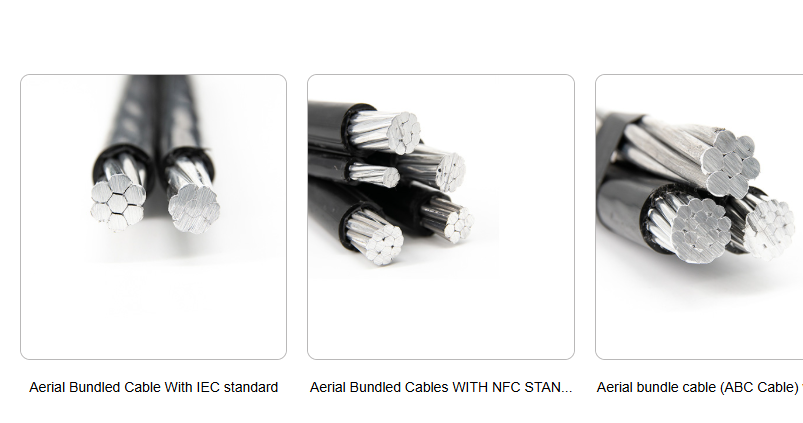
Overhead cables play a vital role in transmitting electricity safely and efficiently over long distances. From power generation plants to residential or industrial areas, these cables ensure continuous electrical flow with minimal losses. At HNBFpower, we specialize in manufacturing durable and high-performance overhead cables that meet the growing demand for reliable energy distribution.
In this guide, we’ll explain the role of overhead cable in power transmission, their specifications, applications, advantages, and how to choose the right cable for your project.
1. Role of Overhead Cables in Power Transmission
Overhead cables are used to carry electrical power across long stretches of land through towers and poles. Their main role is to transmit electricity from generating stations to substations and then to end users.
These cables are designed to withstand environmental challenges such as heat, wind, and moisture while maintaining stable conductivity.
Key functions include:
- Carrying high voltage from generation to distribution points.
- Ensuring minimal energy loss through efficient conductor materials.
- Providing mechanical strength to resist tension and environmental forces.
- Supporting continuous power supply to urban and rural networks.
2. Technical Specifications of Overhead Cables
At HNBFpower, each overhead cable is engineered with precision to meet industry standards. Common specifications include:
- Conductor Material: Aluminum, Aluminum Alloy, or Aluminum Conductor Steel Reinforced (ACSR).
- Voltage Range: Suitable for low, medium, and high-voltage transmission systems.
- Core Strength: Steel or composite core for mechanical durability.
- Insulation Type: Typically uninsulated for long-distance lines; sometimes protected with weather-resistant coatings.
- Temperature Range: Designed to operate efficiently under extreme weather conditions.
These specifications ensure that every cable delivers superior electrical performance and mechanical reliability in real-world conditions.
3. Applications of Overhead Cables
Overhead cables are used across various sectors and infrastructure projects. Major applications include:
- National Power Grids: For long-distance transmission from power plants to substations.
- Industrial Zones: Providing reliable electricity for factories and heavy machinery.
- Urban Distribution Networks: Connecting substations to residential and commercial areas.
- Renewable Energy Projects: Transmitting electricity generated from solar and wind farms to the main grid.
- Railway Electrification: Used in power lines supplying traction power.
With such broad usage, overhead cables form the foundation of modern electrical infrastructure.
4. Advantages of Using Overhead Cables
Overhead cables remain a preferred choice for power transmission due to several key advantages:
- Cost-Effective Installation: Lower installation and maintenance cost compared to underground systems.
- Easy Inspection & Repair: Faults can be identified and repaired quickly.
- High Transmission Efficiency: Conductors designed for optimal current flow.
- Weather Resistance: Built to handle temperature fluctuations, wind, and UV exposure.
- Flexibility in Expansion: Additional circuits or lines can be added easily as power demand increases.
By combining efficiency, safety, and durability, overhead cables offer long-term performance benefits for utility providers and industrial users.
5. How to Choose or Buy the Right Overhead Cable
Selecting the right overhead cable depends on your specific power transmission needs. Consider the following steps before purchasing:
- Determine Voltage Requirements: Choose a cable suitable for the operating voltage level.
- Assess Environmental Conditions: Factor in weather, terrain, and installation height.
- Select the Right Conductor Type: For long spans, ACSR cables offer both conductivity and strength.
- Check Compliance Standards: Ensure the cable meets IEC, ASTM, or BS standards.
- Consult a Manufacturer: Work with a trusted supplier like HNBFpower to receive technical guidance and product customization.
HNBFpower provides complete support from design and manufacturing to delivery and installation assistance, ensuring your project’s power transmission system performs reliably.
Conclusion
Overhead cables are the lifeline of modern power systems, bridging the gap between generation and consumption. Their strong construction, superior conductivity, and cost-effectiveness make them an ideal choice for long-distance electricity transmission.
When quality, reliability, and performance matter, HNBFpower delivers overhead cables that power industries, cities, and communities with confidence.