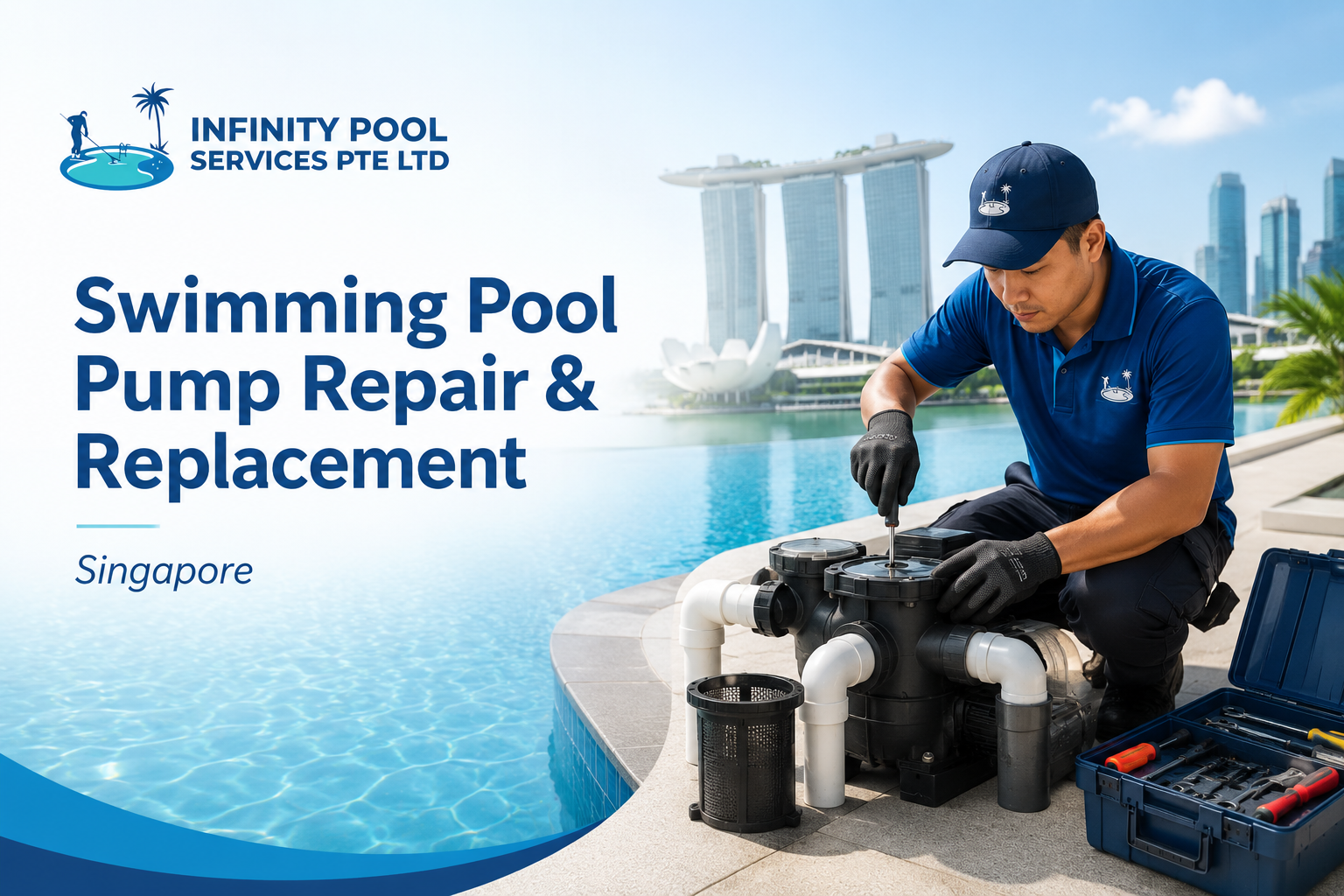
Swimming Pool Equipment Repair & Replacement in Singapore is a vital service for maintaining a clean, safe, and efficient swimming pool. By following a professional repair and replacement process, Infinity Pool Services Pte Ltd helps homeowners and commercial property managers keep their pool systems operating at peak performance.
Why a Professional Repair Process Matters
Swimming pool equipment is made up of several interconnected systems, including pumps, filters, heaters, sanitizing units, valves, plumbing, and automation controls. When one component develops a fault, it can impact the performance of the entire pool.
Choosing professional Swimming Pool Equipment Repair & Replacement in Singapore ensures every issue is diagnosed correctly, repaired safely, and tested thoroughly before the equipment is returned to service.
A structured repair process also helps extend equipment lifespan and improve overall pool efficiency.
Understanding the Main Equipment in a Swimming Pool
Before exploring the repair process, it is important to understand the equipment commonly found in modern swimming pools.
Swimming Pool Pump
The pump circulates water through the filtration system, helping remove debris and maintain healthy water quality.
Pool Filter
Filters trap dirt, dust, leaves, and microscopic particles to keep the water clean and clear.
Pool Heater
Heating systems regulate water temperature and improve swimmer comfort.
Sanitizing Equipment
This includes systems such as:
- Salt chlorinators
- UV sanitizers
- Chemical dosing systems
- Ozone generators
These systems help maintain balanced and hygienic pool water.
Automation and Control Systems
Automation equipment manages daily pool operations, including:
- Pump schedules
- Heating controls
- Lighting
- Water features
- Filtration cycles
Proper maintenance keeps these systems operating accurately.
Step 1: Initial Equipment Inspection
The first step in professional Swimming Pool Equipment Repair & Replacement in Singapore is a detailed inspection.
Experienced technicians examine every major component to identify visible signs of wear or damage.
The inspection generally includes:
- Pump condition
- Filter performance
- Heater operation
- Plumbing connections
- Electrical systems
- Automation controls
- Water circulation
A complete inspection helps identify both obvious and hidden issues.
Step 2: System Performance Assessment
After the visual inspection, technicians evaluate how efficiently the equipment is operating.
Performance testing may include:
- Water flow analysis
- Pressure testing
- Pump efficiency checks
- Electrical measurements
- Motor performance evaluation
This process determines whether the equipment is functioning within recommended operating conditions.
Step 3: Accurate Problem Diagnosis
Professional diagnosis is one of the most important stages.
Rather than replacing equipment unnecessarily, technicians identify the exact source of the problem.
Common issues include:
- Worn bearings
- Damaged seals
- Motor faults
- Electrical failures
- Clogged filters
- Broken impellers
- Valve problems
Accurate diagnosis ensures the correct repair solution is selected.
Step 4: Repair or Replacement Recommendation
Once the inspection is complete, technicians determine whether repair or replacement is the better option.
Several factors are considered, including:
- Equipment age
- Overall condition
- Mechanical wear
- Electrical safety
- System compatibility
- Long-term reliability
Minor component failures are often repairable, while severely worn equipment may require replacement.
Step 5: Equipment Repair
If repair is the recommended solution, technicians replace or restore damaged components.
Common repair work includes:
- Replacing seals
- Installing new bearings
- Repairing motors
- Servicing valves
- Cleaning filters
- Repairing electrical connections
- Replacing worn impellers
Professional repairs restore equipment performance while maintaining system safety.
Step 6: Equipment Replacement
When equipment has reached the end of its service life, replacement becomes the most practical solution.
Replacement involves:
- Removing old equipment
- Inspecting surrounding plumbing
- Installing compatible components
- Connecting electrical systems
- Testing water flow
Proper installation ensures reliable long-term operation.
Step 7: System Testing
After repairs or replacement, technicians perform comprehensive testing.
Testing includes:
- Pump operation
- Water circulation
- Pressure readings
- Electrical safety
- Leak inspection
- Automation system verification
- Filter performance
Every component must operate correctly before the system is considered ready for normal use.
Step 8: Water Quality Verification
Pool equipment and water quality work together.
Technicians often verify that:
- Water circulation is balanced
- Filtration is effective
- Sanitizing systems operate correctly
- Water chemistry supports equipment performance
Balanced water helps protect equipment from corrosion and premature wear.
Step 9: Final Safety Inspection
Before completing the project, a final inspection confirms that every component operates safely.
This includes checking:
- Electrical connections
- Plumbing fittings
- Pump stability
- Equipment alignment
- Leak prevention
- Automation controls
Professional safety inspections reduce the risk of future equipment problems.
Step 10: Preventive Maintenance Recommendations
After completing the repair or replacement process, technicians provide maintenance recommendations.
Typical advice includes:
- Regular equipment inspections
- Filter cleaning schedules
- Water chemistry monitoring
- Pump basket cleaning
- Leak inspections
- Routine servicing
Preventive maintenance significantly extends equipment lifespan.
Infinity Pool Services Pte Ltd encourages scheduled maintenance to help customers avoid unexpected equipment failures.
Why Professional Repairs Are Better Than Temporary Fixes
Attempting temporary repairs without proper knowledge can create larger problems.
Professional technicians understand:
- Electrical systems
- Plumbing layouts
- Hydraulic performance
- Equipment compatibility
- Safety procedures
Their experience ensures every repair supports long-term system reliability.
Common Equipment That Requires Professional Servicing
Most swimming pools contain several components requiring periodic maintenance.
These include:
- Swimming pool pumps
- Pool heaters
- Salt chlorination systems
- UV sanitation equipment
- Control panels
- Valves
- Automation systems
- Water circulation systems
Pool filters Each component contributes to the overall efficiency of the swimming pool.
Benefits of Following a Professional Repair Process
A structured repair process offers numerous advantages.
These include:
- Improved equipment performance
- Better water circulation
- Cleaner pool water
- Enhanced swimmer safety
- Longer equipment lifespan
- Reduced unexpected failures
- Reliable system operation
- Greater maintenance efficiency
Professional servicing also helps identify developing issues before they become major repairs.
Why Experience Matters
Swimming pool systems involve multiple technologies working together.
Experienced technicians understand how electrical, hydraulic, and mechanical systems interact.
This expertise allows them to:
- Diagnose problems accurately
- Perform safe repairs
- Install compatible equipment
- Maintain system efficiency
- Reduce future maintenance risks
Many residential and commercial property owners choose Infinity Pool Services Pte Ltd because of its experienced technicians, professional workmanship, and commitment to maintaining high-quality swimming pool systems.
Best Practices for Pool Owners
Pool owners can help extend equipment life by following several simple practices.
These include:
- Inspect equipment regularly.
- Keep pump baskets clean.
- Maintain balanced water chemistry.
- Clean filters on schedule.
- Address leaks immediately.
- Schedule professional servicing.
- Listen for unusual equipment noises.
- Monitor water circulation.
These habits reduce unnecessary wear while supporting long-term equipment performance.
Conclusion
Swimming Pool Equipment Repair & Replacement in Singapore follows a systematic process that ensures accurate diagnosis, safe repairs, and reliable equipment performance. With expert support from Infinity Pool Services Pte Ltd, pool owners can maintain efficient systems, extend equipment lifespan, and enjoy clean, healthy swimming environments year-round.