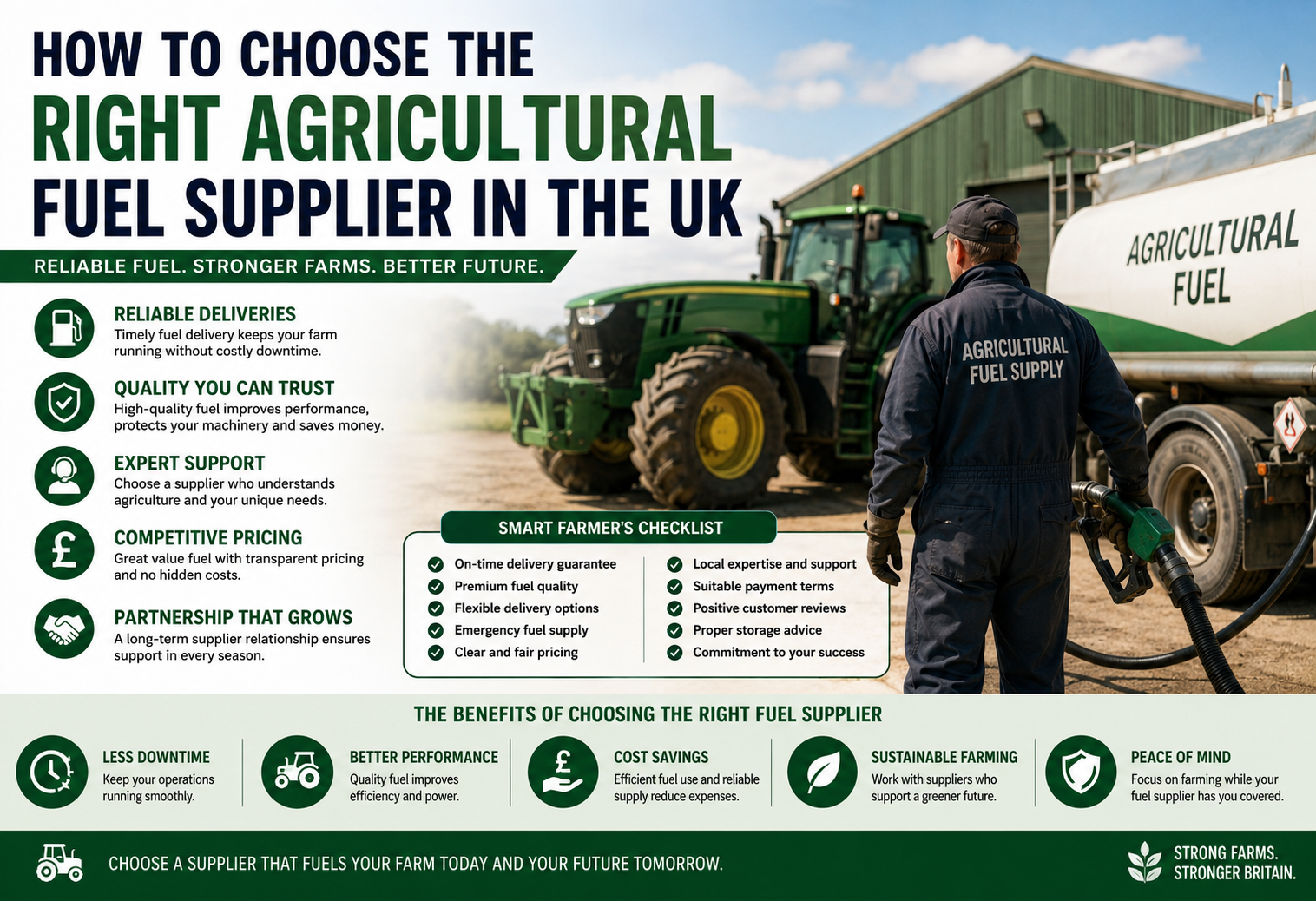
Every successful farm has one thing in common that rarely gets the attention it deserves—an uninterrupted fuel supply. Whether you’re preparing fields in spring, harvesting in late summer, or feeding livestock through winter, your machinery is only as reliable as the fuel that powers it. Yet many farmers spend weeks comparing tractors or equipment while choosing an agricultural fuel supplier in just a few minutes.
That decision can have long-term consequences.
A delayed delivery during harvest, inconsistent fuel quality, or poor customer support can cost far more than a few pence saved per litre. The right supplier doesn’t simply deliver fuel; they become a dependable partner who understands the rhythm of farming and supports your business when timing matters most.
If you’re searching for an agricultural fuel supplier in the UK, this guide explains what truly separates an average supplier from one that helps your farm operate more efficiently throughout the year.
Why Your Agricultural Fuel Supplier Is More Than Just a Fuel Provider
Many businesses see fuel as a commodity. Farmers know it’s much more than that.
Every litre delivered to your farm powers machinery responsible for planting, cultivating, harvesting, transporting, and maintaining daily operations. When fuel isn’t available exactly when it’s needed, productivity slows, deadlines become harder to meet, and operating costs quickly increase.
A dependable supplier offers something more valuable than competitive prices—they offer confidence. Knowing your fuel will arrive on time allows you to focus on running your farm instead of chasing deliveries or worrying about shortages.
The best suppliers understand agriculture isn’t a nine-to-five industry. They appreciate that weather conditions, seasonal workloads, and unexpected equipment demands require flexibility and dependable service.
Start by Understanding Your Farm’s Fuel Consumption
Before comparing suppliers, take a closer look at how your farm actually uses fuel.
Every agricultural business has different requirements. A livestock farm may require consistent deliveries throughout the year, while an arable farm often experiences significant seasonal demand.
Consider questions such as:
- How much fuel do your machines consume each month?
- Does your fuel usage increase dramatically during harvest?
- Do you need multiple fuel types?
- Is your current storage capacity sufficient?
- Would scheduled deliveries reduce operational pressure?
Understanding your own consumption makes it easier to choose a supplier capable of supporting your workload rather than forcing you into a one-size-fits-all service.
Don’t Judge a Supplier by Price Alone
It’s natural to compare prices, especially when fuel represents a significant operating expense. However, selecting the cheapest quote can become an expensive mistake.
Imagine two suppliers.
The first offers fuel at a slightly lower rate but struggles with delivery times and communication.
The second charges marginally more but consistently delivers on schedule, maintains excellent fuel quality, and responds quickly during busy farming periods.
Which one saves more money over an entire season?
In reality, reliability often creates greater savings than the lowest price.
Downtime caused by delayed fuel deliveries can affect harvesting schedules, labour efficiency, and equipment utilisation. Those hidden costs frequently outweigh any small difference in fuel price.
Instead of focusing only on cost per litre, consider the overall value the supplier brings to your business.
Delivery Reliability Should Never Be an Afterthought
Agriculture operates around seasons rather than office hours.
Rainfall, soil conditions, and harvest windows cannot be postponed because a fuel tanker arrives late.
Reliable delivery should therefore be one of your highest priorities.
A professional agricultural fuel supplier plans routes carefully, communicates clearly, and offers realistic delivery schedules rather than making promises they cannot keep.
Ask prospective suppliers:
- How quickly can deliveries be arranged?
- Do they provide scheduled deliveries?
- Can they respond during emergencies?
- What happens if severe weather affects transport?
The answers reveal far more about a supplier than promotional brochures ever will.
Fuel Quality Directly Affects Machinery Performance
Modern agricultural machinery represents a major investment. Protecting that investment starts with high-quality fuel.
Poor-quality fuel can contribute to:
- Engine deposits
- Reduced efficiency
- Increased maintenance
- Injector problems
- Unexpected machinery downtime
Quality suppliers carefully manage storage conditions, maintain clean distribution systems, and ensure fuel reaches customers in excellent condition.
While poor fuel may not cause immediate problems, its long-term effects can significantly increase maintenance costs and shorten equipment lifespan.
Choosing quality today often prevents expensive repairs tomorrow.
Look Beyond Products and Evaluate the People
One factor many buyers overlook is the people behind the business.
When speaking with a supplier, pay attention to how they answer questions.
Do they understand agriculture?
Can they explain delivery options clearly?
Do they ask about your farming operation before recommending services?
Experienced suppliers spend time understanding your business rather than simply taking an order.
That relationship becomes particularly valuable during busy periods when unexpected situations require fast decisions.
A knowledgeable account manager often becomes just as important as competitive pricing.
Flexibility Matters More Than You Think
No two farming seasons are identical.
Weather changes.
Crop yields vary.
Market conditions shift.
Your fuel supplier should adapt accordingly.
Look for providers capable of offering flexible arrangements, including scheduled deliveries, seasonal adjustments, emergency orders, and customised supply plans.
Rigid contracts may appear attractive initially but can become restrictive when your operational needs change.
The best partnerships grow alongside your business rather than limiting it.
Think About the Future, Not Just the Next Delivery
Selecting an agricultural fuel supplier shouldn’t be treated as a short-term purchase.
Instead, think about where your business will be in three, five, or even ten years.
If you’re planning to expand your acreage, invest in larger machinery, or diversify your farming activities, your fuel requirements will inevitably change.
Choosing a supplier capable of supporting future growth prevents unnecessary disruption later.
Strong suppliers don’t simply respond to today’s order—they prepare for tomorrow’s demand.
Questions Every Farmer Should Ask Before Signing an Agreement
A professional supplier welcomes informed customers.
Before committing, ask questions such as:
- How do you maintain fuel quality?
- What happens if I require emergency delivery?
- Can delivery schedules be adjusted during harvest?
- Are there minimum order quantities?
- How are prices reviewed?
- What support is available outside normal working hours?
- Can you advise on fuel storage and efficiency?
The quality of the answers often reveals the quality of the supplier.
Warning Signs You Should Never Ignore
Choosing the wrong supplier can create ongoing problems.
Be cautious if a supplier:
- Avoids discussing delivery times.
- Provides unclear pricing.
- Has inconsistent customer feedback.
- Responds slowly to enquiries.
- Cannot explain fuel quality standards.
- Offers unrealistic promises without clear commitments.
Professional suppliers value transparency because they understand long-term trust is more important than winning a single order.
Build a Partnership Instead of Simply Buying Fuel
The strongest agricultural businesses often work with the same trusted suppliers for years.
Why?
Because genuine partnerships create mutual understanding.
As your supplier learns about your seasonal workload, machinery, storage capacity, and operational priorities, they can anticipate your needs more accurately.
Instead of reacting to fuel shortages, they help prevent them.
That level of service is difficult to measure in pounds per litre, yet it often becomes one of the greatest competitive advantages for a busy farm.
How Sustainability Is Changing Agricultural Fuel Supply
The UK’s agricultural sector continues evolving.
Environmental responsibilities, fuel efficiency improvements, and changing regulations are encouraging farmers to think differently about energy management.
Forward-thinking fuel suppliers increasingly provide guidance on:
- Reducing unnecessary fuel consumption.
- Improving storage efficiency.
- Minimising contamination risks.
- Supporting cleaner operational practices.
- Preparing for future energy developments.
Working with a supplier who embraces innovation ensures your business remains prepared for future changes rather than constantly catching up.
The Smart Farmer’s Supplier Checklist
Before making your final decision, ensure your chosen supplier demonstrates:
- Reliable delivery performance
- High-quality agricultural fuel
- Transparent pricing
- Flexible delivery schedules
- Strong customer support
- Industry knowledge
- Emergency delivery capability
- Long-term partnership approach
- Professional communication
- Commitment to consistent service
If a supplier performs well across all these areas, they’re likely to become a valuable business partner rather than simply another vendor.
Final Thoughts
Choosing the right agricultural fuel supplier in the UK isn’t about finding the cheapest fuel. It’s about selecting a company that understands farming, values reliability, and consistently supports your operation through every season.
Fuel powers more than machinery—it powers productivity, profitability, and peace of mind.
By looking beyond headline prices and focusing on service quality, delivery reliability, expertise, and long-term value, you’ll build a partnership that benefits your farm for years to come.
The best suppliers don’t just deliver fuel. They help keep British agriculture moving, regardless of the weather, workload, or season.
Frequently Asked Questions
1. How do I choose the best agricultural fuel supplier in the UK?
Compare suppliers based on delivery reliability, fuel quality, customer support, flexibility, industry experience, and overall value rather than price alone.
2. Why is delivery reliability so important for farmers?
Farming schedules depend heavily on weather and seasonal timing. Reliable deliveries reduce downtime and help keep operations running smoothly.
3. Does fuel quality really affect farm machinery?
Yes. High-quality fuel improves engine performance, reduces wear, lowers maintenance costs, and helps extend the life of agricultural equipment.
4. Should I choose a local agricultural fuel supplier?
A supplier with strong coverage in your region can often provide quicker deliveries and better local support, although service quality should always be the deciding factor.
5. Can suppliers provide scheduled fuel deliveries?
Many professional agricultural fuel suppliers offer scheduled deliveries based on your expected fuel consumption, helping you avoid unexpected shortages.
6. Is buying agricultural fuel in bulk a good idea?
Bulk purchasing can reduce costs per litre, improve supply security during busy periods, and reduce the frequency of deliveries if adequate storage is available.
7. What qualities define a reliable agricultural fuel supplier?
Dependability, transparent pricing, consistent fuel quality, responsive customer service, flexible delivery options, and a good understanding of farming operations are all important qualities.
8. How often should farm fuel storage be inspected?
Regular inspections help maintain fuel quality, reduce contamination risks, and ensure your storage system remains safe and efficient throughout the year.
9. Can a long-term supplier relationship benefit my farm?
Yes. Long-term partnerships allow suppliers to better understand your seasonal needs, making deliveries more efficient and reducing the risk of operational disruptions.
10. What is the biggest mistake farmers make when choosing a fuel supplier?
The most common mistake is focusing only on the cheapest price instead of evaluating reliability, service quality, fuel standards, and long-term support.