Water leaks are one of the most common plumbing problems homeowners face. While some leaks are easy to spot, others can remain hidden for months, causing significant water damage, mold growth, and costly repairs. Understanding what causes household water leaks can help homeowners detect issues early and protect their property from unnecessary damage. Scheduling professional Leak Detection Services when warning signs appear can help identify hidden leaks before they become major problems.
A small leak may seem harmless at first, but even a slow drip can waste thousands of gallons of water annually. The longer a leak goes unnoticed, the greater the potential for structural damage and expensive repairs.
Why Water Leaks Are a Serious Problem
Many homeowners underestimate the impact of water leaks. Beyond increasing utility bills, leaks can damage walls, flooring, ceilings, insulation, and even a home’s foundation.
Water leaks can lead to:
- Higher water bills
- Mold and mildew growth
- Structural deterioration
- Damaged flooring and drywall
- Reduced water pressure
- Costly restoration expenses
Identifying the source of a leak early is one of the best ways to minimize damage and reduce repair costs.
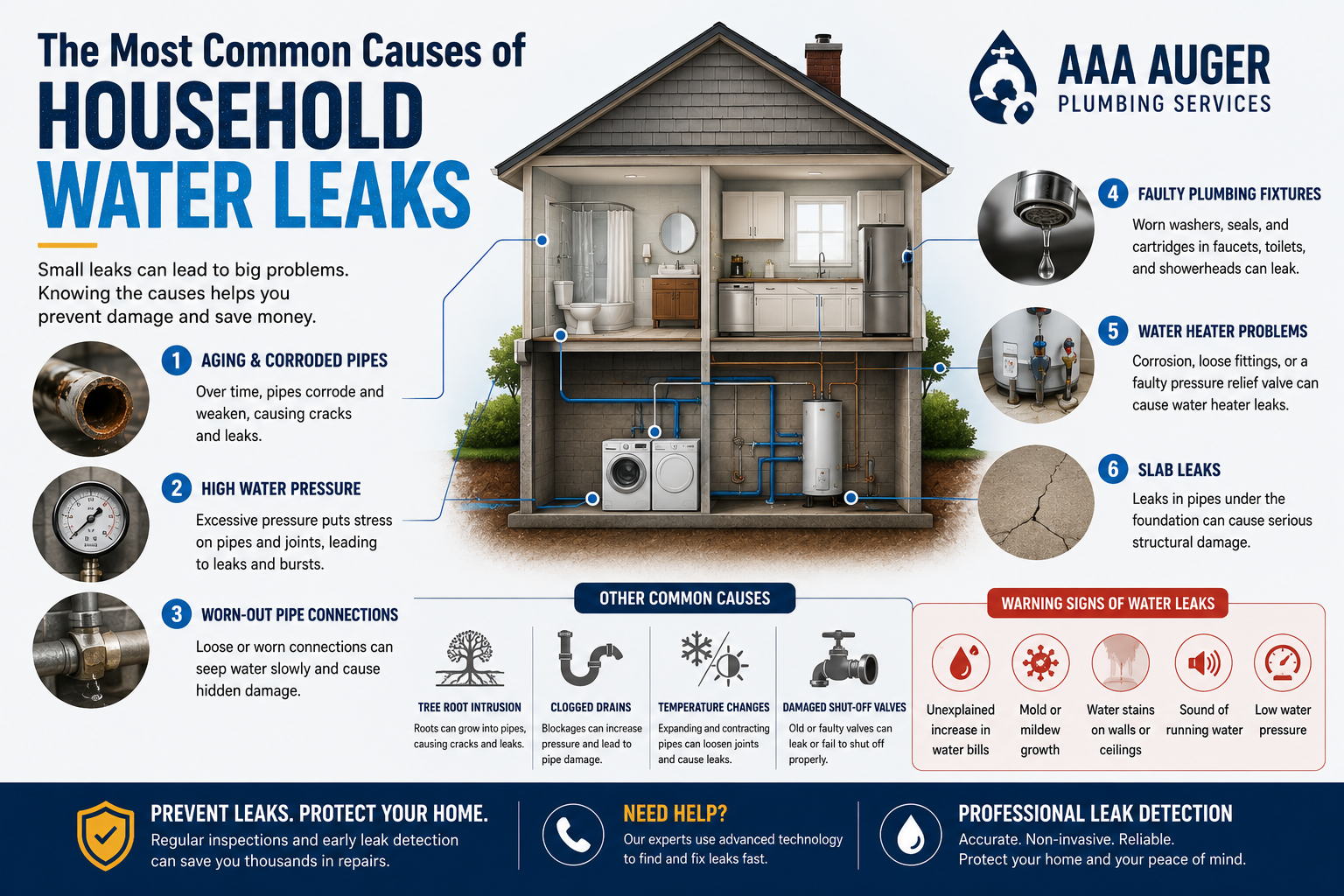
Aging and Corroded Pipes
One of the leading causes of household water leaks is aging plumbing infrastructure. Over time, pipes naturally deteriorate due to constant exposure to water, minerals, and environmental conditions.
Pipe corrosion is especially common in older homes with galvanized steel or aging metal plumbing systems.
Signs of pipe corrosion include:
- Discolored water
- Rust stains
- Frequent leaks
- Reduced water pressure
- Visible corrosion on exposed pipes
As pipes weaken, small cracks and pinhole leaks can develop, allowing water to escape behind walls or beneath floors.
High Water Pressure
Many homeowners assume strong water pressure is a good thing. However, excessively high water pressure can place significant stress on plumbing components.
Over time, high pressure can damage:
- Pipes
- Water supply lines
- Faucets
- Valves
- Appliance connections
The continuous strain increases the likelihood of leaks and premature plumbing failures. Installing a pressure regulator can help maintain safe water pressure levels throughout the home.
Worn-Out Pipe Connections
Pipe joints and connections are often among the first components to develop leaks.
These connection points can loosen over time due to:
- Temperature changes
- Water pressure fluctuations
- Natural wear and tear
- Pipe movement
Even a small gap in a connection can allow water to seep out slowly. Because many pipe joints are hidden behind walls or under sinks, these leaks often go unnoticed until visible damage appears.
Faulty Plumbing Fixtures
Household fixtures experience daily use and eventually wear out.
Common fixtures that may develop leaks include:
- Faucets
- Toilets
- Showerheads
- Bathtubs
- Sink drains
Worn washers, damaged seals, and deteriorated internal components often contribute to fixture leaks.
While these leaks may seem minor, a constantly dripping faucet or running toilet can waste a substantial amount of water over time.
Water Heater Problems
Water heaters are another common source of household leaks.
Several issues can cause a water heater to leak, including:
- Corrosion inside the tank
- Loose connections
- Faulty pressure relief valves
- Sediment buildup
- Cracked tanks
Regular maintenance helps identify developing problems before they result in water damage or complete water heater failure.
Homeowners should inspect the area around their water heater regularly for signs of moisture or standing water.
Slab Leaks Beneath the Foundation
A slab leak occurs when a water line located beneath a home’s concrete foundation develops a leak.
These leaks are particularly concerning because they are often hidden from view and can cause significant structural damage if left untreated.
Common signs of a slab leak include:
- Warm spots on floors
- Cracks in walls or flooring
- Unexplained water bill increases
- Sounds of running water
- Damp flooring
Professional leak detection technology is often required to accurately locate slab leaks and minimize disruption during repairs.
Tree Root Intrusion
While tree roots are commonly associated with sewer line issues, they can also contribute to water line damage.
Roots naturally seek moisture and may grow toward underground plumbing pipes. As roots expand, they can:
- Crack pipes
- Displace water lines
- Create leaks
- Restrict water flow
Properties with mature trees near underground plumbing systems may face a higher risk of root-related pipe damage.
Clogged Drains and Pipes
Clogs may not seem directly related to leaks, but severe blockages can increase pressure within the plumbing system.
When water cannot flow properly, pressure may build up behind the obstruction and place stress on pipes and connections.
Over time, this pressure can contribute to:
- Pipe cracks
- Joint failures
- Fixture leaks
Routine drain cleaning helps reduce strain on the plumbing system and minimizes the risk of related leaks.
Extreme Temperature Changes
Temperature fluctuations can affect plumbing materials and increase the likelihood of leaks.
Cold weather may cause pipes to contract and freeze, while warmer temperatures can lead to expansion.
These repeated movements place stress on:
- Pipe joints
- Fittings
- Valves
- Connections
Over time, weakened components may develop leaks, especially in older plumbing systems.
Damaged Shut-Off Valves
Shut-off valves control water flow to specific fixtures and appliances. These valves may wear out with age or become damaged through repeated use.
A failing shut-off valve may:
- Leak around the handle
- Drip continuously
- Fail to close completely
Routine plumbing inspections can identify worn valves before they become a larger issue.
How to Spot Hidden Water Leaks
Some leaks are obvious, but many remain hidden behind walls, beneath floors, or underground.
Warning signs of hidden leaks include:
- Unexpected increases in water bills
- Mold or mildew growth
- Water stains on walls or ceilings
- Peeling paint
- Musty odors
- Reduced water pressure
If any of these signs appear, professional leak detection may be necessary to locate the source.
Preventing Household Water Leaks
While not every leak can be prevented, homeowners can reduce risk through regular maintenance and inspections.
Helpful prevention strategies include:
- Scheduling annual plumbing inspections
- Monitoring water pressure
- Repairing minor leaks promptly
- Replacing aging fixtures
- Maintaining water heaters
- Addressing drain issues early
Preventive maintenance often costs far less than repairing extensive water damage.
Final Thoughts
Household water leaks can originate from many sources, including aging pipes, high water pressure, faulty fixtures, slab leaks, and water heater problems. While some leaks are easy to detect, others remain hidden and cause significant damage over time.
Understanding the most common causes of household water leaks allows homeowners to recognize warning signs early and take action before small problems become expensive repairs. Regular plumbing inspections and prompt leak detection can help protect your home, conserve water, and prevent costly property damage.
FAQs
What is the most common cause of household water leaks?
Aging and corroded pipes are among the most common causes of residential water leaks.
Can a small leak cause major damage?
Yes. Even minor leaks can lead to mold growth, structural damage, and increased water bills if left untreated.
What is a slab leak?
A slab leak occurs when a water pipe beneath a home’s concrete foundation develops a leak.
How can I tell if I have a hidden water leak?
Common signs include higher water bills, water stains, mold growth, musty odors, and reduced water pressure.
How often should plumbing systems be inspected?
Most homeowners should schedule a professional plumbing inspection at least once per year to identify potential issues early.