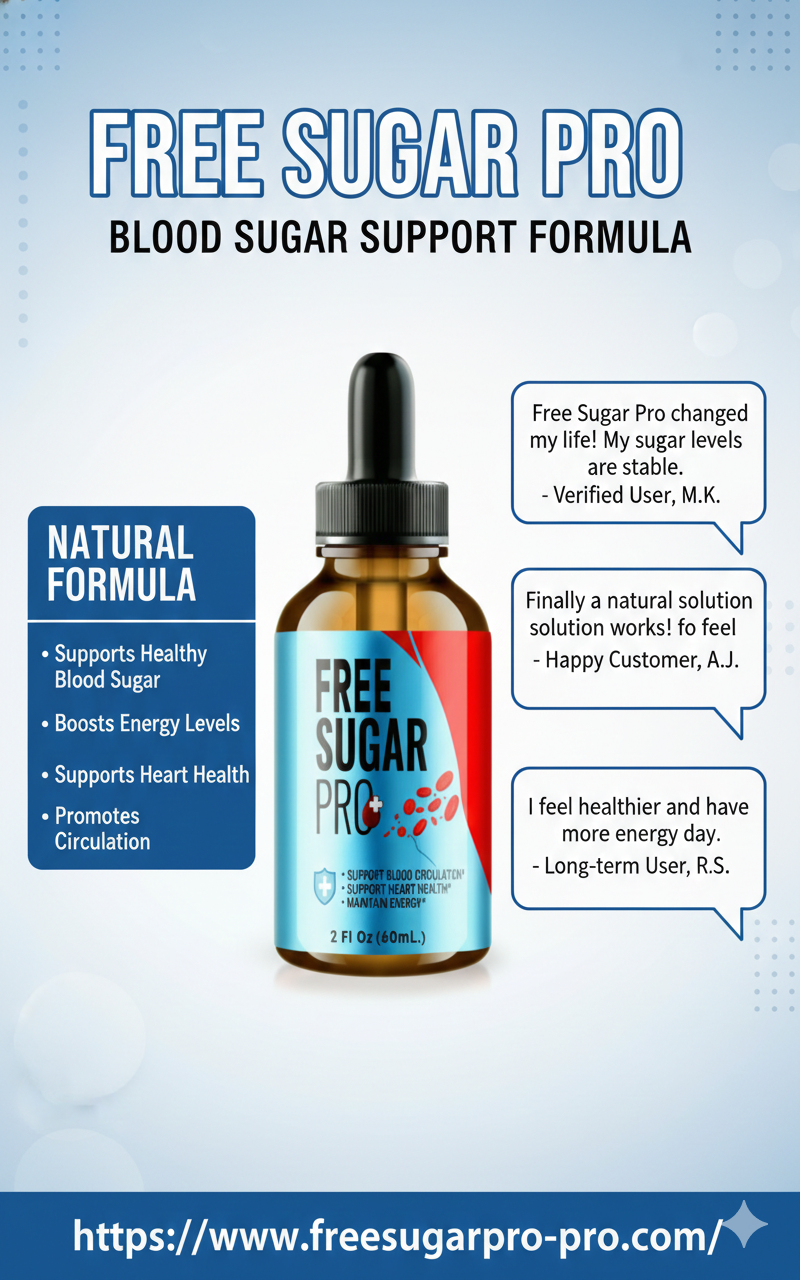
Free Sugar Pro is an advanced herbal health supplement specially designed to support healthy blood sugar levels and improve overall metabolic health. Formulated with powerful natural ingredients like berberine, cinnamon extract, and chromium, it helps enhance insulin sensitivity, reduce sugar cravings, and support balanced energy throughout the day.
Free Sugar Pro is marketed as a blood sugar support supplement that aims to promote healthy glucose metabolism, insulin sensitivity, energy, and metabolic balance.
In this guide, we’ll break down what “healthy sugar balance” really means, the practical benefits people look for in products like Free Sugar Pro, which ingredients are commonly used in blood sugar formulas (and what science says about them), and how to use supplements safely and effectively—without hype or unrealistic promises.
Why healthy sugar balance matters (and what “balance” really means)
Your body’s main “sugar” is glucose, a key fuel source made from carbohydrates. When you eat, glucose enters the bloodstream. Insulin then helps move glucose from blood into cells, where it’s used for energy or stored.
When this process is working smoothly, you generally get:
- steadier energy
- fewer cravings
- easier appetite control
- better mood stability
- improved long-term metabolic health
When it’s not working well (often described as insulin resistance), glucose can stay higher for longer after meals, contributing to energy crashes and increased hunger. Emory Healthcare explains insulin resistance as a core driver of high blood sugar in diabetes.
Important note: Supplements are not a replacement for medical care. If you have diabetes, take glucose-lowering medication, or have symptoms like frequent urination, extreme thirst, unexplained weight loss, or blurry vision, talk to a clinician and monitor your numbers appropriately.
What Free Sugar Pro is positioned to do
From publicly available marketing pages, Free Sugar Pro is presented as a natural supplement intended to support:
- healthy blood sugar levels
- insulin sensitivity
- glucose metabolism and energy
- metabolic balance
Some retail listings also carry the standard disclaimer that dietary supplement statements are not evaluated by the FDA and are not intended to diagnose, treat, cure, or prevent disease.
Because ingredient lists and formulas can vary by seller and product version (and some listings only say “See label”), it’s best to treat any supplement’s benefits as potential support, not guaranteed outcomes—and always verify the Supplement Facts panel on the exact bottle you purchase.
The most common benefits people seek from a blood sugar support supplement
Even if different brands use different blends, most “blood sugar supplements” aim to help in a few predictable ways. Here are the most realistic, wellness-oriented benefits—especially when paired with diet and lifestyle changes.
1) Support for steadier post-meal glucose
Many people feel their worst after carbohydrate-heavy meals: sleepiness, fog, and a “crash” later. Supplements are often used to support more stable postprandial (after-meal) blood glucose, primarily by supporting insulin response, slowing carbohydrate absorption, or improving overall metabolic efficiency.
Lifestyle still matters most—especially carbohydrate quality, fiber intake, and daily movement—but a well-formulated supplement may be a helpful add-on for some people.
2) Reduced sugar cravings and appetite swings
Cravings are not just “willpower.” Big glucose swings can influence hunger hormones and reward signals. Products marketed for sugar balance frequently emphasize craving support because it’s a major pain point for people trying to reduce sweets and refined carbs.
Practical diet strategies—like higher protein at breakfast and more fiber at meals—tend to be the foundation. Harvard’s nutrition guidance strongly encourages limiting added sugars as part of long-term health.
3) Better everyday energy and fewer afternoon slumps
Many shoppers associate glucose balance with energy: fewer “3 PM crashes,” less jittery snacking, and more consistent performance at work or workouts. This benefit is commonly reported in marketing materials and reviews, but in real life it often depends on basics like sleep, hydration, meal timing, and overall calorie quality.
4) Weight-management support (indirect, not “fat-melting”)
Balanced glucose can make it easier to stick to a calorie plan by reducing cravings and rebound hunger. However, it’s important to be skeptical of any supplement implying dramatic fat loss without lifestyle changes.
For sustainable results, the best strategy remains consistent nutrition, activity, and behavior change; supplements can sometimes support adherence, but they don’t replace it.
5) Support for metabolic wellness over time
Some people use blood sugar supplements because they’re concerned about long-term metabolic health—especially those with prediabetes, family history, or signs of insulin resistance.
If you’re in this group, think of supplements as part of a broader “metabolic health stack”:
- higher-fiber meals
- resistance training + daily walking
- better sleep consistency
- stress management
- regular lab monitoring with a clinician
Common ingredients found in “blood sugar balance” formulas (and what evidence suggests)
Because “Free Sugar Pro” product pages don’t always display a full ingredient list in every listing, the safest way to explain benefits is to cover the most common, widely used ingredients in this category and what research organizations say about supplements for glycemic support.
The U.S. Department of Veterans Affairs Whole Health Library notes that many supplements have been reported to have anti-glycemic effects, but evidence quality varies and results are not uniform.
Here are ingredient types you’ll frequently see in blood sugar support supplements:
1) Cinnamon extracts
Cinnamon is one of the most recognized “blood sugar” ingredients online. Some studies suggest potential modest support for glucose metabolism, but results vary, and the type/dose matters.
Tip: If a product uses cinnamon, it should specify the extract type and dose. “Sprinkle of cinnamon” amounts are unlikely to move the needle.
2) Chromium
Chromium is a trace mineral involved in carbohydrate and fat metabolism. It’s commonly used in supplements aimed at insulin sensitivity support.
3) Berberine
Berberine is a popular compound in metabolic wellness supplements. It’s frequently discussed for glucose metabolism support, but it may interact with medications and may cause gastrointestinal side effects for some people.
If you take medication: Always check with a clinician/pharmacist before combining berberine with diabetes meds, blood pressure meds, or anticoagulants.
4) Alpha-lipoic acid (ALA)
ALA is often used in metabolic and antioxidant formulas. Some people use it to support glucose metabolism and nerve health, though results can vary.
5) Fiber-based ingredients (like psyllium, glucomannan, or inulin)
Soluble fiber can help slow digestion and reduce glucose spikes after meals. This is one of the more straightforward mechanisms: slower absorption can mean a smoother post-meal curve.
diaTribe (a diabetes-focused publication) highlights fiber and other natural approaches as part of glucose management strategies.
6) Botanical ingredients (fenugreek, bitter melon, gymnema, etc.)
Many herbals are used traditionally for glucose support. Some have early evidence, but consistency and standardization are common issues, and quality varies widely by manufacturer.
How Free Sugar Pro may fit into a smart blood-sugar routine
If you’re considering Free Sugar Pro (or any blood sugar supplement), the most productive mindset is:
Lifestyle first, supplement second.
Here’s how to build a routine where a supplement—if you choose to use one—has the best chance of being useful.
Step 1: Start with food strategies that flatten glucose spikes
You don’t need extreme diets. Try these:
- Protein-forward breakfast (eggs, Greek yogurt, tofu scramble)
- Fiber at every meal (vegetables, legumes, oats, chia)
- Swap refined carbs for minimally processed carbs (brown rice, quinoa, sweet potato)
- Add healthy fats (olive oil, nuts, seeds) to slow absorption
Harvard’s nutrition guidance emphasizes limiting added sugar as a foundational step.
The American Heart Association also recommends practical ways to reduce added sugars, especially sugary drinks.
Step 2: Use movement as “glucose management”
A simple, high-impact tactic: 10–15 minutes of walking after meals. This can help muscles use glucose more efficiently.
Step 3: Sleep and stress—often the hidden levers
Poor sleep and chronic stress can worsen insulin sensitivity and cravings. If your routine is chaotic, no supplement can fully compensate.
Step 4: If you add a supplement, track something measurable
Consider tracking:
- fasting glucose (if you already monitor)
- post-meal energy and cravings
- weight and waist measurements
- A1C (through labs, not guesswork)
If nothing changes after a reasonable trial period, it may not be worth continuing.
Safety, quality, and smart-buy checklist (especially important in blood sugar products)
The FDA has warned consumers about certain “glucose support” products that contained hidden drug ingredients—highlighting why supplement quality and reputable sourcing matter.
That doesn’t mean every supplement is unsafe, but it does mean you should shop carefully.
Checklist before buying Free Sugar Pro (or any similar supplement)
- Confirm the Supplement Facts label (exact ingredients + dosages).
- Look for third-party testing or quality certifications when possible.
- Avoid products that promise to “cure diabetes” or replace medication.
- Be cautious if the product’s ingredient list is vague (“proprietary blend” with no amounts).
- If you take medication, are pregnant/breastfeeding, or have liver/kidney issues—get medical guidance first.
Who might consider Free Sugar Pro?
Free Sugar Pro may appeal to adults who:
- want general blood sugar support as part of a wellness routine
- experience post-meal energy crashes and sugar cravings
- are working on weight management and want metabolic support
- want a natural supplement approach (alongside diet and exercise)
However, if you have diagnosed diabetes or take insulin/medications, you should not self-experiment without professional input—because improving glucose control can require medication adjustments.
Who should avoid or be extra cautious?
Be cautious (or avoid unless approved by your clinician) if you:
- take diabetes medications (risk of hypoglycemia depending on ingredients)
- take blood thinners or multiple prescription drugs (interaction potential)
- have chronic kidney disease or liver disease
- are pregnant or breastfeeding
- have a history of supplement sensitivities
Setting realistic expectations (what supplements can and can’t do)
Supplements can:
- support healthy routines
- provide specific nutrients/botanicals that may help glucose metabolism
- help some people feel steadier energy and fewer cravings (subjective outcomes)
Supplements cannot:
- override a high-sugar, low-fiber diet
- replace medication for diabetes
- guarantee A1C reduction without lifestyle changes
- “detox” sugar from the body in a magical way
A grounded approach protects your wallet and your health.
Diet and lifestyle foundations that multiply results
If your goal is healthy sugar balance, these are the highest ROI habits:
Reduce added sugar (especially drinks)
Sugary beverages are one of the easiest ways to overshoot sugar intake. AHA guidance specifically recommends limiting sugary drinks and choosing water or unsweetened options.
Build plates around protein + fiber
This combo slows digestion and improves satiety.
Strength training 2–4x/week
Muscle acts like a glucose “sink,” improving insulin sensitivity over time.
Prioritize sleep consistency
Short sleep can increase hunger and cravings.
Regular check-ins with labs
If you’re concerned about prediabetes or insulin resistance, monitor fasting glucose and A1C with a clinician.
Frequently asked questions
Does Free Sugar Pro treat diabetes?
No supplement is approved to treat, cure, or prevent diabetes. Many listings include the standard dietary supplement disclaimer.
How long does it take to notice benefits?
It depends on the person, the formula, and whether lifestyle habits improve at the same time. The most reliable improvements usually come from diet/activity changes first.
Can I take it with medication?
If you’re on glucose-lowering medication, you should consult a clinician/pharmacist before using any “blood sugar” supplement due to the risk of pushing glucose too low and due to ingredient interactions.
Bottom line
Free Sugar Pro is marketed as a natural supplement for blood sugar support, emphasizing healthy glucose metabolism and insulin sensitivity.
If you’re considering it, the smartest approach is:
- verify the exact ingredient label and dosages
- prioritize food, movement, sleep, and stress management first
- track measurable outcomes
- use extra caution if you take medications or have a medical condition
When used responsibly, a supplement can be a supportive tool—but your daily habits are the main driver of healthy sugar balance.