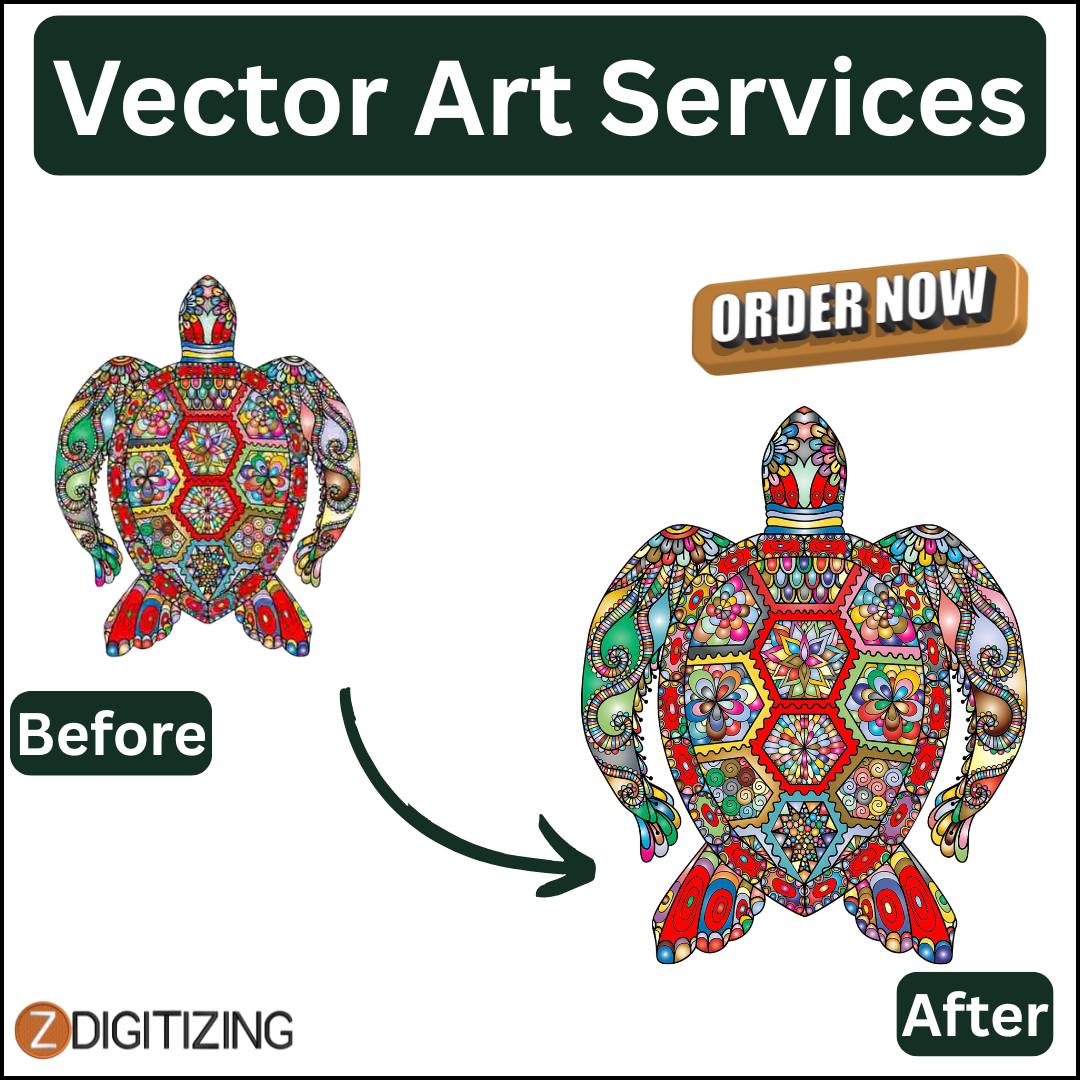
In today’s competitive digital and print environment, high-quality visuals are essential for building a consistent and recognizable brand identity. Whether you need a logo for large-format printing, apparel decoration, signage, or digital platforms, the clarity and scalability of your artwork directly impact how your business is perceived.
A Professional Vector Art Conversion Service ensures that raster images are accurately converted into clean, scalable vector formats. This process protects image quality, maintains design precision, and prepares your artwork for both print and digital use without distortion.
What Is Vector Art Conversion?
Vector art conversion is the process of transforming raster images (such as JPG, PNG, GIF, or BMP files) into vector file formats like AI, EPS, SVG, or PDF. Raster images are made up of pixels, which means they lose clarity when enlarged. In contrast, vector graphics are built using mathematical paths and curves, allowing them to scale infinitely without losing sharpness.
Professional conversion goes beyond automated tracing tools. Skilled designers manually redraw artwork using advanced software such as Adobe Illustrator and CorelDRAW. Manual redrawing ensures smooth curves, accurate anchor points, proper layer organization, and precise color matching.
This hands-on approach significantly improves the final output compared to automated conversion methods.
Why Professional Vector Conversion Matters
Free or automated tools may appear convenient, but they often generate inconsistent paths, uneven curves, and excessive anchor points. These issues become noticeable during large-scale printing, embroidery digitizing, or cutting applications.
A professional vector art conversion service provides:
- Accurate and clean path creation
- Consistent line thickness and shape integrity
- Optimized anchor points for smooth curves
- Proper color profile management (CMYK, RGB, Pantone)
- Print-ready and editable file formats
When brand consistency is critical across packaging, merchandise, signage, and marketing materials, professionally converted vector files reduce production errors and costly reprints.
The Professional Vector Conversion Process
A structured workflow ensures quality and accuracy at every stage:
1. Image Evaluation
Designers assess image resolution, color complexity, gradients, and typography.
2. Manual Redrawing
Using professional vector software, artists recreate each element carefully rather than relying solely on auto-trace features.
3. Color Matching and Adjustment
Brand colors are aligned with the appropriate output profile, whether for digital display or commercial printing.
4. Quality Review and Optimization
Paths are cleaned, anchor points are minimized, and layers are organized for easy editing.
5. Final File Delivery
Clients receive vector formats such as AI, EPS, SVG, or print-ready PDF based on their requirements.
This structured method ensures reliable results suitable for commercial production.
Manual Vector Conversion vs. Automated Tracing
Understanding the difference between manual and automated methods helps businesses make informed decisions.
Automated tracing is fast but often produces jagged lines, uneven shapes, and bloated files with unnecessary anchor points.
Manual conversion, performed by experienced designers, creates smooth curves, precise geometry, and optimized file structures. This approach improves print quality, embroidery clarity, and cutting accuracy.
For professional use, manual conversion consistently delivers better long-term value.
Choosing a Reliable Vector Art Conversion Service
When selecting a provider, prioritize experience, technical skill, and transparency. Consider:
- Portfolio examples demonstrating clean path work
- Clear turnaround timelines
- Revision policies
- Multiple file format options
- Responsive communication
- Transparent pricing
A credible service will explain its process, provide realistic timelines, and deliver production-ready files without hidden limitations.
Long-Term Business Value of Vector Files
Investing in professional vector conversion is not a short-term fix; it is a foundational branding decision. Once converted, your vector artwork becomes a permanent asset that can be resized, edited, and adapted for various applications including websites, social media, packaging, apparel, and printed marketing materials.
Maintaining a high-quality master vector file reduces repeated design costs and ensures consistent branding across all platforms.
Frequently Asked Questions (FAQs)
1. What file format will I receive after vector conversion?
Most professional services provide AI, EPS, SVG, and print-ready PDF formats. The final format depends on your intended use, such as printing, embroidery, or digital publishing.
2. Can you convert a low-resolution or blurry image into vector?
Yes, but results depend on the clarity of the original design. Skilled designers manually recreate unclear elements to improve accuracy, though extremely distorted images may require partial redesign.
3. How long does professional vector conversion take?
Turnaround time varies based on complexity. Simple logos may take a few hours, while detailed artwork with gradients and intricate shapes may require additional time.
4. Is manual vector conversion better than auto-tracing?
Yes. Manual conversion produces cleaner paths, fewer anchor points, smoother curves, and better color accuracy, making it more suitable for professional printing and production.
Final Thoughts
A Professional Vector Art Conversion Service provides measurable value for businesses that rely on high-quality graphics. Clean, scalable vector files ensure consistent branding, professional presentation, and reliable print results across all applications. By choosing experienced designers who follow a structured and quality-focused process, businesses gain editable, production-ready artwork that supports long-term marketing and branding goals.