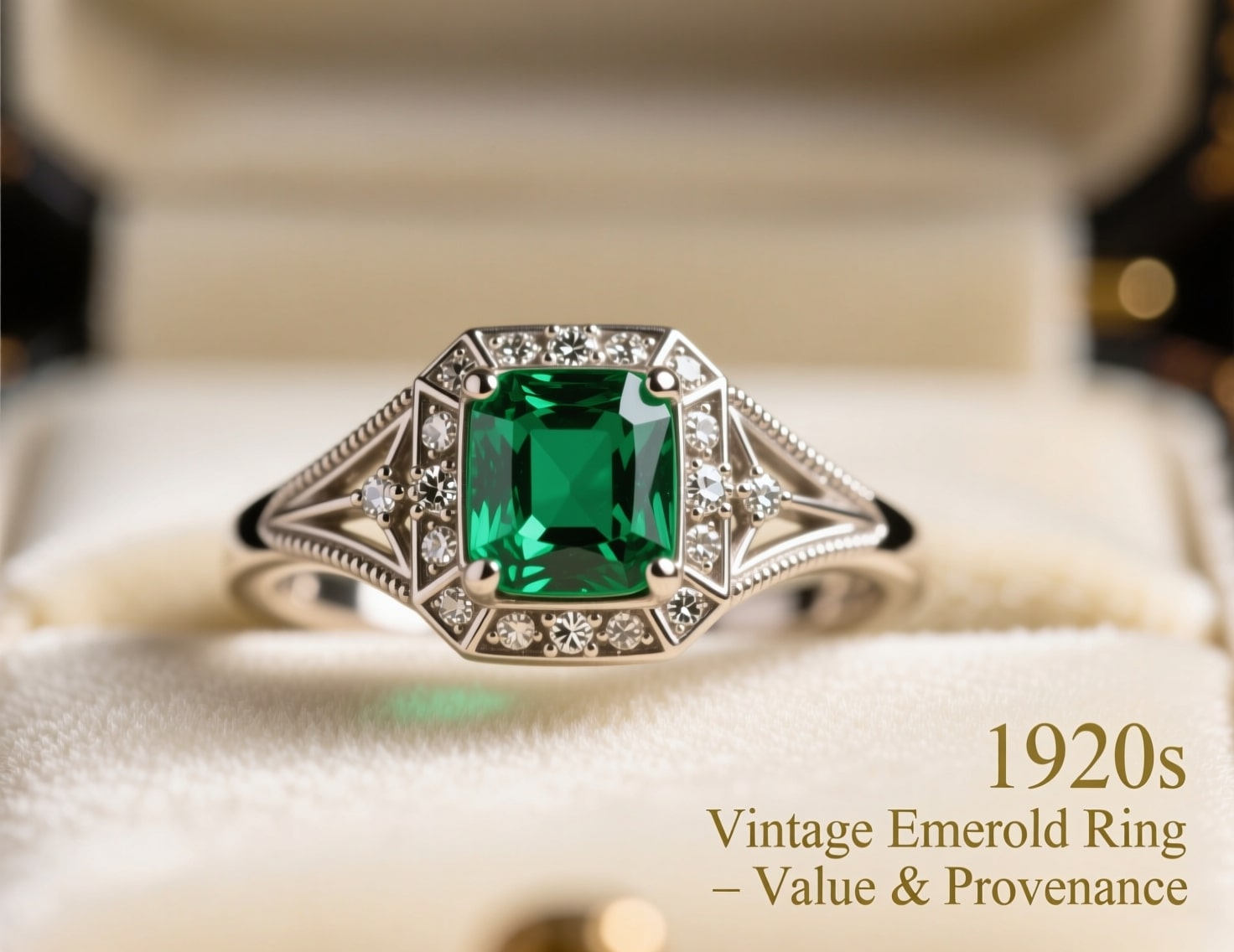
Few things catch your eye as much as a vintage emerald engagement ring from the 1920s in the world of fine jewelry; even fewer are the things that cause romance. This is the Art Deco period—the very height of sumptuous change in dramatic social and artistic innovations, and art being more bold for the departure from the now eddying forces of flowing, organic forms typical of the last Edwardian era. The combination of all this and that eternal quality of the emerald—a stone that has for so long been associated with love, rebirth, and wisdom—geometric precision, and the glamour of the Roaring Twenties produces something far more than jewelry; this is history that you can wear. But beauty aside, how would one appraise such stunning artifacts? This is the crux of a complex situation for collectors and brides-who-often-would-be, for vintage emerald engagement rings 1920s are neither simple nor easy issues in appraisal.
The Historical and Cultural Context: The Art Deco Revolution
To appreciate the value of a 1920s emerald ring, one must first appreciate the era that birthed it. The end of World War I was the harbinger of liberation and of exuberance. Women had more independence, famously bobbing their hair, shortening dresses, and adapting styles that were rather androgynous. Now this modern woman needed jewelry to go along with her purpose.
Art Deco derived its name from the 1925 Exposition Internationale des Arts Décoratifs et Industriels Modernes, held in Paris. It was a direct refusal by design principles from the soft, naturalistic Art Nouveau style. Rather, Art Deco celebrated the machine age, symmetry, and bold geometry. Sharp angles, stepped forms, chevron patterns, and sunburst motifs would immediately come to mind. Such made this a perfect style for the white metals of the time—one being platinum—and white gold, which often had accents of stark black onyx or a vibrant pop of color from a plethora of gemstones such as sapphires, rubies, and, of course, emeralds. An emerald, with its deep, captivating green, provided the perfect dramatic contrast against the cool, sleek platinum, making it a favorite among the fashionable elite.
What Makes Vintage Emerald Engagement Rings from the 1920s So Special?
Value runs deeper than skin into numerous characteristics distinguishing it from both modern and other vintage pieces.
- Unmatched Craftsmanship: It is said that these pieces were handmade jewelry made by highly skilled artisans using methods such as millegrain edging (tiny beaded detail along the metal edges), intricate filigree work, and precise calibre-cut gemstone settings, which are typical hallmark features of authentic Art Deco. This type of detail is incredibly difficult and most expensive to replicate today, adding intense intrinsic value.
- The Platinum Standard: The 1920s was the golden age for platinum. This strong, durable, and rare metal allowed the jewelers to craft very delicate, lace-like settings that would just not have been possible with softer gold. An authentic 1920s ring is more often than not set in platinum, a precious metal that is worth quite a value on its own.
- Distinctive Gem Cuts and Settings: Step cuts were the usually adopted cuts for emeralds used for the Art Deco rings; most notable would be that of the emerald cut (which was, in fact, named after the stone it was most frequently used for). Other popular forms applied include the octagonal and square step-cuts. Such sorts would accentuate even more the clarity of color in the stones and not the brilliance in line with the geometric view. To top it all, emeralds were often enhanced with small diamonds, also in baguette or trapezoid cuts, which resulted in that impressive, architectural profundity.
- The Allure of the Emerald Itself: What Emeralds Have Always Represented throughout History: Of course, emeralds have been valued from time immemorial, but vintage ones come with their own story. Most emeralds that were in the market during that time came from Colombia, which is known to have provided the best world “examples” in terms of pure, grassy green hue. It was also standard practice then to oil or fill emeralds with natural resins to improve clarity and fill natural inclusions. A vintage emerald that remained stable and scintillating after almost a century dignified itself in quality.
Assessing the Financial and Sentimental Value
When pricing a 1920s emerald engagement ring, the broad spectrum is indeed vast. Smaller and simpler examples can be had for a few thousand dollars, while an exceptional, grand emerald set with exceptional craftsmanship in a signed platinum mount from such distinguished houses as Cartier or Van Cleef & Arpels can bring tens or even hundreds of thousands at auction.
The following are the basic factors affecting the price:
- The Quality of the Emerald: Color, clarity, cut, and carat weight matter above all else. A vivid, saturated “emerald green” stone with good transparency is always worth more than a pale-colored stone with heavy inclusions.
- The Design and Craftsmanship: These characteristics include the complexity of the setting, presence of elaborate millgraining, and quality of any accent diamonds. Objects of a unique design and old-school proportion appeal strongly to the collector.
- Condition and Provenance: The higher the level of original condition, with the least wear to the detail, the more the ring is valued. The value of the ring increases exponentially if it comes with the original case or can be connected directly to a notable designer or previous owner.
- Market Demand: There has been an increase in demand for unusual, non-traditional engagement rings in recent years. Art Deco jewelry is always in style and therefore has created a strong and competitive market.
In the end, the price of these rings is a combination of visible and unseen assets. In financial terms, an authentic, high-quality piece from this iconic period continues to have good investment potential. Yet, the value of such rings frequently goes well beyond finances. Wearing vintage emerald engagement rings 1920s connects its wearer to the glamour, innovation, and rebellious spirit of the Jazz Age. It is a symbol of enduring love, a work of art with a narrative to tell, and a legacy that is, in reality, and indeed, priceless.