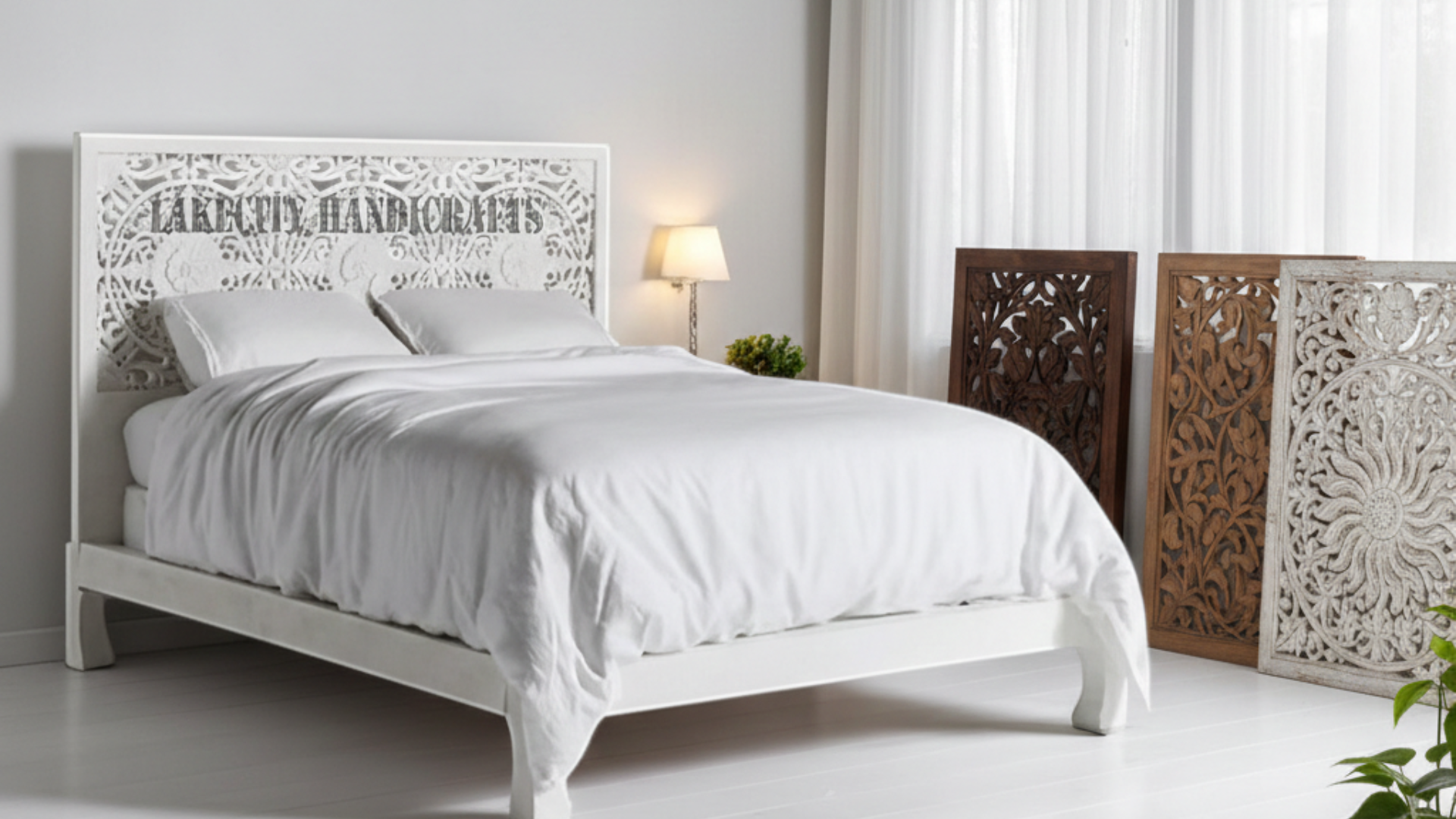
When I first decided to buy a carved wood bed frame, I thought the hardest part would be choosing the design. Floral or geometric? Tall headboard or low? What I didn’t expect was how much the wood itself would matter.
After weeks of researching handcrafted furniture collections, reading product descriptions, and comparing finishes, I discovered something important. The beauty of a carved bed goes beyond the artwork. It comes from the wood underneath. If the wood is not acceptable, even the most intricate carving will decay.
That realization pushed me to learn which wood actually works best for a carved wood bed frame meant for everyday living – not just showroom appeal.
Why wood choice is crucial in carved beds?
Carving is demanding work. Unlike plain furniture, a carved wood bed frame goes through intense handwork. Artisans cut, shape, and refine every curve. The wrong wood chips, splits, or loses sharpness over time.
From what I observed, the best woods for carving share a few traits:
- They are dense but not brittle
- They allow clean, deep carving
- They stay stable through seasonal changes
- They hold polish without looking dull
This is why solid hardwoods are virtually always used. A carved wood bed frame requires strength not only to sustain weight, but also to maintain the design over time.
Sheesham wood: reliable and full of character
During my search, sheesham wood was all over the place, and once i saw it for myself, i saw why. It feels reassuringly substantial. When you look at a Sheesham bed frame, the carving looks confident rather than delicate.
The grain pattern naturally enhances carved details. Even simple motifs look richer because the wood has depth. Another thing I noticed is how well Sheesham ages. Over time, it develops a warmer tone rather than looking tired.
For anyone wanting a traditional yet durable carved wood bed frame, Sheesham is often the safest and smartest option.
Mango wood: surprisingly practical for carving
I’ll admit, I underestimated mango wood at first. I associated it more with casual furniture. But after seeing several mango wood beds, my opinion changed.
A carved wood bed frame made from mango wood works best with softer carving styles. It doesn’t support extremely deep detailing like Sheesham, but it still carries patterns beautifully. The lighter feel also makes it easier to move and style in modern homes.
What really stuck out to me was sustainability. Mango trees are only chopped down after they no longer produce fruit, making mango wood a more sustainable choice. Mango wood makes sense if you want a carved bed that’s warm, comfortable and eco-friendly.
Teak wood: strength before decoration
Teak has a reputation, and it earns it. A carved wood bed frame in teak feels heavy, grounded, and almost indestructible.
Because teak is very dense, carving tends to be more controlled and minimal. You won’t usually see overly ornate designs, but what you get instead is longevity. Teak resists moisture, insects, and general wear better than most woods.
If your priority is a bed that lasts decades with minimal upkeep, teak is hard to beat. It’s especially suitable for humid climates where other woods might struggle.
Walnut wood: understated elegance
Walnut wood offers a different experience. It’s not loud. It doesn’t shout craftsmanship. Instead, it feels refined.
A carved wood bed frame made from walnut usually features subtle carving – nothing too heavy. The dark tones and smooth grain do most of the work visually. I found walnut beds particularly appealing in modern or luxury interiors where less detail feels more intentional.
Walnut may not be ideal for deep traditional carving, but for elegant simplicity, it’s a strong contender.
Mahogany wood: classic and time-tested
Mahogany carries history with it. When you see a carved wood bed frame made from mahogany, it immediately feels traditional.
The wood is smooth, stable, and easy to carve with precision. The carvings often look softer and more fluid. Over time, mahogany maintains its shape well, which helps preserve carving details.
This is the kind of wood you choose when you want furniture that feels permanent, almost heirloom-like.
Climate and daily use matter more than people think
One thing I rarely saw mentioned in product descriptions – but learned the hard way – is how climate affects a carved wood bed frame.
In areas with high humidity, denser woods like teak and Sheesham perform better. For daily use, especially in master bedrooms, hardwoods handle pressure and movement more effectively.
Spaces with less frequent use or guest rooms are better suited for lighter woods. Long-term problems like warping or cracking can be avoided by selecting wood that is compatible with the environment.
Finishes can enhance or ruin carving
The finish plays a bigger role than most buyers realize. A poorly chosen finish can flatten carving details.
Natural finishes highlight grain and craftsmanship. Painted finishes, when done well, make carved patterns stand out more clearly. A carved wood bed frame should never appear as if the carving was an afterthought.
Personally, I favor treatments that allow the wood to breathe while maintaining protection.
Final thoughts from a buyer’s perspective
Choosing a carved wood bed frame is not just about looks. It’s about understanding how material, craftsmanship, and daily life come together. The right wood supports the carving, protects the structure, and adds warmth to the space.
After going through this process, I developed a deeper respect for Premium handmade furniture and the artisans behind it. A well-made carved bed doesn’t feel trendy – it feels personal.
That’s why collections like those from Lakecity Handicrafts stand out. They reflect an understanding of wood, carving, and real-world use – something you only appreciate once you’ve truly explored handcrafted furniture.