
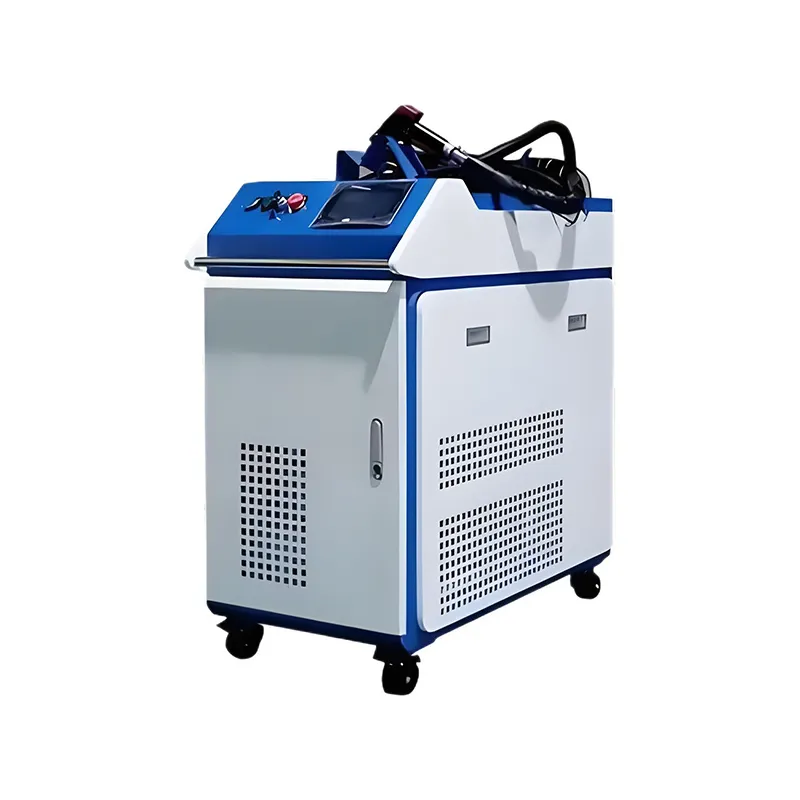
In modern industrial settings, mobility and precision are becoming equally important. Whether it’s field repairs, custom assemblies, maintenance operations, or production line flexibility, traditional welding solutions are often limited by size, heat control, and accessibility. Laser technology — with its non-contact, highly controllable energy delivery — is addressing these challenges head-on, and one of the most versatile tools enabling this shift is the Portable Laser Welding Machine.
Portable laser welding systems bring the power of industrial-grade laser welding into compact, mobile units that can be easily deployed across workstations and field environments. This combination of precision and mobility is transforming how manufacturers, maintenance teams, and fabrication experts approach their work.
What Sets Portable Laser Welding Apart
Traditional welding methods such as TIG, MIG, and arc welding often require substantial setup, skilled labor, and can introduce heat-related stress or distortion into the workpiece. In contrast, a portable laser welding machine offers several compelling advantages:
Non-Contact Precision
Laser energy is delivered without direct contact, reducing mechanical stress and minimizing deformation on sensitive parts.
Excellent Weld Quality
Laser welding creates tight, deep joints with narrow heat-affected zones, resulting in strong, clean welds that require minimal finishing.
Mobility & Flexibility
Because the system is portable, operators can weld on large structures, hard-to-reach assemblies, or onsite components without disassembly.
Fast Setup & Operation
Portable laser welders can often be deployed quickly with minimal fixturing or tooling — helping reduce downtime.
These features make portable laser welding especially valuable in environments where both precision and accessibility are critical.
Key Applications of Portable Laser Welding Machines
Automotive and Transportation
Portable laser welders are ideal for spot repairs on body panels, frames, sensor mounts, and structural components — allowing technicians to work without disassembling vehicles.
Aerospace
Aircraft structures often require on-site joining or repair. With portability, laser welding achieves high-quality bonds without pulling components out of service.
Heavy Machinery & Construction
Large equipment and infrastructure often need maintenance welding in the field. Portable laser solutions make it possible without transporting heavy parts.
Fabrication Shops
Custom metalwork and prototype assemblies benefit from the flexibility of moving a portable laser welder between stations as needed.
Industrial Maintenance
Plant maintenance crews rely on portable laser welding tools to perform precision repairs on equipment, tooling, and fixtures — reducing lead times and costs.
Advantages Over Traditional Methods
A Portable Laser Welding Machine provides several practical advantages:
Minimal Heat-Affected Zone
Focused laser energy reduces surrounding thermal distortion — helping preserve material properties and reducing post-weld finishing.
Strong, High-Quality Joints
Laser welds are typically deep and narrow, delivering strong metallurgical bonds without excessive filler materials.
Reduced Operator Fatigue
Ergonomically designed portable systems are easier to handle and manipulate — which matters when working in tight or awkward spaces.
Higher Productivity
Fast cycle times and simple setup reduce total job time, particularly for repetitive or onsite tasks.
These benefits make portable laser welding a smart choice for applications where accuracy, flexibility, and quality are essential.
Integrating Portable Laser Welders with Smart Production
Beyond mobility, modern portable laser welding machines often integrate seamlessly with advanced plant technologies:
- Vision-guided alignment systems for automated positioning
- Programmable welding profiles for consistent results
- Data logging and traceability for quality control
- Sensor feedback to optimize weld parameters in real time
This connectivity supports the move toward Industry 4.0, where intelligent machines deliver both precision and data-driven insights.
What to Consider When Selecting a System
When evaluating portable laser welding solutions, consider these key factors:
- Laser power and pulse control for the thickness and material type
- Portability and ergonomics for ease of movement and setup
- Safety features such as interlocks and shielding
- Software capabilities for welding path control
- After-sales support and maintenance services
Choosing a system that balances performance with ease of use ensures long-term productivity and operator confidence.
Conclusion
The Portable Laser Welding Machine is reshaping how fabrication and repair work is done — from workshop benches to remote field locations. With its combination of precision, mobility, and strong metallurgical joints, it’s quickly becoming an essential tool across automotive, aerospace, heavy machinery, and industrial maintenance applications.
By adopting portable laser welding solutions, companies can enhance flexibility, reduce downtime, and maintain high quality standards — all while simplifying workflows and expanding what’s possible in onsite fabrication.

